
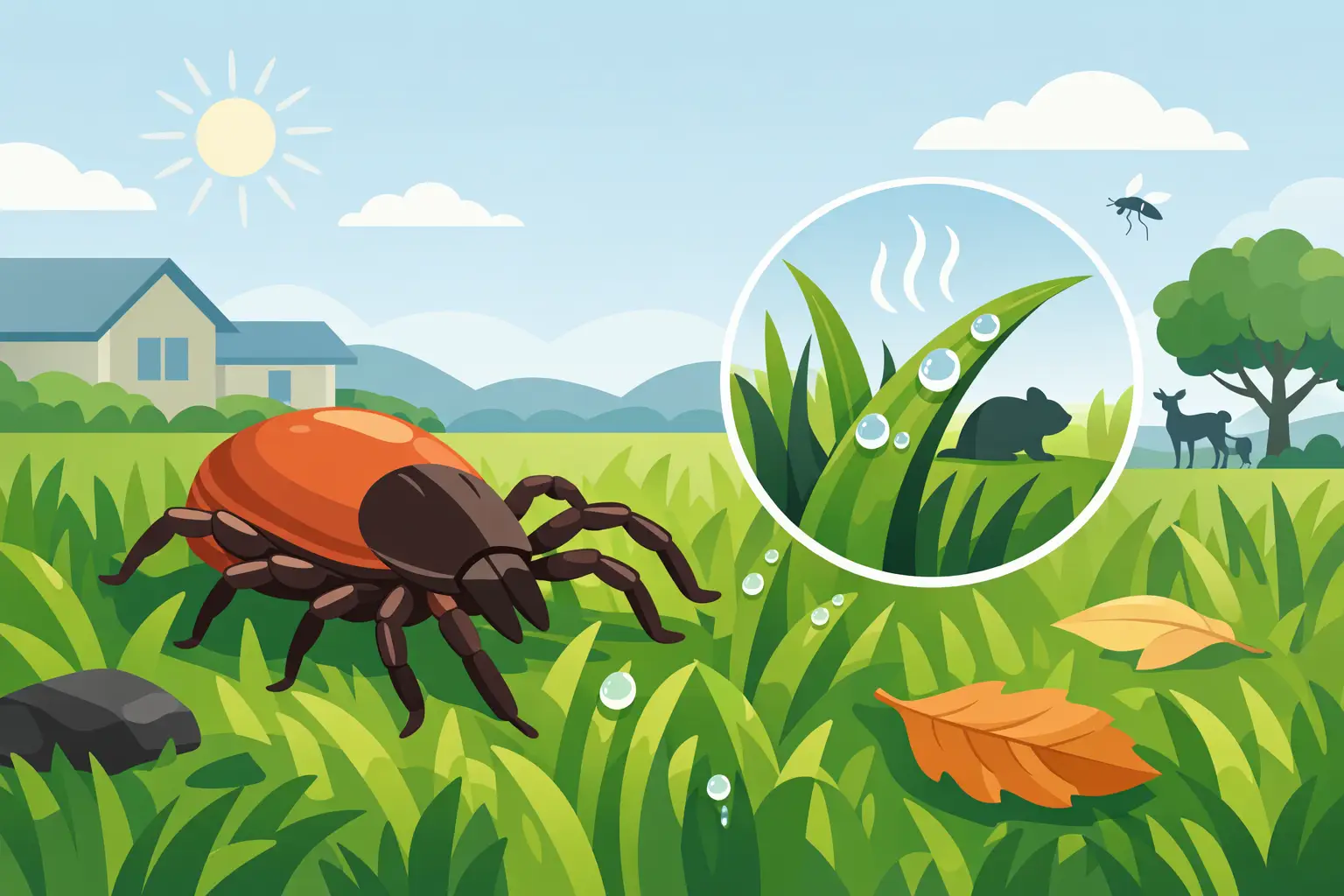
If you have kids playing in the grass or a dog that treats the yard like its second home, it makes sense to ask what attracts ticks to lawns in the first place. Ticks do not appear at random. They settle into outdoor spaces that give them shade, moisture, cover, and easy access to hosts like deer, rodents, pets, and people.
That matters in Ontario, where tick activity is a real concern through the warmer months and into the fall. A lawn may look tidy from the patio and still offer the exact conditions ticks prefer around the edges, under shrubs, or in damp pockets that stay cool all day.
What attracts ticks to lawns most often
Ticks are not drawn to a lawn because the grass itself is especially appealing. They are attracted to the environment around the lawn. If your property gives them protection from heat and dryness and a steady path to animals or people, it can support tick activity even when the turf is cut regularly.
The biggest factor is moisture. Ticks dry out easily, so they survive best in humid, shaded areas where the ground stays cool. A lawn bordered by dense trees, overgrown landscaping, woodlots, or thick groundcover creates the kind of sheltered edge where ticks can wait for a host to pass by.
Wildlife pressure is the next piece. Deer, mice, chipmunks, raccoons, and stray animals all help move ticks through a property. If these animals regularly travel across your yard, rest under decks, or feed near the lawn, they can leave ticks behind in the very places your family and pets use most.
Why some lawns have more ticks than others
Two neighbouring properties can have very different tick pressure. One may stay relatively low risk, while the other sees repeated activity through the season. The difference usually comes down to habitat, not luck.
A sunny, open lawn with limited brush and good airflow is less hospitable to ticks than a yard with deep shade, cluttered borders, leaf litter, and heavy vegetation. Ticks do not fly or jump. They climb low plants, blades of grass, and brush, then wait to latch onto a host that brushes past. That is why transition zones matter so much – the spots where lawn meets woods, fence lines, garden beds, or unmanaged growth.
Properties near ravines, trails, fields, and forested areas often have a higher risk because wildlife moves through them more often. In communities around Merrickville, Kemptville, Smiths Falls, Brockville, and other nearby rural or semi-rural areas, that is a common setup. Large lots and natural surroundings are a benefit until ticks start using those same spaces as a corridor.
Shade, leaf litter, and overgrowth
If you want to understand what attracts ticks to lawns, start with the places that stay damp after the rest of the yard dries out. Thick leaf litter, low-hanging shrubs, ornamental grasses, unmanaged fence lines, and brush piles all help ticks hold moisture and avoid direct sun.
This does not mean every landscaped yard is a tick problem. It means dense plantings need to be maintained with tick habitat in mind. A beautiful property can still be lower risk when beds are kept trimmed, ground clutter is removed, and the lawn edge is clearly separated from wooded or overgrown areas.
One common issue is the back edge of the yard. Homeowners often keep the central lawn short but leave the perimeter natural. That edge can become the main tick zone, especially if children cut through it, dogs sniff along it, or wildlife uses it as cover.
Pets and wildlife make a big difference
Ticks need blood meals to develop and reproduce. If animals regularly move through your property, they can support the tick life cycle even if the lawn itself is well maintained.
Mice are especially important because immature ticks often feed on small mammals. Deer help transport adult ticks across larger areas. Pets can also bring ticks into the yard or pick them up from nearby trails, parks, and wooded spaces before carrying them back toward decks, patios, and doors.
Bird feeders, accessible garbage, brush piles, and hiding spots under sheds can make a property more attractive to wildlife. The result is not always obvious. You may never see a deer bed down on the lawn, but if deer pass through overnight or rodents live along the fence line, ticks have a route in.
There is a trade-off here. Many homeowners want naturalized spaces and more wildlife-friendly landscaping. That is understandable. But the more shelter and animal traffic a yard supports, the more important tick prevention becomes around the parts of the property people actually use.
Moisture problems create better tick habitat
Poor drainage can make a lawn more tick-friendly than expected. Areas where water lingers, irrigation runs too long, or dense plantings trap humidity can stay favourable for ticks even during hot weather.
This is why some properties with short grass still see tick activity. The issue is not lawn height alone. It is the microclimate. If the edges stay cool and damp and hosts keep passing through, ticks can persist.
That also means drought-like conditions do not guarantee safety. Ticks often retreat deeper into shaded vegetation or leaf litter when conditions are dry, then become active again when humidity rises. A yard can seem fine one week and become more active after rain or a stretch of muggy weather.
What does not attract ticks as much as people think
Ticks are not strongly attracted to freshly cut grass, flower colour, or standing water in the same way mosquitoes are. They are not nesting in the middle of every open lawn just because the yard is green.
That distinction matters because homeowners sometimes focus on the wrong fixes. Cutting grass is helpful, but mowing alone will not solve a tick issue if the real problem is the brush line, the damp back corner, or frequent wildlife traffic. Likewise, a clean patio does not change much if the surrounding shrubbery is dense and unmanaged.
The goal is not to panic over every blade of grass. It is to identify the protected zones where ticks are most likely to survive and where contact is most likely to happen.
How to make your lawn less attractive to ticks
The most effective approach is to reduce habitat and interrupt the path between ticks and hosts. Start by trimming overgrown borders, removing leaf litter, and keeping grass cut to a manageable height. Clear brush piles, thin dense vegetation, and pay attention to the shaded perimeter of the yard, not just the open centre.
If pets use the property often, check them regularly and keep the areas around gates, runs, and resting spots maintained. If wildlife is common, limit attractants where possible. Secure waste, rethink feeder placement, and close off sheltered areas under decks or sheds when practical.
It also helps to create separation between lawn space and wooded or naturalized edges. A cleaner border gives ticks fewer protected places to wait close to where people walk, sit, and play.
Still, there is a point where yard maintenance alone may not be enough. Some properties naturally carry more pressure because of location, vegetation, or surrounding wildlife. In those cases, a targeted tick treatment can reduce exposure in the areas that matter most without relying on a broad, one-size-fits-all spray approach.
When professional help makes sense
If you have found ticks on pets, noticed them after time in your own yard, or live beside woods, trails, or unmanaged land, it is worth looking at the property more strategically. Not every lawn needs the same level of service, and that is exactly why customized treatment matters.
A property-specific plan can focus on the edges, shaded zones, and high-contact areas where ticks are actually likely to be. For families trying to protect children, pets, and outdoor gathering spaces, precision matters just as much as effectiveness.
At Mosquito Pros, that is the thinking behind a tailored treatment model. The goal is to reduce risk where people live outside, with lower-volume applications designed around the property instead of a generic blanket spray.
Ticks are opportunistic. Give them moisture, cover, and a steady supply of hosts, and they will use your yard. Take those conditions away, and your lawn becomes a much less welcoming place for them.
Need help reducing ticks around your property?
Learn about our professional tick control service and review when ticks are most active in Ontario.

