
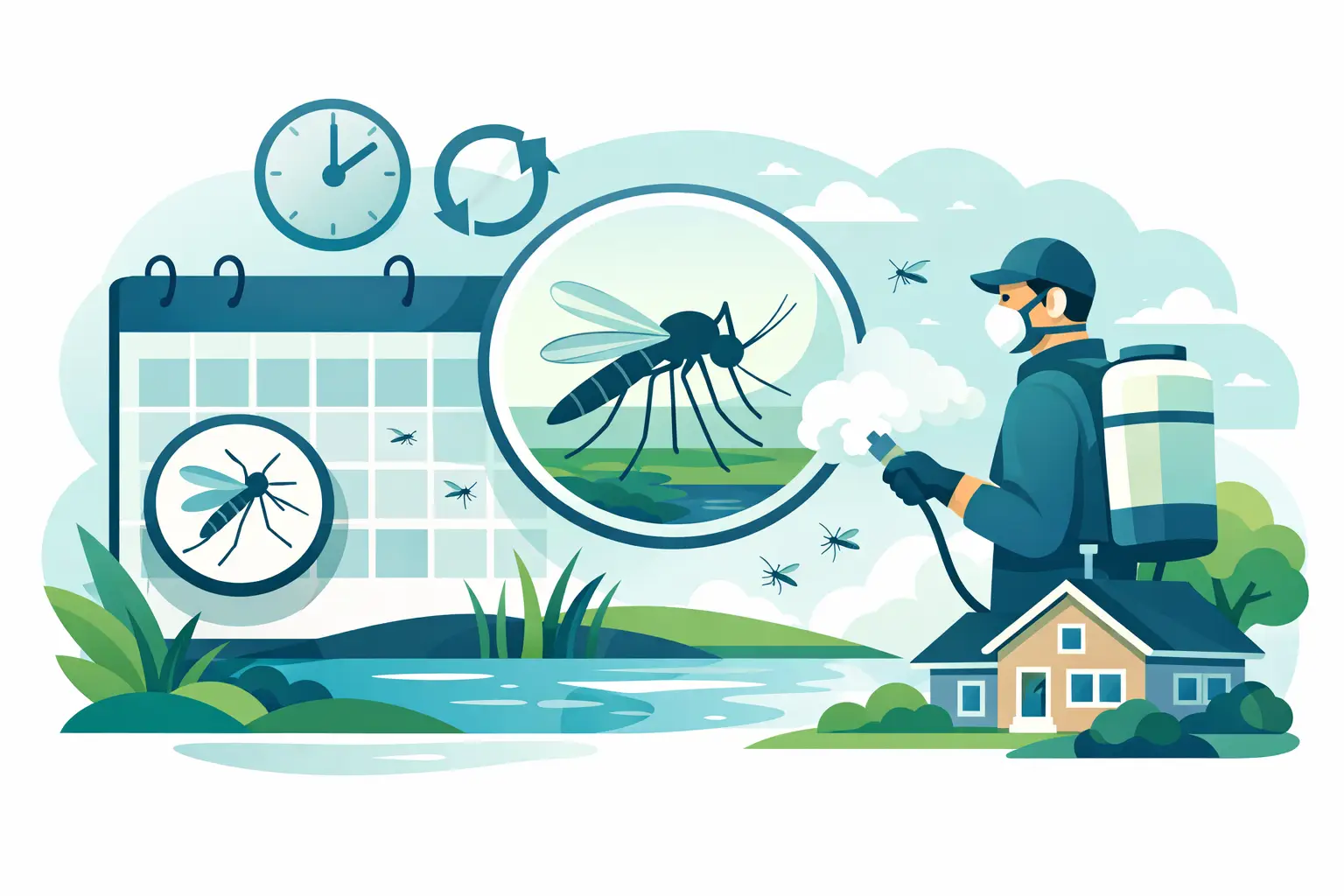
A yard can go from enjoyable to unusable fast once mosquitoes settle in. If you are wondering how often should mosquito treatment be applied, the short answer is this: most properties in Ontario do best on a recurring schedule every 21 days during mosquito season. That said, the right timing depends on pressure, weather, property layout, and how you use your outdoor space.
That matters because mosquito control is not a one-and-done service. Mosquitoes reproduce quickly, Ontario weather changes constantly, and untreated pockets around a property can keep producing new activity. A treatment plan works best when it is timed to interrupt that cycle instead of reacting only after mosquitoes become a major problem.
How often should mosquito treatment be applied on most properties?
For most residential yards, mosquito treatment should be applied about every three weeks through the active season. That interval is common because it helps maintain a protective barrier on the foliage, shrubs, shaded areas, and other resting spots where adult mosquitoes spend time between feeding.
If a property is heavily treed, backs onto water, has dense landscaping, or holds moisture after rain, it may need closer monitoring and a more tailored schedule. On the other hand, a smaller, more open yard with less mosquito habitat may stay comfortable on a standard recurring program.
The key point is consistency. Waiting until mosquitoes become obvious again usually means their breeding cycle has already had time to rebound.
Why treatment frequency is not the same for every yard
Mosquito control is highly property-specific. Two homes on the same street can have very different mosquito pressure depending on shade, standing water, vegetation, and nearby breeding sites.
A yard with cedar hedges, garden beds, tree cover, and damp low spots gives mosquitoes more places to rest and breed. A sunnier property with better drainage may experience less pressure. If you live near wooded areas or wetter conditions common in parts of eastern Ontario, treatment timing often needs to be more deliberate.
Usage matters too. If your family spends evenings on the patio, kids play outside at dusk, or pets are regularly in the yard, the tolerance for mosquito activity is lower. The goal is not just reducing numbers on paper. It is making the space reliably usable.
Weather changes the answer
Rain, heat, humidity, and wind all affect how often mosquito treatment should be applied.
Warm, wet stretches usually increase mosquito activity because they create more breeding opportunities and accelerate development. After repeated rainfall, bird baths, clogged gutters, tarps, toys, planters, and low areas can all collect enough water for mosquitoes to reproduce. In those periods, regular service matters even more.
Hot weather can also intensify activity, especially in shaded yards where mosquitoes can avoid direct sun. If the season is especially humid, homeowners often notice faster rebound between visits.
Rain does not always mean a treatment failed. Professional barrier applications are designed for outdoor conditions and are typically applied to target surfaces where they remain effective. But heavy or repeated rain can increase the mosquito population around your property, which is one reason recurring service tends to outperform one-off spraying.
When to start and stop seasonal mosquito treatments in Ontario
In Ontario, mosquito season typically begins in spring and runs into early fall, though exact timing depends on weather. A smart plan starts before mosquito pressure peaks.
Starting treatment early helps get ahead of the first strong wave of activity. If you wait until every outdoor dinner turns into a swatting contest, you are already playing catch-up. Early-season applications help reduce the build-up that makes summer feel relentless.
Most homeowners benefit from service beginning in late spring and continuing on a regular cycle through the warmer months. For many properties, that means treatments from May into September. Some seasons start earlier or run longer if temperatures stay mild.
If you are hosting outdoor events, timing matters even more. A wedding, family gathering, backyard birthday, or long weekend BBQ may call for a treatment timed specifically around the date, even if you are also on a seasonal plan.
How often should mosquito treatment be applied for heavy infestations?
If mosquito pressure is already severe, a standard schedule may need support from source reduction and closer follow-up. Heavy infestations usually have a reason behind them. There may be standing water nearby, dense harbourage on the property, or environmental conditions that are constantly replenishing the population.
In those situations, treatment alone is only part of the answer. Water sources need to be identified and corrected wherever possible. That might mean emptying containers, improving drainage, cleaning eavestroughs, or addressing neglected areas around sheds and fence lines.
A customized program is usually more effective than simply spraying more often without a plan. More product is not automatically better. Precision, timing, and targeting matter, especially when the goal is strong results with a lower-volume, family-conscious approach.
What homeowners can do between treatments
Professional treatment performs best when the property is not helping mosquitoes at the same time. Between visits, simple maintenance can make a real difference.
Standing water is the biggest issue. Even small amounts can become breeding sites, so regular checks around the yard are worthwhile. Trimmed vegetation also helps because it reduces cool, shaded resting areas where mosquitoes hide during the day.
If you have outdoor toys, bins, wheelbarrows, tarps, or decorative items that collect water, keeping them dry cuts down on new mosquito development. The same goes for pet bowls, planters, and pool covers. None of this replaces treatment, but it supports better results and can help keep pressure lower between applications.
Is monthly mosquito treatment enough?
Sometimes, but not always. The word monthly sounds simple, yet calendar months are not equal in mosquito control. A four-week gap can stretch longer than ideal during peak activity, especially in rainy or humid periods.
That is why many providers use roughly 21-day intervals instead of a strict once-a-month model. It keeps the schedule tighter and better aligned with the realities of mosquito reproduction and Ontario weather.
For homeowners comparing options, this is an important question to ask. If two services both say recurring treatment, the actual timing may be very different. A customized schedule designed around your property and season usually gives more dependable protection than a generic monthly spray plan.
What about pets and children?
For most families, this is the first question that matters. Treatment frequency should support safety as well as effectiveness.
A properly planned mosquito program focuses on targeted application, clear instructions, and products used according to label requirements. Lower-volume, precision-based treatments can reduce unnecessary exposure while still controlling mosquito resting areas effectively. That is especially relevant for households with children playing in the grass and pets moving through the yard every day.
The right schedule is not about overapplying. It is about applying when needed, where needed, and in a way that supports safer outdoor use. If you are choosing between providers, ask how they tailor treatment volume, what areas they target, and what steps they take to keep the service practical for family life.
When a one-time treatment makes sense
There are cases where a one-time mosquito treatment is worthwhile. Outdoor weddings, graduations, reunions, and backyard celebrations often benefit from a targeted application ahead of the event.
Still, one-time service has limits. It can improve comfort for a specific date, but it will not provide season-long control. If mosquitoes are a recurring issue on your property, ongoing treatment usually delivers better value and better results over the course of the summer.
For many homeowners in areas like Kemptville, Brockville, or Smiths Falls, recurring service makes the difference between occasional relief and actually being able to use the yard consistently.
The best treatment schedule is the one built around your property, your season, and how you want to use your outdoor space. If you are dealing with constant mosquito pressure, a tailored recurring plan will usually outperform a generic monthly spray and give you a more comfortable yard when it matters most.
Choosing the Right Treatment Schedule
The best schedule depends on vegetation, shade, standing water, rainfall and how the property is used. Compare one-time and seasonal mosquito service plans, or review our custom mosquito control service.


