
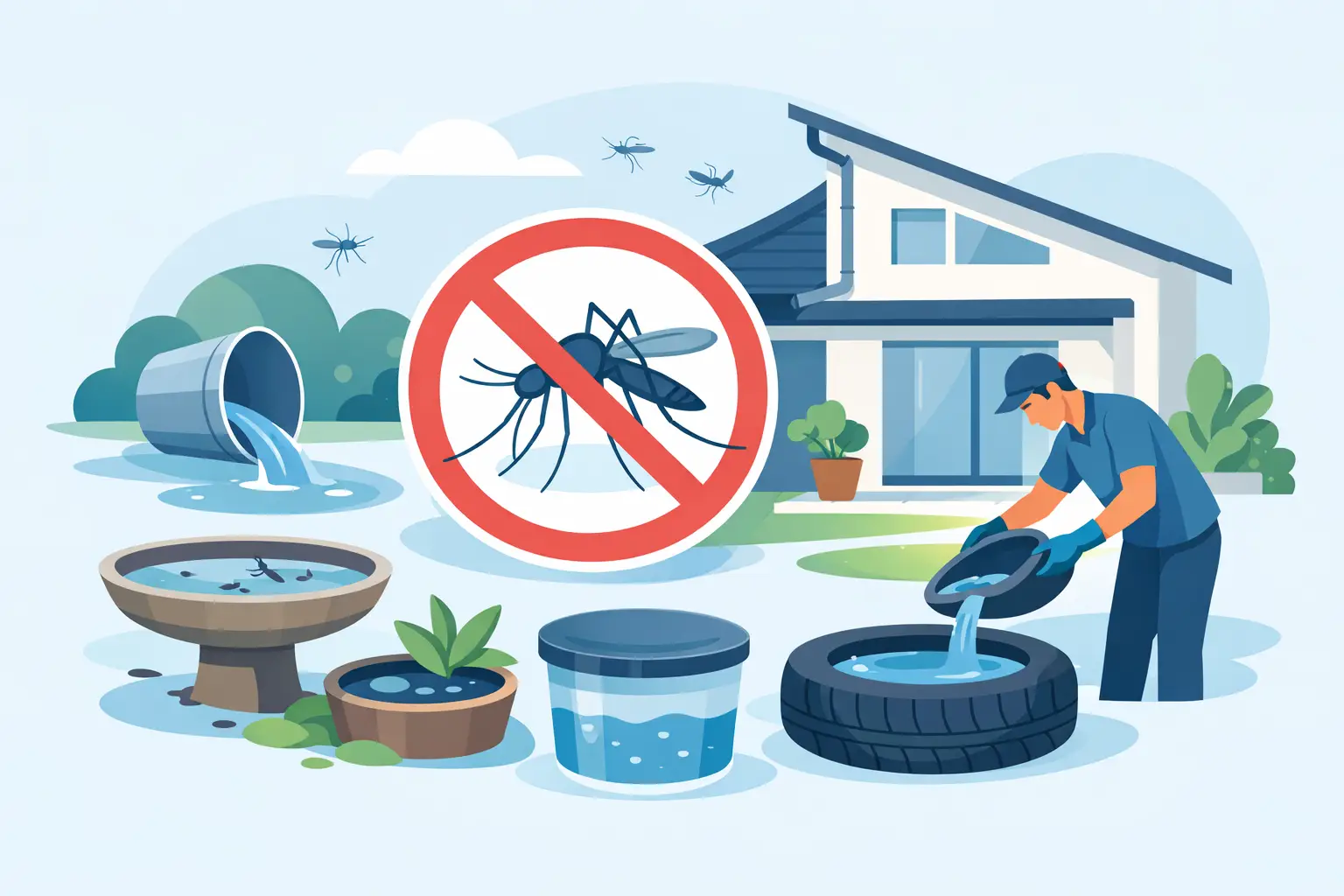
You do not need a swamp to have a mosquito problem. In Ontario, a few days of standing water in a clogged eavestrough, a forgotten toy bin, or a low spot in the yard can be enough to start the cycle. If you are wondering how to stop mosquito breeding, the real answer is not one big fix. It is a series of small, targeted corrections that make your property harder for mosquitoes to use.
That matters more than many homeowners realize. Mosquitoes are not just annoying around patios, decks, and play areas. They also raise concerns about bites, disrupted outdoor time, and exposure to insect-borne illness. If you want a yard that feels safer for kids, pets, and guests, breeding control is one of the smartest places to start.
How to stop mosquito breeding in your yard
Mosquitoes need water to lay eggs, but they do not need much of it. Even a shallow layer that sits for several days can become a breeding site. That is why the first step is not spraying everything in sight. It is finding where water collects and deciding whether it can be removed, drained, cleaned, or treated.
Walk your property after rainfall and again during a dry stretch. Some breeding areas are obvious, like buckets and bird baths. Others are easier to miss, including downspout elbows, tarps that sag, planter trays, corrugated window wells, and old wheelbarrows. In larger yards, breeding can also happen near tree holes, ditch edges, decorative water features, and shaded low areas that stay damp longer than the rest of the property.
The goal is simple – if water does not sit, mosquitoes lose one of the conditions they need to multiply.
Start with containers and small water sources
Most residential mosquito breeding happens in places homeowners can control fairly quickly. Empty buckets, watering cans, kiddie pools, toys, pet bowls left outside, and uncovered bins should all be checked regularly. If an item has to stay outdoors, store it upside down or under cover.
Bird baths and pet water stations are a bit different because they serve a purpose. In those cases, changing the water often matters more than just topping it up. Fresh water breaks the breeding cycle before larvae have time to develop. The same logic applies to outdoor plant saucers and decorative pots. If they hold water, they need attention every few days during peak mosquito season.
Rain barrels can also be a problem if they are not sealed properly. A tight lid and intact mesh over inlets and overflow points can make a major difference. If a barrel is useful to your property, you do not need to remove it. You just need to make sure it is not acting like a nursery for mosquitoes.
Fix drainage issues that keep water sitting
Some yards keep producing mosquitoes even when all the obvious containers are gone. That usually points to drainage. Water that pools beside the foundation, near fence lines, under decks, or in lawn depressions can support mosquito activity, especially in warm weather.
Sometimes the solution is straightforward, such as extending a downspout, cleaning an eavestrough, or regrading a small area so runoff moves away properly. In other cases, the fix may involve filling low spots, improving soil drainage, or adjusting landscaping that traps water. There is a trade-off here. Some improvements are inexpensive and immediate, while others take more planning and cost more up front. But if the same wet areas return after every rainfall, the long-term fix is usually worth it.
For Ontario properties with mature trees and uneven ground, drainage can be especially inconsistent. One part of the yard may dry quickly while another stays damp for days. Those micro-areas often explain why mosquitoes seem concentrated near one seating area or side of the house.
Areas homeowners often miss
When people think about how to stop mosquito breeding, they usually picture open standing water. The harder part is spotting hidden sources. Clogged eavestroughs are a common example. They collect organic debris, hold water, and sit out of sight until the mosquito pressure gets bad.
Tarps are another frequent issue. If they are covering firewood, equipment, or patio furniture and sag in the middle, they can hold enough water for breeding. Window wells, old tires, recycling bins without drainage, and even children’s sandbox covers can do the same thing.
Dense vegetation also plays a role, even when it is not a breeding site on its own. Mosquitoes rest in cool, shaded, humid areas during the day. That means overgrown shrubs, untrimmed hedges, and thick plantings near decks can make the property more comfortable for adult mosquitoes once they emerge. Trimming back those areas will not solve breeding by itself, but it does reduce shelter and makes other control measures more effective.
For a closer look at the difference between breeding habitat and daytime shelter, read Can Mosquitoes Breed in Grass?
Ponds, water features, and natural areas
Not every water source can or should be removed. Backyard ponds, ornamental features, and properties near natural wet areas need a different approach. Moving water is less attractive to breeding mosquitoes than stagnant water, so pumps and circulation can help. Keeping a pond balanced and maintained is usually better than letting it turn still, shallow, and debris-filled.
If your property backs onto a creek, marshy area, or drainage corridor, there is an it depends factor. You may not be able to control the source completely, but you can still reduce breeding opportunities on your side of the property and lower adult mosquito pressure around high-use areas. That is where targeted yard management and professional treatment can become much more practical than trying to fix every environmental condition at once.
When prevention at home is not enough
A lot of homeowners do the right things and still end up with too many mosquitoes. That does not mean the effort was wasted. Source reduction lowers pressure, but it does not always eliminate it. Mosquitoes can travel from nearby properties, wooded edges, drainage ditches, and unmanaged standing water you do not control.
That is usually the point where a professional plan makes sense. A tailored treatment program can target the areas where adult mosquitoes rest and breed without relying on a one-size-fits-all spray approach. For families using their yards daily, or for people planning outdoor events, that added layer of control can make the space more usable and more comfortable through the season.
This is especially true when the concern is not just nuisance bites, but protecting children, pets, and guests from the broader risks that come with mosquito exposure. In communities such as Kemptville, Smiths Falls, Brockville, and surrounding rural properties, larger yards and mixed landscape conditions can create more hiding spots and more moisture patterns than homeowners expect.
A practical routine that actually works
The best mosquito prevention plans are repeatable. Check your yard weekly during mosquito season, and always after heavy rain. Empty or refresh standing water, inspect eavestroughs and downspouts, look under decks and tarps, and pay attention to the spots that stay damp longest.
If you notice the same trouble areas returning, treat that as a property issue rather than a one-time cleanup task. Fixing grading, drainage, or storage habits usually has a better payoff than reacting to mosquito activity over and over. And if the yard still does not feel manageable, a property-specific treatment plan can help close the gap between basic prevention and reliable outdoor comfort.
At Mosquito Pros, that is the difference we focus on – not just spraying more, but targeting the right areas with a safer, lower-volume approach built around how the property actually behaves.
A mosquito problem often starts small and gets ignored until evenings outside become frustrating. Catch it early, stay consistent, and your yard has a much better chance of staying comfortable through the season.


