
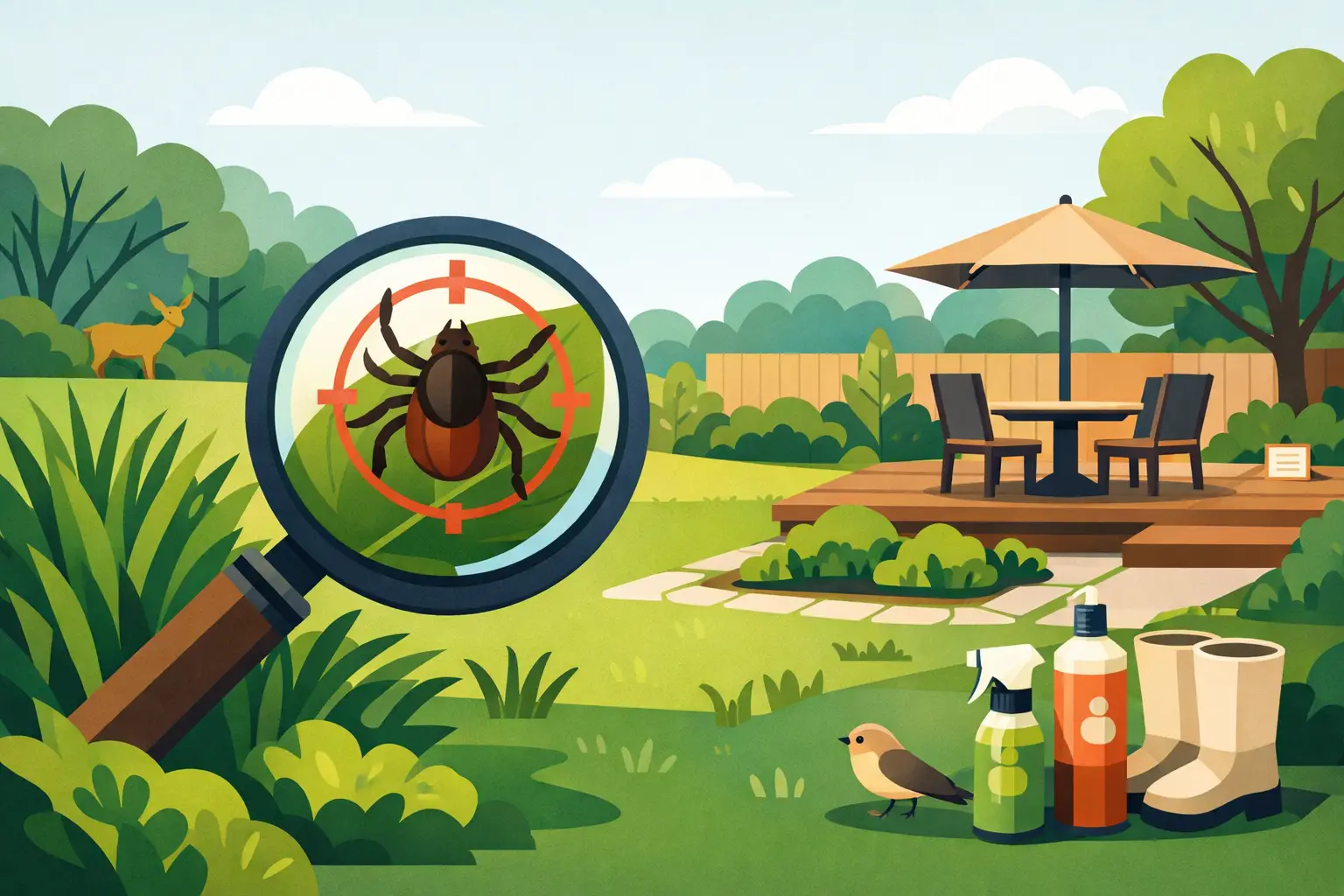
A tidy lawn can still hide ticks. That is what catches many Ontario homeowners off guard. When people think about lyme disease prevention in backyard spaces, they often picture deep woods or hiking trails, not the area beside the deck, the dog run, or the shady edge behind the shed.
The reality is simpler and more frustrating. Ticks do not need a large forest to become a problem. They need moisture, shade, low vegetation, and a way to hitch a ride on pets, wildlife, or people. If your yard backs onto brush, has leaf litter that builds up, or gives deer and rodents easy access, your own property can become part of the risk.
Why backyard tick exposure happens
Ticks are not flying in from nowhere. They move in because a property gives them what they need to survive. Damp areas, overgrown borders, dense ground cover, wood piles, tall grass, and unmanaged fence lines all create sheltered conditions. Add mice, chipmunks, deer, or even a dog that moves through untreated edges, and the chance of tick activity rises.
In Ontario, this matters because tick populations have expanded in many regions. Warmer conditions and active wildlife corridors mean homeowners are seeing tick pressure in places that used to feel low risk. That does not mean every backyard is equally dangerous, but it does mean casual assumptions can leave families exposed.
The biggest mistake is treating tick prevention like a one-step job. Cutting the grass helps, but it is rarely enough on its own. Effective protection usually comes from a combination of yard changes, daily habits, and property-specific treatment.
Lyme disease prevention in backyard areas starts with habitat control
If you want to reduce risk, start by making your property less attractive to ticks. This is the part homeowners can control right away, and it often has the biggest long-term impact.
Focus first on the transition zones in your yard. Ticks thrive where lawn meets brush, where ornamental beds stay damp, and where leaves collect under shrubs or along fences. Open, sunny space is less appealing to them than shaded, protected areas. That is why trimming back overgrowth and clearing accumulated debris matters more than many people realize.
Leaf litter should not be left to sit for long periods near play areas, patios, or walkways. The same goes for stacked branches, neglected wood piles, and unmanaged weeds behind structures. If your property has a naturalized edge, you may not want to remove it completely, and that is fair. There is a trade-off between maintaining a more natural landscape and reducing tick habitat. In those cases, the goal is to create separation between family-use areas and the denser edge zones where ticks are more likely to wait.
A gravel or mulch border between wooded edges and lawn can help define that separation. Keeping play sets, seating areas, and pet hangouts away from brushy perimeters also lowers contact risk. None of these changes guarantee a tick-free yard, but they reduce the conditions ticks rely on.
Pets can bring the problem indoors
For many households, the backyard risk starts with the dog. Pets move through grass, shrubs, and fence lines without thinking twice, then come inside carrying ticks into the home. That makes outdoor prevention and pet protection closely connected.
Regular tick checks are worth building into your routine, especially after pets spend time in shaded parts of the yard. Ask your veterinarian about preventives that fit your pet and your area. A product that works well for one animal may not be the best choice for another, so this is one of those situations where it depends on age, health, and lifestyle.
It also helps to keep pet rest areas clean and dry. If your dog has a favourite path along the back fence or under a hedge, that spot deserves extra attention because repeated animal traffic can turn a low-profile issue into a regular exposure point.
Daily habits matter as much as yard care
Backyard exposure often happens during ordinary routines. Gardening for 20 minutes, pulling weeds near a shed, or letting kids play along a wooded edge can be enough for tick contact. That is why prevention is not just about landscaping. It is also about what happens after time outside.
Check clothing, shoes, legs, waistlines, and behind the knees after yard work or play. For children, look carefully around the hairline, ears, underarms, and behind the legs. Showering after outdoor activity can help you spot ticks before they stay attached. Clothing can also be part of the plan. Long pants, socks, and lighter-coloured fabric make ticks easier to notice, though families will not dress that way every hot summer afternoon. Realistically, habits need to be practical enough to stick.
That is where routine beats perfection. A quick check every time you come in from the yard is more useful than a long list of protective steps nobody follows.
When professional yard treatment makes sense
There is a point where basic maintenance is not enough. If your property backs onto bush, has consistent shade, sees frequent wildlife traffic, or has had ticks found on people or pets, targeted yard treatment can make a meaningful difference.
Professional treatment is most effective when it is customized to the property rather than sprayed as a blanket service with no attention to layout. Ticks are not evenly distributed across a yard. They tend to gather in the cooler, sheltered areas where hosts travel. A property-specific approach focuses treatment where exposure risk is actually highest.
That matters for families who want protection without overapplying product. Lower-volume, targeted application can reduce unnecessary spray while still treating the areas that matter most. For homeowners with kids and pets, that balance is important. They want the yard to feel safer, but they also want to know the approach is thoughtful.
In places like Merrickville, Kemptville, Smiths Falls, and nearby communities where rural lots, tree lines, and mixed landscapes are common, one-size-fits-all treatment often misses the point. A compact suburban yard and a larger edge-heavy property do not carry the same risk pattern.
Timing changes the result
Treatment timing matters almost as much as treatment quality. Waiting until ticks are already being found regularly on pets or family members means you are reacting late. Early-season prevention gives better control because it addresses activity before the problem becomes routine.
That said, mid-season treatment can still be worthwhile. If your yard conditions support ticks, reducing exposure during peak outdoor months is still valuable. The key is not assuming you missed your chance. Prevention is seasonal, but it is not all-or-nothing.
Lyme disease prevention in backyard planning should be realistic
Homeowners often ask for the single best fix. There is not one. Tick prevention works best when you combine habitat reduction, routine checks, pet protection, and treatment where appropriate.
Some families can manage a lower-risk property with good maintenance and careful habits. Others need more support because of the way their yard is built or where it sits. If your home backs onto unmanaged brush or a wildlife corridor, your prevention plan should reflect that. If you host outdoor gatherings, have young children using the grass daily, or have pets constantly moving through the perimeter, the standard should be higher.
This is also why cheap, generic treatment can disappoint. If a service does not account for how you use the space, where ticks are likely to shelter, and how to reduce exposure without unnecessary application, you may be paying for activity rather than results. A more customized plan usually gives better value because it focuses on protection, not just process.
For homeowners who want stronger peace of mind, Mosquito Pros approaches yard treatment with that property-specific mindset, using lower-volume methods designed around the actual layout and pressure points of the space.
What to do if you find a tick in your backyard
Finding one tick does not always mean your yard is heavily infested, but it does mean you should pay attention. Check pets more often, inspect the areas where the tick was likely picked up, and look at the property conditions around those zones. Was the grass too long along the fence? Are leaves collecting behind the garage? Is there a shaded path that wildlife seems to use?
If ticks are found more than once, especially in the same part of the property, that is usually a sign that your backyard needs more than basic cleanup. Repeated findings suggest an active habitat pattern, not random bad luck.
The goal is not to make families afraid of their own yard. It is to make the yard more usable with fewer risks built into everyday outdoor time. The best prevention plans do not just react to ticks. They make the space less welcoming to them in the first place, while keeping the lawn, patio, and play areas safer for the people and pets who use them most.
A backyard should be where your family relaxes, not where you second-guess every trip outside. A few smart changes now can make the whole season feel a lot more comfortable.

