
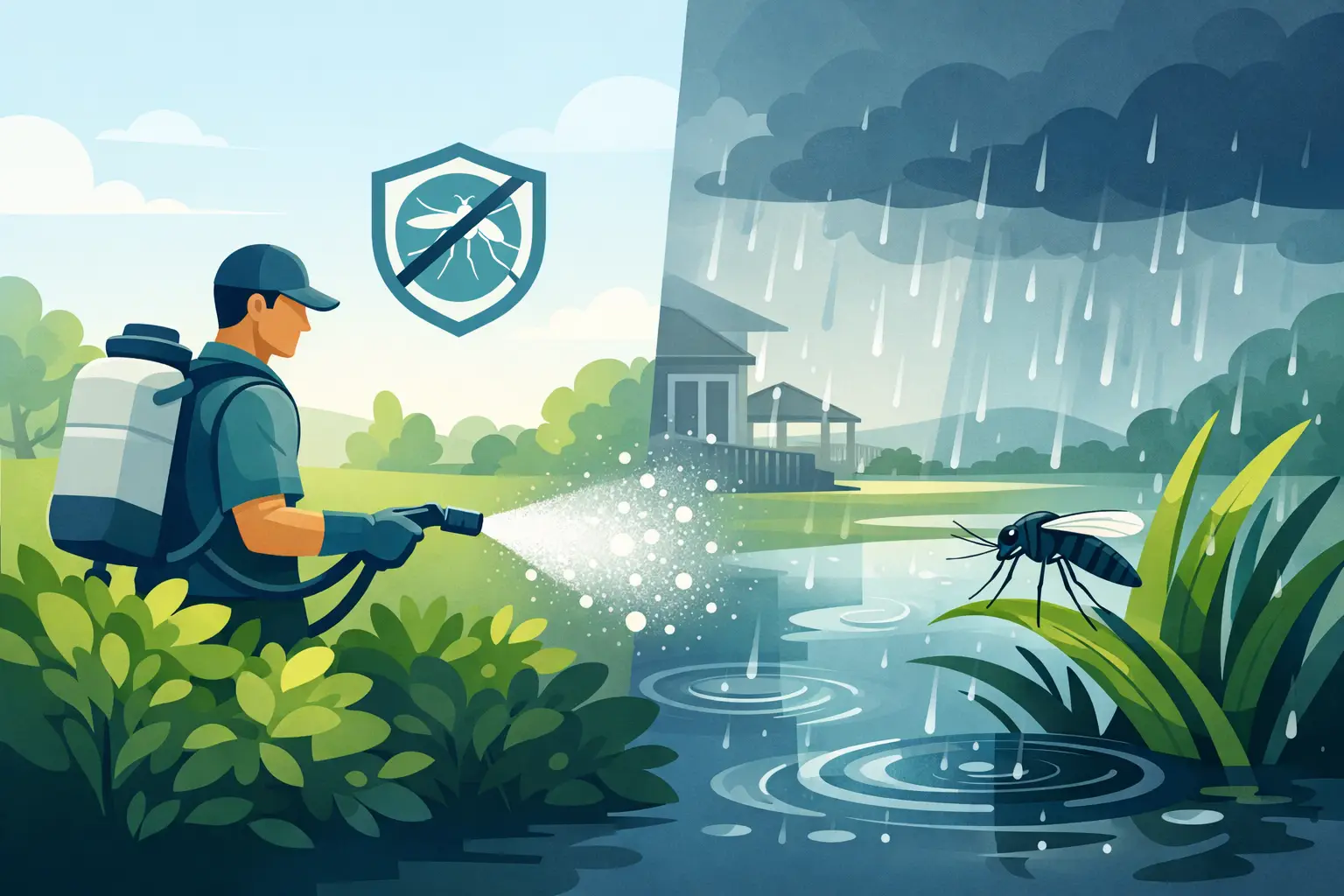
You book a mosquito treatment, the technician leaves, and then Ontario weather does what Ontario weather does – it rains. At that point, one question matters more than anything else: do mosquito treatments work after rain? The short answer is yes, often they do. But the real answer depends on when the rain falls, how heavy it is, what areas were treated, and how the application was designed in the first place.
That last part matters more than most people realize. A well-planned yard treatment is not just mist floating through the air. It is a targeted application to the places mosquitoes rest and breed – shaded foliage, dense perimeter growth, damp hiding spots, and problem areas around outdoor living spaces. When a treatment is applied properly, some rain does not automatically erase the results.
Do mosquito treatments work after rain or wash away?
Rain can affect mosquito control, but it does not always cancel it out. If the treatment has had enough time to dry and bond to leaves and other surfaces, light to moderate rain may have little impact on performance. That is because the product is meant to stay where mosquitoes land and rest, not disappear at the first sign of moisture.
The timing of the rain is usually the deciding factor. If a heavy downpour starts immediately after application, there is a better chance that some of the treatment will be diluted or displaced before it has settled properly. If rain arrives several hours later, the outcome is often very different. In that case, the treatment may still be doing its job.
This is also why homeowners sometimes get mixed messages from neighbours or online forums. One person says rain ruined their treatment. Another says their yard stayed comfortable all week. Both can be true, because not every rain event and not every treatment plan are the same.
What actually happens to mosquito treatments in wet weather
Mosquitoes do not spend most of their time flying across open lawns in direct sun. During the day, they usually rest in cool, humid, protected areas. Good treatments focus on those zones because that is where contact happens.
When those surfaces are treated correctly, the product can remain effective even after rainfall. Leaves, shrubs, fence lines, and other protected surfaces often still hold treatment better than people expect. On the other hand, standing water, runoff channels, or exposed surfaces can be more vulnerable to wash-off.
Rain also creates a second issue. Even if your barrier treatment remains effective, wet weather can lead to new mosquito activity by creating fresh breeding conditions. That means people sometimes blame the rain for washing away the treatment, when the bigger issue is that more mosquitoes are hatching after the storm.
In practical terms, both things can be true at once. A treatment may still be working, but rain can also increase pressure from newly active mosquitoes. That is one reason recurring service is often more reliable than treating only once and hoping for the best.
Light rain versus heavy rain
A brief shower is not the same as a thunderstorm. Light rain after the product has dried is usually less concerning than prolonged, intense rainfall with wind and runoff. Heavy rain has a greater chance of reducing residual effectiveness, especially in exposed areas or if it arrives too soon after service.
Rain right after treatment versus rain the next day
If rain starts within minutes of application, there is more reason to question how much product stayed in place. If it rains the next day, many treatments will still provide meaningful control. Drying time matters, which is why experienced technicians pay close attention to forecast windows before treating.
Why customized treatments hold up better
A one-size-fits-all spray program can leave gaps, especially on properties with dense vegetation, drainage issues, or unusually wet corners. A customized approach looks at where mosquitoes are likely to hide, where water tends to collect, and how the yard is actually used by the family.
That matters after rain because not every part of a property responds the same way. A sheltered cedar hedge may retain treatment well. A wide-open garden edge exposed to wind and runoff may not. A provider that understands the layout of the property can target the most valuable areas instead of overapplying product everywhere and hoping it sticks.
For families with children and pets, this is especially important. Better targeting means better control with less unnecessary spray. It also means the treatment strategy is based on real mosquito behaviour, not just coverage for the sake of coverage.
When rain should make you call your provider
Not every wet-weather treatment issue requires a retreatment, but some situations deserve a closer look. If your property had a strong storm almost immediately after service and mosquito activity rebounds quickly, it is worth contacting your provider. The same goes for yards with obvious pooling water, drainage problems, or a sudden spike in activity after several days of rain.
A good company will not treat rain as a mystery. They should be able to explain whether the weather likely affected results, whether breeding conditions changed, and whether follow-up service makes sense.
This is particularly helpful during Ontario mosquito season, when humidity, tree cover, and regular summer storms can create ideal conditions. Homeowners in places like Kemptville, Smiths Falls, and Brockville often deal with a mix of wooded lots, riverside moisture, and shaded yards that can stay mosquito-friendly long after a storm passes.
What homeowners can do after rain
If you are wondering whether your treatment still works, avoid judging it the moment the rain stops. Give the yard a bit of time to settle, then watch mosquito activity around dusk, shaded seating areas, and entry points near shrubs or fencing. That gives a better picture than checking in the middle of a windy afternoon.
It also helps to reduce breeding sources wherever possible. Empty containers, refresh birdbaths, clear clogged eavestroughs, and deal with standing water around play structures, planters, or tarps. Barrier sprays are highly effective, but they work best as part of a broader control strategy. If water keeps collecting, mosquitoes can keep returning.
If you are planning a backyard gathering, timing matters even more. Rain before an event can trigger mosquito activity, so waiting until the last minute to think about treatment is risky. Event-focused mosquito control usually works best when the property is assessed ahead of time, with the weather and the layout both taken into account.
The bigger question is reliability, not perfection
Many homeowners ask about rain because they want certainty. That is understandable. If you are trying to protect kids in the yard, make evenings on the deck more comfortable, or reduce exposure for pets, you want to know the service will hold up.
The honest answer is that outdoor pest control is never about perfection in every condition. It is about reliable reduction of mosquito pressure through smart timing, proper application, and ongoing management. Weather is part of the equation, but it is not the whole equation.
That is why professional mosquito control should be judged by how it performs over time, not by a single rain event. If the plan is tailored to the property, applied carefully, and supported by follow-up when needed, rain does not automatically undo the value of the service.
At Mosquito Pros, that property-specific approach matters because every yard behaves differently after wet weather. Dense hedges, open lawns, marshy edges, pet areas, and outdoor entertaining spaces all require different attention if the goal is real protection instead of a generic spray-and-go visit.
So, do mosquito treatments work after rain?
Yes – in many cases, mosquito treatments still work after rain, especially if the product had time to dry and the application was targeted properly. Heavy rain immediately after treatment can reduce effectiveness, and ongoing wet conditions can create new mosquito pressure even when the original treatment is still active.
That is the difference homeowners need to understand. Rain does not always mean failure. Sometimes it means the treatment needs time. Sometimes it means the property needs a smarter control plan. And sometimes it means a follow-up conversation is the best next step.
If your yard is the kind that stays damp, shaded, and buggy after every storm, the right solution is not guessing. It is having a treatment plan built for how your property actually handles rain, so your family and pets can spend more time outside with fewer bites and fewer worries.
Trying to understand the sudden increase in bites after a storm? Read why mosquitoes become more active after rain and how standing water creates new breeding sites.
Does Your Property Need Treatment After Rain?
Light or moderate rain does not automatically mean a properly applied barrier treatment has failed. Results depend on rainfall intensity, drainage, vegetation and the time since application. Read why mosquito activity rises after rain, or explore targeted mosquito control in Eastern Ontario.


