
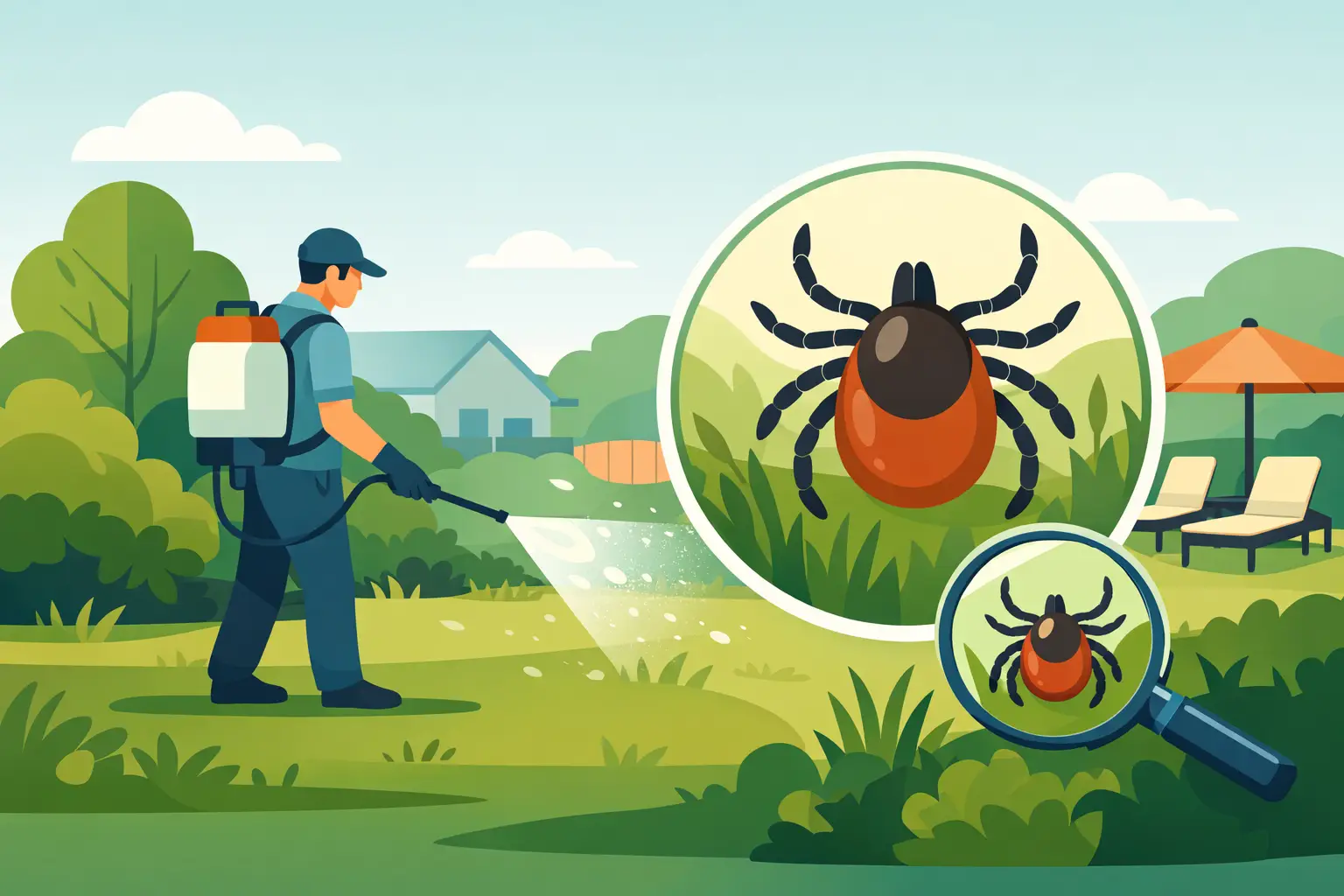
The first warm weekend of spring is when most people notice the same thing at once – kids head outside, dogs start roaming the yard again, and suddenly tick season is back on your radar. If you are wondering when should yards be sprayed for ticks, the short answer is early in the season, before tick activity builds and before your family and pets are spending long stretches outdoors.
That timing matters more than most homeowners realize. Tick control works best when it is proactive, not reactive. Waiting until you find ticks on a dog, spot one on a child’s clothing, or hear that Lyme disease cases are rising nearby usually means they have already become active around your property.
When should yards be sprayed for ticks in Ontario?
In Ontario, yards should generally be sprayed for ticks in spring, with follow-up treatments through the active season as needed. For many properties, that means starting in April or May, depending on weather, snow melt, and how quickly temperatures warm up. A mild spring can push tick activity earlier. A late, cold season can delay it somewhat, but not enough to justify waiting until summer.
The goal is to treat when ticks are active and looking for hosts, but before populations around your yard become harder to manage. In practical terms, that usually means booking your first treatment as outdoor use is ramping up, not after the problem is obvious.
For many homeowners, the best window is early to mid-spring, followed by repeat treatments on a schedule that matches the property. Heavily wooded lots, damp edges, tall grass, and yards backing onto trails or natural areas often need a more active plan than open, sunny properties with limited cover.
Why early treatment usually works better
Ticks do not appear out of nowhere in the middle of summer. They become active as conditions allow, often hiding in shaded, moist areas like leaf litter, brush lines, ground cover, woodpiles, and fence edges. Those are the places where people and pets brush past them without noticing.
Spraying early helps reduce exposure before your yard reaches peak use. That matters if you have children playing in the grass, a dog that patrols every corner of the property, or a backyard that turns into the main gathering space once the weather improves.
There is also a safety and comfort benefit to getting ahead of the problem. Homeowners tend to feel much more confident using their yard when they know treatment has already been done at the right time, rather than wondering whether every bite, crawl, or dark speck on a sock is a tick.
It depends on your yard, not just the calendar
A calendar date alone does not tell the full story. The best answer to when should yards be sprayed for ticks depends on how attractive your property is to ticks in the first place.
Yards with dense shrubs, wooded borders, long grass, stone walls, and damp shaded sections are more likely to support tick activity. The same goes for properties that regularly see deer, mice, or other wildlife. If your backyard backs onto bush, open fields, ravines, or unmanaged land, your risk is often higher than a yard in a newer subdivision with little natural cover.
Pets also change the equation. Dogs move through brush, fences, garden beds, and perimeter areas where ticks wait. Families with active dogs often benefit from earlier and more consistent treatments because the yard is being used differently than a property with no pets.
This is why a custom treatment plan matters. A generic one-size-fits-all schedule can miss what is actually happening on your property.
Where tick treatments are usually focused
Tick control is not just about spraying the middle of the lawn. In many cases, the highest-value treatment areas are the edges and transition zones where ticks live and travel.
That often includes fence lines, wooded borders, ornamental beds, leaf litter, tall grass, around sheds, under decks, and the shady perimeter where lawn meets brush. These are the zones where ticks wait for hosts and where effective barrier treatment can make the biggest difference.
A targeted approach matters because it improves results without overapplying product across the entire property. For families and pet owners, that is often exactly what they want – effective control with a lower-volume, more precise application.
How often should tick yards be sprayed?
Most yards do not need one treatment and then nothing else all season. Tick pressure changes over time, and weather, shade, moisture, and surrounding habitat all affect how long protection lasts.
For many Ontario properties, recurring seasonal treatments make more sense than a single visit. The exact timing depends on the property and the treatment method, but regular service through tick season helps maintain protection when your family is actually outside using the yard.
If your property has higher exposure, such as backing onto wooded land in places like Kemptville, Smiths Falls, or Merrickville, a recurring plan is often the more reliable option. If exposure is lower, a provider may recommend a simpler schedule. The right answer is based on risk, not guesswork.
Weather matters more than people think
The best time to spray is not only about the season. Day-to-day weather also affects treatment success.
A good treatment window usually means dry conditions, limited wind, and enough time for the application to settle properly. Heavy rain right after a treatment can reduce effectiveness, and windy conditions make precise application harder. Extreme heat is not always ideal either, especially when the goal is to target shaded areas where ticks are active rather than blasting the whole yard in poor conditions.
That is one reason professional scheduling can be helpful. It is not just about showing up in May. It is about choosing the right timing within the season so treatment is applied where it works best.
Should you wait until you see ticks?
Usually, no. By the time you are seeing ticks regularly, they have already established activity around your property or are being brought in by pets, wildlife, or family members moving through nearby habitat.
Ticks are small, easy to miss, and often noticed only after contact. That makes them different from some other yard pests. Homeowners may think they have no tick issue simply because they have not seen one yet. In reality, the question is often exposure risk, not visible infestation.
If your yard has the right habitat and your area has known tick activity, waiting for proof can mean waiting too long. A preventive treatment plan is usually the better move if you are serious about reducing risk.
What homeowners can do between treatments
Professional yard treatment is one part of tick control, but it works best alongside basic property maintenance. Keeping grass trimmed, reducing brush, clearing leaf litter from edges, and limiting overgrown ground cover can make the yard less hospitable to ticks.
It also helps to check pets after time outside, especially around ears, legs, paws, and under collars. Families should get into the habit of doing quick clothing and skin checks after playing near wooded edges or garden areas. These small steps support the treatment plan and reduce the chance of a tick hitching a ride indoors.
Still, maintenance alone is often not enough on higher-risk properties. If ticks are coming in from surrounding habitat, a professional barrier treatment adds a level of protection that mowing and cleanup cannot provide on their own.
Is tick spraying safe for families and pets?
This is usually the biggest question after timing, and understandably so. Homeowners want effective tick control, but they also want to know their children, pets, and outdoor spaces are being treated responsibly.
A professional service should explain where treatments are applied, how much product is used, and when it is safe to return to the treated area. Lower-volume, targeted applications are often a better fit for family properties than broad, heavy-handed spraying. Precision matters. It supports safety, improves efficiency, and avoids treating areas that do not need it.
That is especially important for households trying to balance disease prevention with peace of mind. The best service is not just about killing ticks. It is about reducing risk in a way that fits real family life.
The best time to book is before you need it
If you are asking when should yards be sprayed for ticks, you are already asking at the right time. The smartest approach is to book before peak yard use, before tick encounters become common, and before your calendar fills with spring and summer plans.
For homeowners in Ontario, early-season treatment followed by a property-specific schedule is usually the most practical way to protect outdoor spaces. Whether you have a dog that treats the backyard like a racetrack, kids who live outside all summer, or guests coming for a backyard gathering, timing your tick control properly gives you a much better chance of enjoying the season with fewer worries.
A safer yard rarely happens by accident. It starts with acting early enough that prevention still has room to work.

