
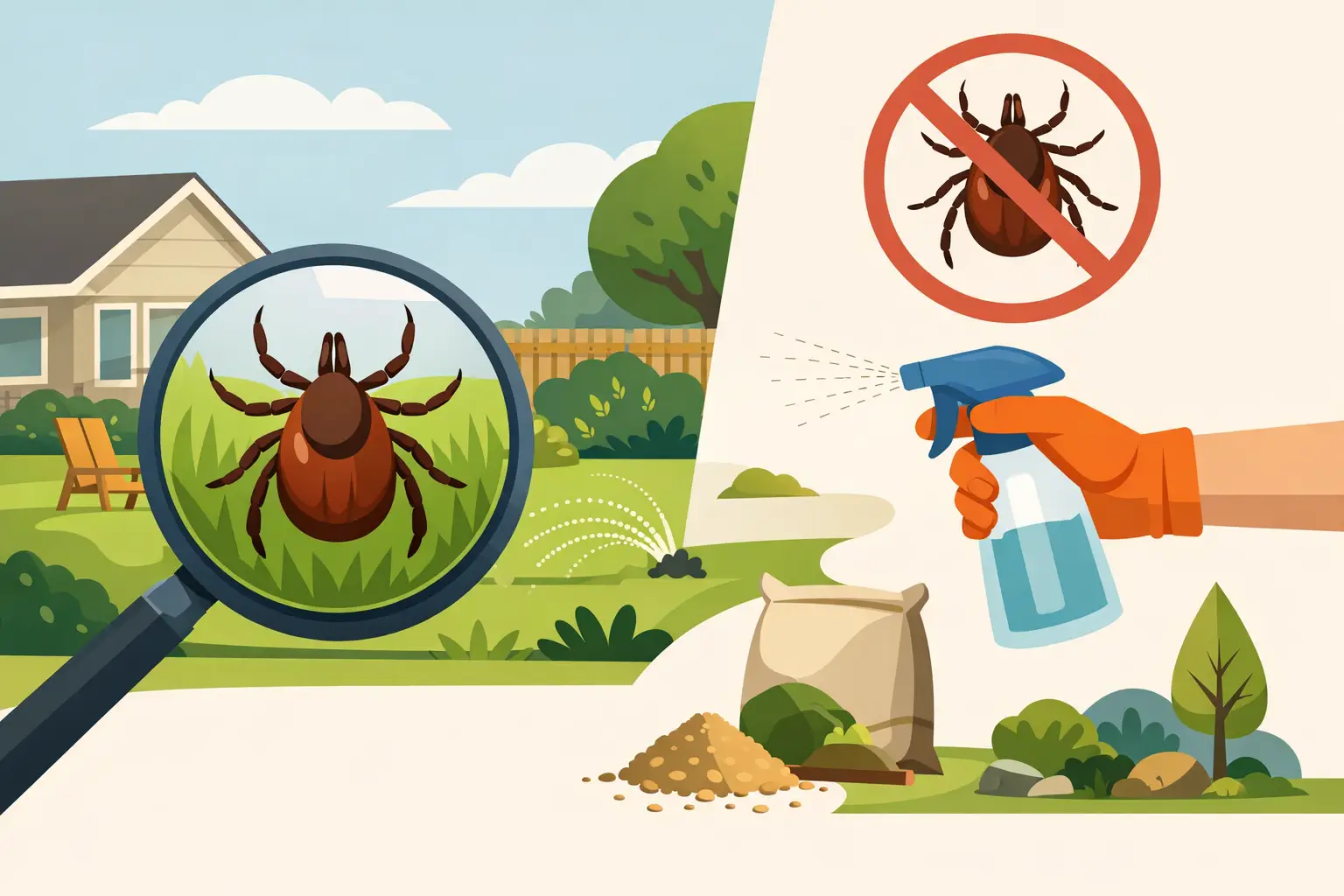
A tidy lawn can still have ticks. That catches a lot of Ontario homeowners off guard, especially when the yard looks clean, the kids are outside, and the dog has the run of the property. If you are wondering how to prevent ticks in yard spaces around your home, the answer usually is not one big fix. It is a mix of habitat control, routine maintenance, and targeted protection where ticks actually live.
Ticks are not like flying pests that move through a yard evenly. They wait in shaded, humid areas and latch onto people or pets as they pass. That means the highest-risk parts of your property are often the edges, the overgrown sections, and the spots where lawns meet gardens, brush, stone, or wooded areas. Once you know where ticks prefer to hide, prevention gets a lot more practical.
Why ticks show up in the first place
Ticks need moisture and cover. They do not do well in hot, exposed areas for long periods, which is why they are more commonly found in leaf litter, tall grass, dense groundcover, and shaded perimeter zones. If deer, rodents, or other wildlife move through your yard, that adds another layer of risk because ticks often hitch a ride in with those hosts.
In many Ontario properties, the issue is not the middle of the lawn. It is the transition zones around the yard. A back fence line, the area behind a shed, a garden bed with heavy mulch, or a stretch of untrimmed growth beside a tree line can all support tick activity. If your property backs onto fields, forest, trails, or unmanaged land, prevention matters even more.
How to prevent ticks in yard spaces naturally and effectively
The goal is to make your property less attractive to ticks and harder for them to survive. That starts with yard conditions.
Keep grass cut regularly, but do not assume mowing alone solves the problem. Short grass helps reduce humidity at ground level, yet ticks often stay closer to perimeter areas where maintenance is less consistent. If there are sections of the yard you rarely use, it can be tempting to let them grow wild. That may be fine for aesthetics, but it also creates better shelter for ticks.
Leaf litter should be removed, especially along fence lines, under shrubs, and around wooded edges. Damp leaves hold moisture and provide exactly the kind of cover ticks need. The same goes for brush piles and stacked yard debris. If you have been meaning to clean up that back corner of the property, it is worth doing.
Pruning matters too. Dense shrubs and low-hanging branches create shade and trap moisture near the ground. Opening those areas up allows more sunlight and airflow, which makes the space less hospitable to ticks. This is one of the simplest ways to improve a yard without changing how it looks or functions.
Focus on the edges, not just the lawn
If you want real progress, focus on where people and pets move between maintained and unmanaged areas. That includes the line between lawn and woods, paths near long grass, and routes pets use along the perimeter. Ticks wait on vegetation and low growth, then grab onto anything brushing past.
Creating a dry barrier can help. In some properties, a strip of gravel or stone mulch between wooded areas and lawn reduces the easy movement of ticks into active parts of the yard. It is not a magic fix, but it can support a broader prevention plan. The same logic applies to play areas and patios. The more separated they are from dense vegetation, the better.
Landscaping choices that lower tick pressure
Some yards naturally hold more moisture than others, so prevention is partly about design. Groundcover that stays thick and damp can increase risk compared with open lawn or more sun-exposed planting beds. Heavy, deep mulch in shaded areas can also create a better environment for ticks.
That does not mean your yard has to look bare. It means choosing lower-risk layouts around the spaces you use most. Keep children’s play structures away from tree lines. Place seating areas away from brushy edges. If you have ornamental grasses or dense plantings, avoid letting them crowd walkways or access points.
Wildlife management also matters. Deer-resistant planting choices, secure garbage storage, and reducing rodent shelter can all help limit the animals that carry ticks onto the property. This part is not always quick, and results depend on the neighbourhood, but it is worth considering if you have repeated tick issues.
Pets can bring ticks into the yard and the house
For many families, the first sign of a yard problem is a tick found on the dog. Pets move through the exact places ticks prefer, then bring them back toward the house, deck, or patio. That is why yard prevention and pet prevention should work together.
Check pets after they have been outside, especially around the ears, neck, toes, underbelly, and tail area. Stay current with veterinarian-recommended tick prevention as well. A treated yard reduces exposure, but it should not replace protection for pets that spend time outdoors.
It also helps to think about where pets rest. If your dog likes lying under shrubs, beside a fence, or near a wooded edge, those are smart places to inspect and maintain more closely. In many homes, the pet route tells you exactly where the risk is highest.
When DIY tick prevention is enough and when it is not
Basic yard care goes a long way on lower-risk properties. If your lot is mostly open, sunny, and well maintained, you may be able to keep tick pressure manageable with regular mowing, cleanup, pruning, and pet checks.
But some properties need more than maintenance. If your yard backs onto forest, has heavy shade, includes long perimeter zones, or has ongoing wildlife traffic, ticks can keep returning even when the lawn looks great. The same is true if someone in the home is especially concerned about Lyme disease risk, or if children and pets use the yard every day.
That is where professional treatment becomes practical. A property-specific application targets the zones where ticks actually live instead of treating the yard like one flat, uniform space. That matters because overapplying product is not the same as getting better results. In fact, smart placement and lower-volume precision often make more sense for family yards.
What a professional tick treatment should do
A good treatment plan should start with the property itself. Shade, moisture, vegetation density, edge habitat, pet movement, and nearby unmanaged land all affect where ticks are most likely to be active. A one-size-fits-all approach misses those differences.
The most effective service focuses on high-risk harbourage areas and creates a protective barrier around the places people actually use. That gives homeowners better coverage without unnecessary blanket spraying. For families who care about child and pet safety, that level of customization matters.
In towns like Kemptville, Smiths Falls, and Brockville, where many properties sit near fields, trails, or wooded spaces, local conditions can change the level of tick pressure from one yard to the next. That is why treatment plans should match the property, not just the postal code.
Seasonal timing makes a difference
One reason tick prevention fails is that people wait until they find several ticks before acting. By then, the conditions that support them have already been in place for weeks. Prevention works best when it starts early and continues through tick season.
Spring cleanup is important, but do not stop there. Summer growth can recreate the same shaded, damp conditions that were cleared in April or May. Mid-season trimming, leaf removal in problem spots, and routine inspections help keep the yard from sliding back into tick-friendly territory.
If you are booking treatment, earlier is usually better than later. It is easier to reduce exposure proactively than to chase a problem after it becomes obvious.
A safer yard is usually a more usable yard
The best tick prevention plans do not just reduce pests. They make the yard easier to enjoy. Cleaner edges, better airflow, trimmed plantings, and protected activity zones all help create outdoor spaces that feel more comfortable for families, guests, and pets.
If you have been searching how to prevent ticks in yard areas, the most useful answer is this: control the habitat first, protect the high-traffic zones, and get help when the property itself keeps working against you. For many homeowners, peace of mind starts when the yard is treated like a real risk area instead of just a patch of grass.
A few smart changes now can make the rest of the season feel a lot more open, comfortable, and safe.

