
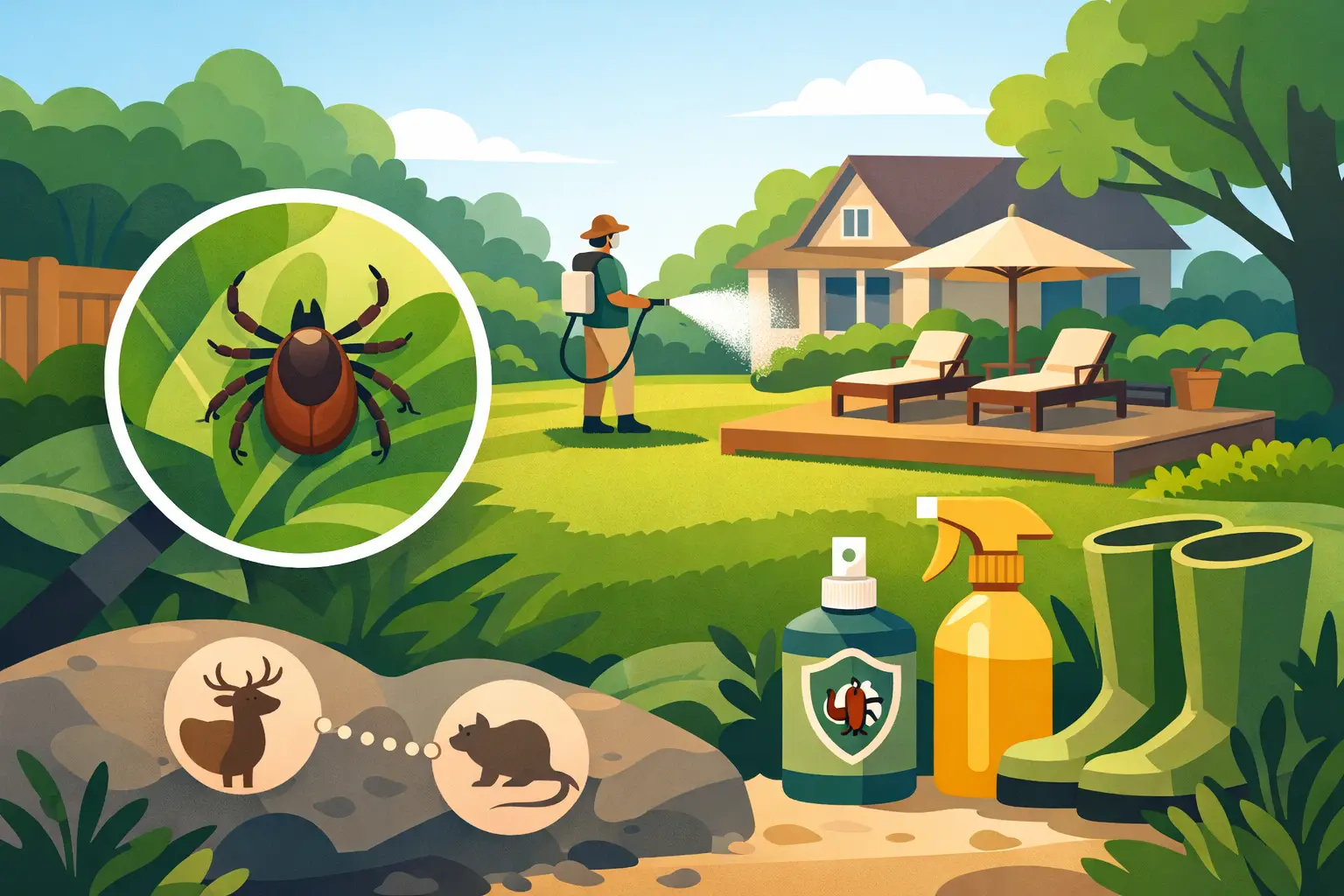
A tidy lawn can still hide ticks. That catches a lot of Ontario homeowners off guard, especially when the yard looks well kept and the kids or dogs are outside every day. Real lyme disease yard prevention is not about making your property look perfect. It is about reducing the shaded, humid, low-traffic areas where ticks survive and improving the parts of your yard where your family actually spends time.
Ticks do not need a wild forest to become a problem. They move in from wooded edges, brush piles, unmowed boundaries, and the animals that pass through your property. If you back onto trees, trails, overgrown fields, or even a neighbour’s unmanaged lot, your risk can be higher than you think. That is why prevention works best when it is practical, targeted, and built around how your specific yard is used.
What lyme disease yard prevention really means
The goal is not to eliminate every tick from the environment. That is not realistic. The goal is to reduce tick activity where exposure is most likely – around play areas, patios, dog runs, garden paths, fence lines, and the transition zones between lawn and dense vegetation.
That matters because Lyme disease risk is tied to contact. The fewer ticks that make it into your outdoor living space, the lower the chance that a child, guest, or pet brings one inside attached to clothing or fur. Good prevention lowers pressure on the property and makes outdoor routines safer.
There is also a timing issue. Many homeowners wait until they spot a tick on a person or pet. By then, the property may already have a pattern – wildlife movement, damp cover, and untreated harborage areas that are helping ticks persist. Prevention is stronger when it starts before tick activity peaks and continues through the season.
Start with the places ticks like most
Ticks are vulnerable to heat and dry conditions, which is why they prefer shaded, moist cover. The problem spots are rarely the middle of a sunny lawn. They are the edges and hiding zones around it.
Look closely at the perimeter of your yard. Leaf litter under hedges, tall grass along fencing, overgrown garden borders, stacked wood in shade, and brushy patches near trees all create the kind of protected environment ticks use to wait for hosts. If your dog cuts through the same back corner every day, or your kids take a shortcut along a wooded edge, those routes deserve extra attention.
You do not need to strip your yard bare to make it safer. In fact, aggressive clearing is not always the best answer if it leaves soil exposed or ruins the way you use the property. The better approach is selective reduction. Trim back overgrowth, remove unnecessary debris, and create clearer separation between dense natural areas and active family space.
Landscaping changes that make a real difference
Some of the most effective tick prevention steps are simple property maintenance decisions. Keep grass cut consistently, especially in lower-use areas that tend to get skipped. Rake up leaf litter in spring and fall. Thin out groundcover where it crowds walkways or seating areas. Move wood piles away from the house and away from places where children or pets play.
If your yard borders a wooded or brushy area, a dry barrier can help. Materials such as mulch or gravel can reduce the direct transition from thick vegetation into lawn or patio space. It is not a magic fix, but it can make the edge less inviting and easier to monitor.
Wildlife management matters too. Deer, rodents, and other animals can carry ticks onto a property. Bird feeders placed close to lounging areas, brush piles that attract small animals, and easy shelter under sheds can all contribute to the problem. Prevention sometimes means making the yard less comfortable for the hosts that move ticks in.
Why DIY yard prevention has limits
Homeowners can absolutely reduce risk through maintenance and awareness. But there is a point where mowing, trimming, and tidying stop being enough.
Ticks are small, mobile, and often concentrated in the places people do not treat properly. A general spray from the hardware store may not reach the right zones or last through changing weather. On the other hand, overapplying product across the whole property is not a smart answer either, especially when families want to be cautious around kids, pets, and outdoor living areas.
That is where targeted professional treatment makes sense. A property-specific approach focuses on the likely tick harborage areas instead of treating every inch the same way. That can improve results while reducing unnecessary spray.
For families comparing options, this is one of the biggest differences between a generic pest program and a yard plan built around tick exposure. The question is not just what gets sprayed. It is where, how much, and why.
Professional tick control should fit the property
No two yards carry the same risk. A fenced suburban lot with full sun is different from a shaded rural property backing onto bush. A family with dogs that roam the perimeter has different needs than a couple who mainly uses a patio. Good lyme disease yard prevention should reflect that.
A custom treatment plan typically starts with the high-risk zones – wooded edges, under-deck shade, fence lines, ornamental plantings, and damp perimeter areas. Those are the locations where tick activity tends to build. Treating them strategically can help reduce contact where it is most likely to happen.
This is also where homeowners should ask better questions. Is the treatment family-conscious? Is it designed for recurring seasonal control instead of a one-time reaction? Is the provider adjusting the plan based on layout, vegetation, and activity patterns? Those details matter more than broad promises.
For many households in areas like Kemptville, Smiths Falls, Brockville, and surrounding communities where properties often back onto natural space, tick prevention has to account for the reality of local outdoor living. Big yards, tree lines, pets, and frequent time outside all change the risk picture.
Pets need their own layer of protection
Dogs are often the bridge between tick habitat and the home. They run the fence line, nose through shrubs, and rest in shady spots where ticks are active. Even with a well-managed yard, pets should have veterinarian-recommended tick prevention during the season.
This is not an either-or choice. Yard treatment lowers the number of ticks on the property. Pet protection helps prevent attachment if exposure still happens. Together, they create a stronger barrier than either step alone.
The same thinking applies to people. If your family spends time gardening, playing near wooded edges, or walking through long grass, clothing checks and full-body tick checks are still part of the routine. Yard prevention reduces risk, but it does not replace common-sense habits.
The best time to act is earlier than most people think
Tick season does not begin the day you notice a bug on a sock. Activity can start earlier in the season than many homeowners expect, and it can continue well into fall depending on temperatures. Waiting for a visible problem usually means you are behind it.
The strongest approach is preventative. Get the property assessed early, deal with the obvious harborage areas, and put a treatment plan in place before family routines are in full swing. If you host outdoor events, have children playing outside daily, or use the yard heavily with pets, the benefit is not just comfort. It is peace of mind.
Mosquito Pros approaches outdoor pest control this way because lower-volume, targeted treatment tends to make more sense for families than broad, one-size-fits-all spraying. The objective is clear – reduce exposure without treating more than the property actually needs.
What a safer yard really looks like
A safer yard is not necessarily a bare one. It is a yard where the high-risk edges are managed, the shaded hiding places are reduced, and the treatment plan matches the layout. It is a property where children can play, guests can gather, and dogs can roam with less worry about what is waiting in the grass line.
That kind of prevention is rarely built from one single step. It comes from layering smart landscaping, routine monitoring, pet protection, and targeted seasonal control. If your yard has natural edges, dense planting, or regular wildlife traffic, a more customized plan is usually worth it.
If you are thinking about tick control this season, trust what the yard is telling you. The places that feel damp, shaded, and slightly overlooked are often the places that need the most attention.

