
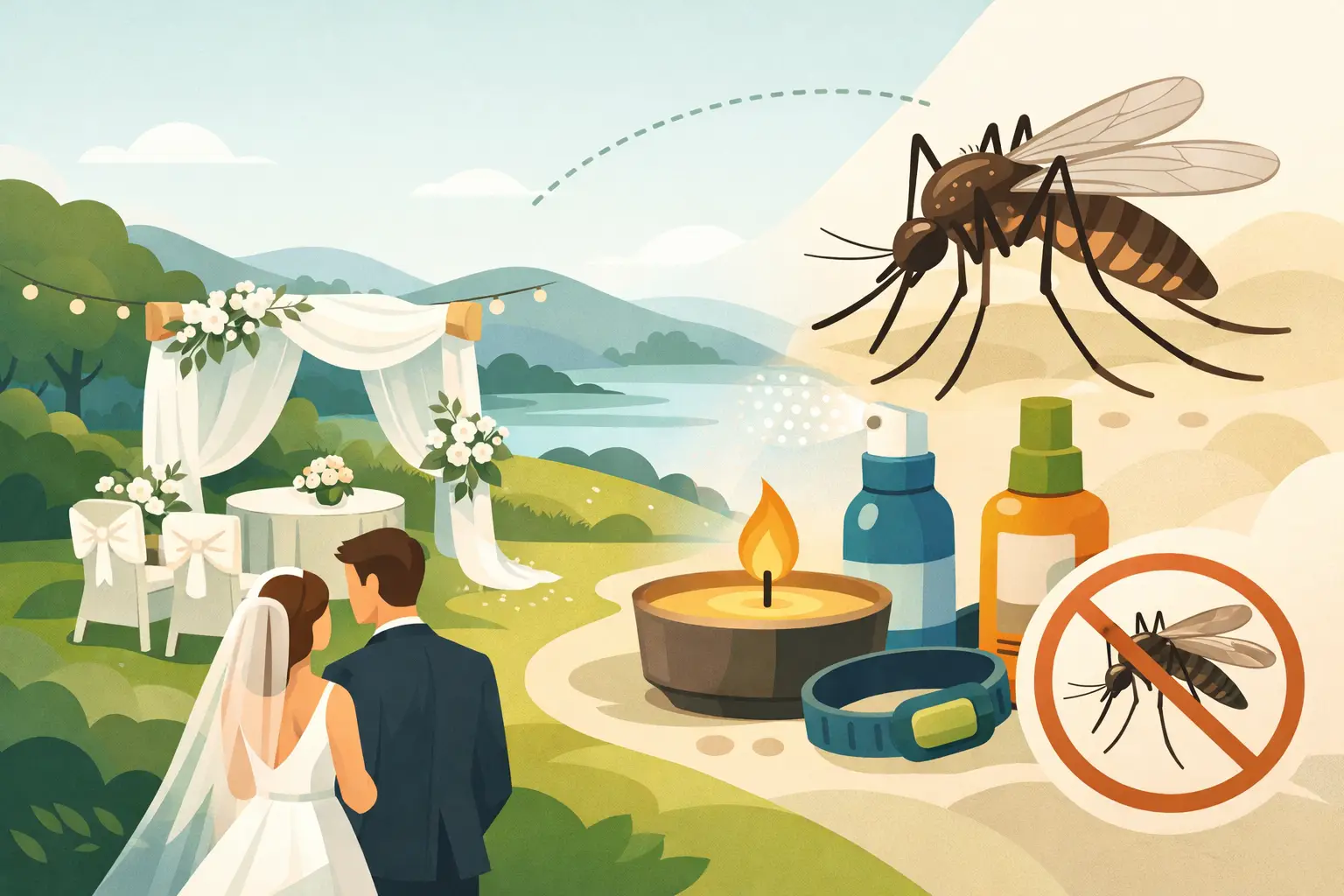
The ceremony starts, the photos are perfect, and then the swatting begins. Few things pull attention away from an outdoor celebration faster than mosquitoes. If you are planning a backyard reception, tented estate wedding, or rural venue event, outdoor wedding mosquito prevention needs to be part of the plan as early as flowers, seating, and catering.
In Ontario, mosquito pressure can change quickly depending on rain, shade, standing water, and the time of day. That means a beautiful property is not always a comfortable one. The good news is that with the right preparation, you can significantly reduce mosquito activity and give guests a better experience from the first arrival to the last dance.
Why outdoor wedding mosquito prevention matters
A few mosquitoes may sound like a minor nuisance until you picture guests in formalwear trying to enjoy dinner, speeches, and dancing while constantly brushing bugs away. Comfort matters at weddings because people stay longer, mingle more, and actually enjoy the space when they are not distracted.
There is also the health side of the issue. In Ontario, mosquitoes are more than an annoyance. They can expose people and pets to insect-borne risks, and that concern feels more personal when children, older relatives, and families are attending. A prevention plan helps protect the atmosphere of the event, but it also supports peace of mind.
For outdoor venues near trees, hedges, water features, gardens, or open countryside, mosquito activity often builds in exactly the spots guests gather – shaded cocktail areas, lawn seating, photo backdrops, and the perimeter of tents. That is why prevention works best when it is planned around the property itself rather than treated like a last-minute add-on.
Start with the site, not the spray
Good outdoor wedding mosquito prevention starts with understanding where mosquitoes rest and breed. They are drawn to damp, shaded, protected areas. If a property has dense shrubs, low tree cover, wet grass, drainage issues, bird baths, planters that collect water, or decorative containers left after rain, those conditions can support mosquito activity even on an otherwise well-kept site.
Walk the venue at the same time of day the wedding will happen. A location that feels fine at noon may become much more active around late afternoon and dusk. Pay attention to edges of the property, not just the ceremony space. Mosquitoes often move in from tree lines, hedges, fence rows, and damp shaded corners.
This is where hosts can make practical changes before treatment is even discussed. Empty standing water, trim overgrowth where possible, and keep traffic areas open and dry. If there is a choice between placing cocktail hour beside dense shrubbery or in a more open breezy section of the property, the more exposed area is usually the better call.
Timing makes a bigger difference than most people expect
One of the biggest mistakes with wedding mosquito control is waiting until the week of the event to think about it. That can still help, but it limits your options.
The most effective approach is to assess the property ahead of time and schedule treatment close enough to the event to provide strong coverage, without leaving it to the last possible moment. Weather matters here. Heavy rain, extreme heat, and changing mosquito pressure can all affect what the property needs.
For that reason, a customized treatment plan usually performs better than a generic spray schedule. Some sites need attention to heavily shaded boundaries. Others need focus around patios, tent lines, seating areas, and pathways. A one-size-fits-all approach may leave active zones untouched while wasting product in lower-risk areas.
If your wedding is taking place during peak mosquito season, especially after rainy periods, earlier planning gives you room to adjust. It also reduces the stress of trying to solve an outdoor comfort problem when every other part of the event is already moving.
The best prevention plan combines layout and treatment
No single tactic does all the work. The strongest results usually come from combining property preparation with targeted treatment and smart event setup.
A professional mosquito treatment for a special event is designed to reduce mosquito activity in the areas people will actually use. That includes lawn perimeters, shaded foliage, under decks, around hedges, near structures, and along transition zones where mosquitoes rest before moving toward guests. When treatment is tailored to the property, you get better coverage with less unnecessary application.
Layout decisions then help protect those results. Seating guests in open airflow, keeping food and bar service away from dense greenery, and avoiding ceremony placement beside damp wooded edges can all improve comfort. Fans can also help in covered or tented areas because mosquitoes are weak fliers. Even a well-treated property benefits from moving air where guests gather for long stretches.
Candles and citronella products are often used at weddings, but they should be seen as secondary support, not the main strategy. They may help in very small areas under the right conditions, but they are rarely enough on their own for a full guest list spread across a large outdoor space.
What to avoid when planning mosquito control for a wedding
It is tempting to rely on quick fixes, especially when budgets and timelines are tight. But some common approaches create more confidence than results.
Foggers and off-the-shelf sprays can seem convenient, but they often provide inconsistent coverage and are easy to misapply. They also tend to miss the places mosquitoes actually hide. If the source areas around the property are left untreated, guests may still feel heavy activity during the event.
Another issue is assuming the venue handles everything. Some venues maintain grounds beautifully, but landscaping is not the same as mosquito control. Ask direct questions. Has the property been treated recently? Are there wet areas, wooded edges, or standing water concerns? Is there a plan for peak evening mosquito activity?
Repellent stations can be a helpful backup, especially for guests who want extra protection, but they should not carry the whole burden. If everyone needs to apply strong repellent repeatedly just to get through the evening, the site likely needed a stronger prevention plan.
Safety should be part of the conversation
Wedding hosts are often balancing comfort with concern about children, pets, and guests spending hours outdoors. That is a fair concern, and it is one reason professional treatment should be discussed in terms of method, timing, and application volume – not just whether spraying happens.
A lower-volume, targeted approach is often the better fit for family-focused events because it is designed around precision rather than blanket over-application. When treatment is customized to the property, the goal is to treat the areas that matter most while avoiding a broad, excessive approach.
If pets will be on site, or the wedding is at a family home where children use the yard regularly, ask how the treatment plan is adapted for that setting. Clear, property-specific answers matter more than vague claims. Hosts should feel informed and comfortable, not rushed through the decision.
Outdoor wedding mosquito prevention for rural and backyard venues
Backyard weddings and rural properties can be especially memorable, but they also come with more mosquito variables than manicured urban venues. Tree cover, fields, drainage ditches, ponds, and ornamental gardens all increase the need for planning.
In communities like Merrickville, Kemptville, Smiths Falls, and surrounding areas, many outdoor weddings take place on properties with natural beauty and plenty of green space. That setting photographs well, but it also creates more resting and breeding zones for mosquitoes. A targeted event treatment can make those properties far more usable without changing the feel of the location.
This is where local experience helps. Someone familiar with Ontario mosquito patterns and rural property layouts can spot risk factors quickly and recommend a more practical plan than a standard spray pass.
When to book help
If the wedding is outdoors and takes place between late spring and early fall, it makes sense to think about mosquito control early in the planning process. You do not need to overcomplicate it, but you do want enough time to assess the site, prepare the property, and schedule treatment appropriately.
Special event mosquito control is especially worth considering if the property has shade, water, wooded edges, a history of mosquito activity, or an evening timeline. It is also a smart choice if the event includes children, pets, elderly guests, or a large number of people expected to stay outdoors for several hours.
For hosts who want a safer, more comfortable celebration, the goal is simple: reduce distractions so people can focus on the reason they are there. A well-planned prevention strategy does exactly that. If you are setting up an outdoor wedding and want the yard to feel as ready as the rest of the event, bringing in a customized mosquito treatment plan is one of the most practical decisions you can make.
A beautiful outdoor wedding should be remembered for the vows, the laughter, and the late-night dancing – not for how many guests left with itchy bites.

