
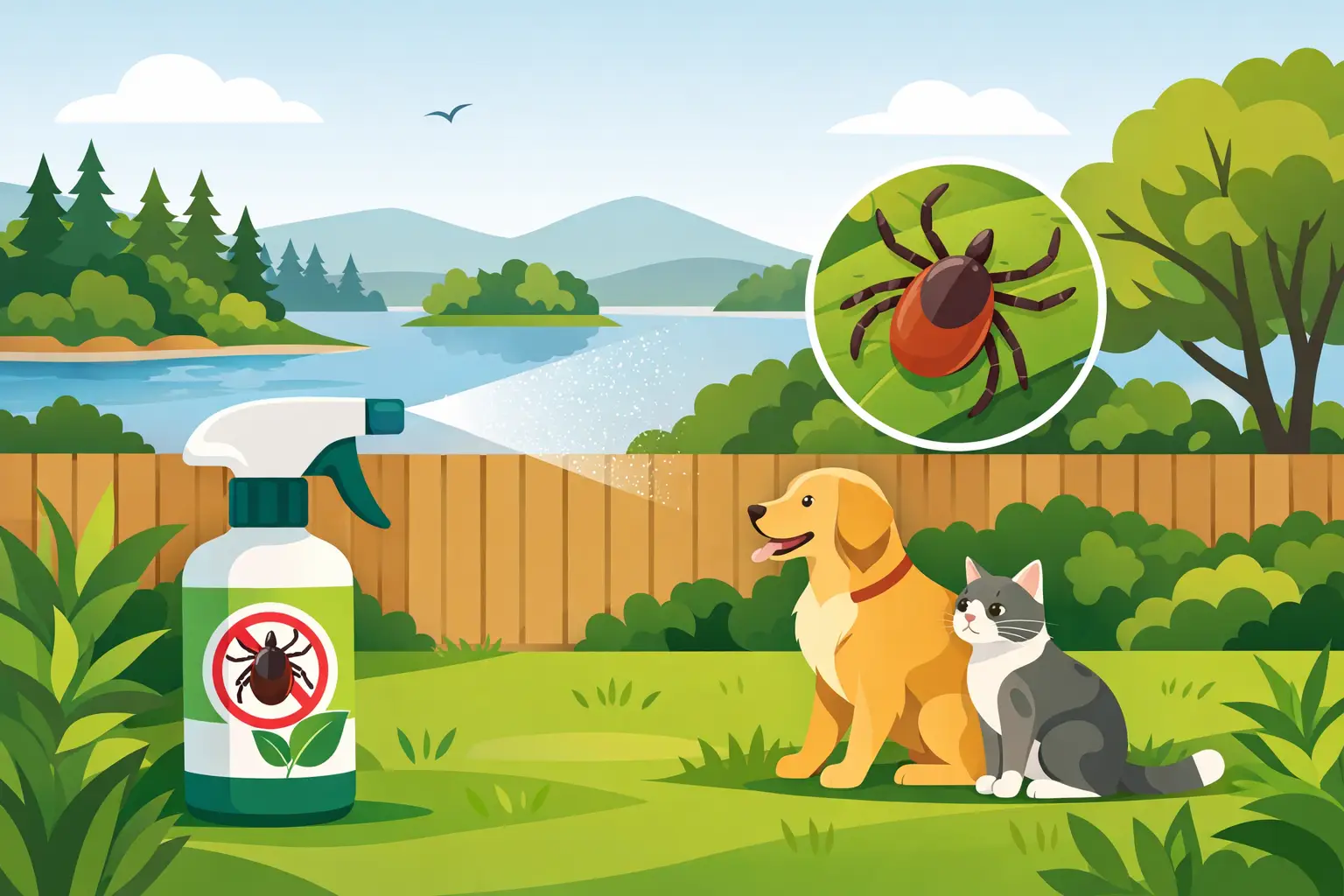
A good pet safe tick spray review should do more than promise a bite-free backyard. For Ontario pet owners, the real question is whether a treatment can reduce tick activity around the places your dog explores while being applied carefully enough to protect the animals and people who use that space.
Ticks are not just an annoyance during a walk through tall grass. Blacklegged ticks can carry Lyme disease, and pets may bring ticks indoors after time in the yard. A well-chosen yard treatment can be a useful part of protection, but no product or service should be treated as a substitute for veterinary preventives, regular tick checks, or prompt tick removal.
What “pet safe” should mean in a tick spray review
“Pet safe” is often used too broadly. A product may be designed for use around pets without being safe for direct application to every animal, at every dose, or before the treatment has dried. The label directions, the active ingredient, the application method, and the condition of your property all matter.
The most responsible interpretation is simple: the treatment is applied according to its directions, pets are kept out of the area while spraying takes place, and they return only after the treated surfaces are fully dry. A professional should be able to explain that process clearly before treatment begins.
Cats deserve extra attention. Some ingredients that can be used around dogs or in outdoor pest-control products may be harmful if a cat is directly exposed to them or grooms residue from its fur. This does not mean every professionally applied yard treatment is unsuitable for cat owners. It means the technician needs to know there are cats on the property and tailor the application, exclusion period, and treatment zones accordingly.
A trustworthy review also avoids claiming that any spray is completely risk-free. Every effective pest-control treatment involves choices. The goal is to use the right product, in the smallest effective amount, in the places ticks are most likely to rest and travel.
Pet safe tick spray review: what to look for
When comparing products or seasonal tick services, look past broad claims such as “natural,” “green,” or “family friendly.” Those terms may describe an approach, but they do not explain how a treatment will perform on your property.
Start with the target pest. A spray should specifically list ticks among the pests it controls. Mosquito-only products are not automatically effective against ticks, which behave differently and tend to stay low in vegetation, leaf litter, brush edges, and shaded transition areas.
Next, ask where the spray will go. The best tick treatment is rarely a full-property blanket spray. Ticks are most likely to be found along wooded edges, under shrubs, beside stone walls or woodpiles, around dense groundcover, and in tall grass. Treating those harbourage areas directly can reduce unnecessary product use on open lawn and patio areas.
The application timing also matters. In eastern Ontario, tick activity can begin when temperatures rise above freezing and continue well into the fall. A single treatment may help with an immediate issue, but recurring service is often more practical for households with active dogs, wooded lots, or frequent outdoor use. The right schedule depends on tick pressure, weather, landscaping, and how often your family uses the yard.
Finally, consider the provider’s instructions. Clear guidance about keeping pets indoors during application, allowing surfaces to dry, and avoiding treated areas during the stated re-entry period is a positive sign. Vague advice such as “it should be fine” is not.
Natural tick sprays: safer does not always mean stronger
Natural treatment options can appeal to families who want to limit conventional pesticide use. Some plant-based formulas use essential-oil-derived ingredients that may repel or affect certain insects and ticks. For lower-pressure properties, or as part of a broader prevention plan, they may be a reasonable choice.
There are trade-offs. Natural products can have shorter residual performance, may need more frequent application, and may not provide enough control for a heavily wooded yard with established tick activity. Essential oils are not automatically harmless to pets either. Concentrated oils can irritate skin, trigger respiratory concerns, or create risks if animals ingest them.
That is why a natural option still needs the same careful planning as a conventional treatment. It should be selected for the pest pressure, applied only where needed, and paired with practical yard maintenance. The best option is not always the one with the most reassuring label. It is the one that provides suitable control with a safety plan that fits your family and property.
DIY spray versus a professional tick treatment
A store-bought tick spray can make sense for a small, clearly defined area or for homeowners who are comfortable reading labels and applying products precisely. It can be a convenient response when you notice tick habitat developing around a shed, fence line, or garden edge.
The limitations become clearer on larger or more complex properties. Homeowners may miss shaded harbourage zones, apply too much product across open areas, or choose a product that is not intended for the tick species or conditions present. Rain, mowing, irrigation, and rapid vegetation growth can also affect how long a treatment performs.
A professional service is most valuable when it begins with a property assessment. Rather than treating every square metre the same way, a technician can identify likely tick zones and focus the application where it has the most value. That approach is particularly helpful for families in Merrickville, Kemptville, Smiths Falls, and surrounding rural or semi-rural communities where yards may back onto brush, woodland, fields, or trail areas.
Mosquito Pros uses property-specific barrier treatments designed to reduce exposure in high-use outdoor areas while using significantly less spray than broad, one-size-fits-all programs. For pet owners, the practical advantage is not simply fewer ticks. It is knowing the treatment plan accounts for where your dog runs, where children play, and where ticks are most likely to be waiting.
Yard changes that make tick sprays work better
Even a well-applied spray cannot compensate for ideal tick habitat left untouched. Small maintenance steps can make a meaningful difference, especially along the perimeter of the property.
Keep grass cut, remove leaf litter, and trim back dense vegetation near patios, play areas, dog runs, and walkways. Move woodpiles away from the home where possible, since they can attract small animals that carry ticks. If your yard borders a wooded area, create a clearer, maintained transition between the lawn and the brush rather than allowing groundcover and debris to build up at the edge.
It also helps to think about your pet’s routine. If your dog has a favourite path along the fence or through the garden, that route deserves attention during a property assessment. After walks, hikes, or time near brush, check your dog closely around the ears, collar line, armpits, groin, between toes, and under the tail. Ask your veterinarian about a tick prevention product that suits your pet’s age, health, and lifestyle.
Questions to ask before booking
Before choosing a tick spray, ask whether the treatment targets ticks specifically, which areas will be treated, and what you need to do with pets during and after the service. Ask whether the provider offers a lower-volume or natural option, but also ask how its expected performance compares with a conventional treatment.
You should also ask about follow-up. Tick control is a seasonal effort, not a one-time promise. A good provider will explain when to expect results, how weather can affect service, and whether your property would benefit from recurring visits.
Your backyard should be a place where dogs can sniff, children can play, and guests can stay for supper without every trip outside becoming a tick concern. The right treatment is one part of that peace of mind – chosen carefully, applied precisely, and supported by sensible pet and yard habits.

