
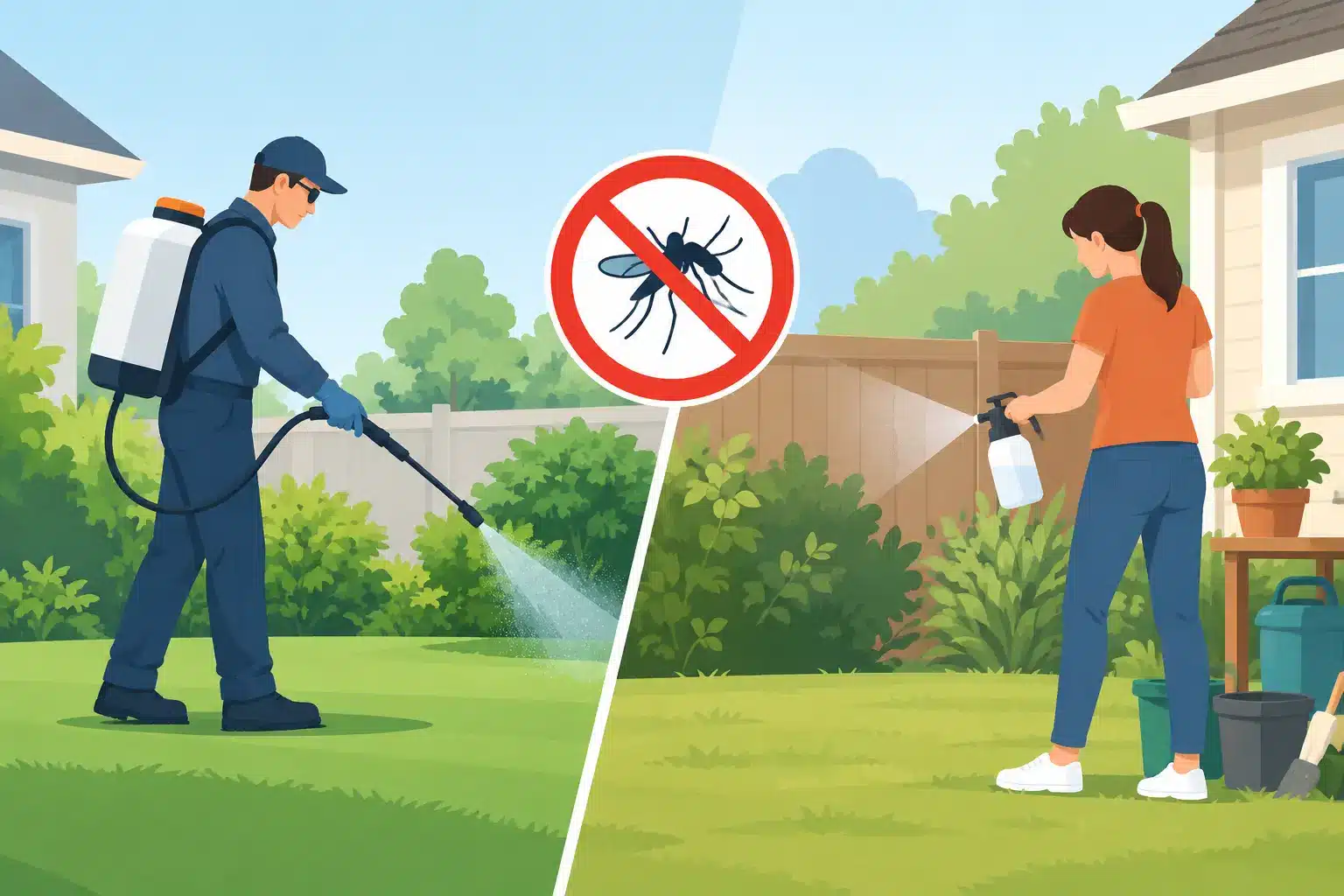
A backyard should not become off-limits at dusk. Yet during an Eastern Ontario mosquito season, a few bites can quickly turn dinner on the deck, playtime, or a cottage weekend into a rush indoors. When weighing professional mosquito control versus DIY, the real question is not whether one option is always better. It is whether the approach matches your property, your tolerance for ongoing work, and the level of protection your family and pets need.
DIY prevention can make a meaningful difference, especially on smaller properties with limited mosquito pressure. Professional treatment becomes more valuable when mosquitoes keep returning, the property has dense vegetation or moisture-prone areas, or you want reliable protection for a gathering, a season, or a frequently used outdoor space.
Professional Mosquito Control Versus DIY: The Core Difference
DIY mosquito control is largely homeowner-led prevention. It includes removing standing water, maintaining the yard, using personal repellent, and applying store-bought products where appropriate. These steps address common breeding and resting conditions, but they require consistency and can be difficult to manage across larger or more complex properties.
Professional mosquito control begins with an assessment of where mosquitoes are actually living and resting. Mosquitoes commonly shelter in shaded shrubs, tall grass, under decks, along fence lines, around dense groundcover, and near damp areas. A targeted service treats those likely harbourage zones rather than simply spraying open lawn areas where mosquitoes are less likely to spend time.
That distinction matters. Effective mosquito management is not about applying more product. It is about applying the right treatment, in the right places, at the right time, while following product labels and property-specific instructions.
What DIY Can Do Well
A strong DIY routine is worth doing whether or not you choose professional service. The most useful step is removing or refreshing small sources of standing water. Birdbaths, buckets, tarps, wheelbarrows, clogged eavestroughs, planter trays, toys, and unused containers can all hold enough water for mosquitoes to breed.
Regular yard maintenance also helps. Trim back overgrown vegetation near patios and walkways, keep grass reasonably short, and clear leaf buildup from areas that stay damp. If you have a rain barrel, ensure it is properly screened. These actions make the property less welcoming, although they will not stop mosquitoes flying in from neighbouring properties, woodlots, drainage areas, or nearby water.
Personal protection remains essential, particularly for time spent in high-mosquito areas. Appropriate repellent, light long sleeves, and avoiding peak biting periods can reduce bites. For tick exposure, checking people and pets after time in tall grass, wooded edges, or leaf litter is also a practical habit.
DIY is often a sensible first step when mosquito activity is mild and you are prepared to maintain it throughout the season. It is also useful between professional visits because source reduction supports longer-lasting results.
Where DIY Often Falls Short
The challenge with DIY products is not that they never work. The challenge is coverage, placement, and follow-through. A ready-to-use spray may provide short-term relief in one area, but it may miss the shaded vegetation and perimeter zones where adult mosquitoes rest during the day.
Many homeowners also apply too broadly, too lightly, or at the wrong time. Treating a sunny lawn, for example, is rarely the best use of a mosquito-control product. Wind, rain, vegetation density, and new mosquito activity from outside the property can also reduce the practical value of a one-time application.
There is a safety consideration as well. Store-bought products still need to be used exactly as directed. More is not better. Homeowners must consider children, pets, gardens, water features, pollinators, and food-growing areas before applying any pest-control product. If you are not comfortable making those decisions, a professional assessment can provide more confidence.
DIY becomes especially demanding for properties with wooded borders, extensive landscaping, drainage concerns, cottages near water, or repeated tick activity. In those situations, the task is less about buying a stronger product and more about building a precise, repeatable treatment plan.
What Professional Service Adds
Professional treatment is designed around the property rather than a generic spray pattern. A technician can identify high-pressure zones, select treatment areas, and tailor the schedule to the property’s layout, use, and mosquito activity. For a family that spends every evening outside, that may mean seasonal service. For a wedding, reunion, or backyard celebration, it may mean a one-time event treatment scheduled before guests arrive.
At Mosquito Pros, treatments focus on vegetation, shaded areas, perimeter zones, and other likely mosquito resting sites. This lower-volume approach can use up to 94% less product than traditional high-volume spraying while still concentrating treatment where it can be most effective. It is a practical fit for homeowners who want targeted control without treating every square metre of the yard.
Professional service also provides consistency. Mosquito populations change after rain, heat, and humid weather. Scheduled treatments help maintain protection through peak season instead of leaving homeowners to react only after bites become unbearable.
No responsible provider should promise a mosquito-free property forever. Mosquitoes can travel into a treated yard, and conditions can change quickly. The goal is to significantly reduce mosquito pressure in the outdoor areas you use, helping make patios, poolsides, play spaces, and event areas more comfortable.
Tick Control Requires a Different Focus
Mosquitoes and ticks share some habitat, but they are not managed in exactly the same way. Ticks are more often associated with tall grass, wooded edges, leaf litter, brush, and areas frequented by wildlife. Because ticks can carry Lyme disease, targeted tick control and property maintenance can be especially important for families, pet owners, and anyone whose yard borders natural areas.
A professional can assess those edge zones and help prioritize treatment where tick exposure is most likely. This is particularly useful when a pet has brought ticks indoors or family members regularly use trails, gardens, or wooded portions of the property.
Comparing Cost, Time, and Results
DIY usually has a lower upfront cost. A few maintenance tools, repellents, traps, and over-the-counter products can appear less expensive than professional service. But the true cost includes your time, repeat purchases, trial-and-error, and the possibility that the problem continues through the season.
Professional mosquito control costs more upfront because it includes property assessment, specialized application, and a customized plan. For many households, the value is in time saved and outdoor time regained. If you are cancelling barbecues, keeping children indoors at dusk, or avoiding your own deck, the comparison is no longer only about the price of a spray can.
Results also depend on expectations. DIY can reduce breeding sources and provide temporary relief. Professional service is generally better suited to reducing adult mosquito activity across the areas where they rest and hide. The strongest approach is often both: professional targeted treatment supported by simple homeowner habits such as eliminating standing water and keeping vegetation managed.
How to Choose the Right Option for Your Property
DIY may be enough if your yard is small, mosquito activity is occasional, and you can stay on top of standing water and maintenance. It can also be a good choice for homeowners who are comfortable reading labels, applying products carefully, and accepting that results may be limited or short-lived.
Consider professional control if mosquitoes are affecting daily life, your property has dense landscaping or damp areas, you are concerned about ticks, or you need dependable relief before an event. It is also a practical choice for cottages and larger rural properties where mosquito pressure often comes from surrounding habitat, not just from one container in the yard.
For families in Merrickville, Kemptville, Brockville, Perth, and surrounding Eastern Ontario communities, local conditions matter. A property beside mature trees and wet ground needs a different plan than a sunny suburban yard with a small patio. The best treatment is the one that reflects that difference.
Start with the prevention steps you can control this week: empty standing water, clear damp debris, and inspect the shaded edges of your yard. If mosquitoes or ticks are still deciding how you use your outdoor space, a targeted professional assessment can help you take that space back with greater confidence.


