
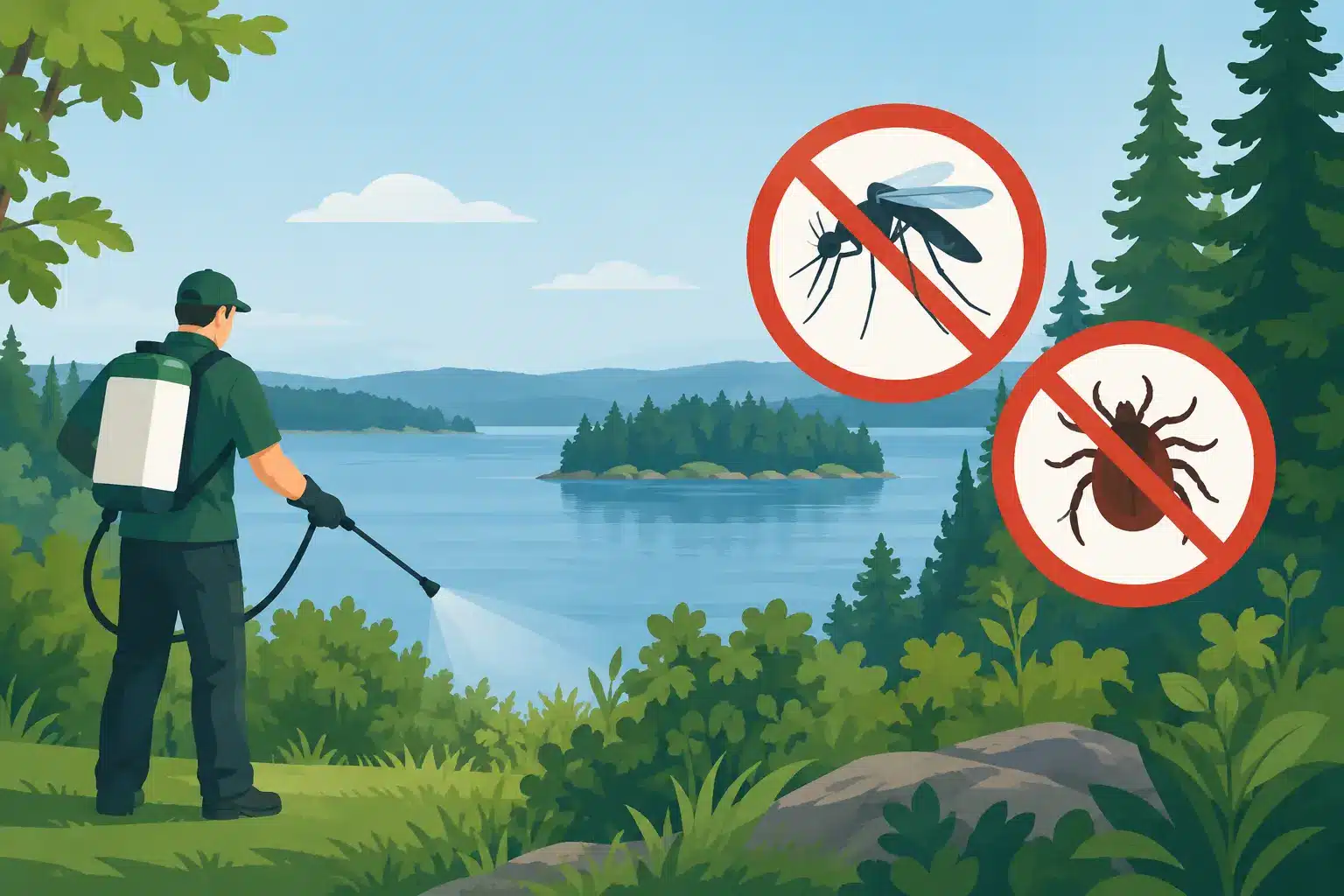
A backyard should not become off-limits when the weather finally turns warm. Yet across Eastern Ontario, one humid evening can be enough to send families indoors, keep pets close to the door, and make a deck, pool area, or cottage property feel unusable. Professional mosquito and tick control Eastern Ontario property owners can rely on starts by treating the places these pests actually rest, breed, and travel – not simply spraying open lawn.
Mosquitoes and ticks are more than an annoyance. Mosquito bites can make evenings uncomfortable and may expose people to illnesses such as West Nile virus. Ticks can carry bacteria that cause Lyme disease, and pets face their own risks from tick-borne illness and mosquito-borne heartworm. A thoughtful prevention plan reduces exposure where it matters most: around the outdoor spaces your family, guests, and animals use every day.
Why Eastern Ontario Properties Need a Targeted Plan
Eastern Ontario has the ingredients mosquitoes and ticks need to thrive. Wooded edges, long grass, stone walls, leaf litter, drainage areas, gardens, wetlands, shaded decks, and cottage shorelines all create favourable conditions. Even a well-kept suburban yard can have dense shrubs beside a patio or a damp corner behind a shed where pests remain protected from sun and wind.
Mosquitoes need standing water to reproduce, but it does not have to be a large pond. Clogged eavestroughs, plant saucers, tarps, wheelbarrows, children’s toys, and low spots in a yard can hold enough water for larvae. Adult mosquitoes then rest in cool, shaded vegetation during the day and move toward people and pets when temperatures soften in the evening.
Ticks work differently. They do not fly or jump. They wait on grass, brush, and low vegetation for a host to pass by, then climb on. Properties bordering woods, trails, fields, or naturalized areas often have greater tick pressure, especially where deer, mice, and other wildlife travel. That does not mean every tick carries disease, but avoiding bites is still the most practical form of protection.
The right service reflects these differences. Mosquito control focuses on adult resting zones and breeding pressure. Tick control focuses on the vegetation and perimeter areas where ticks are likely to quest and where people or pets may brush against them.
What Effective Mosquito and Tick Control Looks Like
A good treatment is not a one-size-fits-all spray. Every property has different conditions, from a compact backyard in Kemptville to a wooded cottage lot near Rideau Lakes. The most effective approach begins with a property assessment that identifies shade, dense vegetation, moisture-prone areas, outdoor living zones, pet areas, and likely pest entry points.
Mosquito treatment around the areas you use
Barrier treatments are applied to the foliage, shrubs, hedges, under-deck areas, and perimeter vegetation where adult mosquitoes hide. The goal is to reduce mosquito activity around patios, play spaces, fire pits, walkways, and other active areas without treating every square metre of the property unnecessarily.
Lower-volume applications are especially valuable for homeowners who want precise, property-conscious service. When treatments are focused on pest harbourage areas, it is possible to use substantially less product than traditional high-volume spraying. Mosquito Pros can use up to 94% less product while following product labels and property-specific instructions.
Results depend on weather, property conditions, and the pressure coming from nearby woods or standing water. Heavy rain shortly after a treatment, dense vegetation growth, or an untreated breeding source can affect performance. This is why seasonal plans commonly work better than waiting until mosquitoes are already overwhelming the yard.
Tick treatment where contact happens
Tick control is directed at the edges of lawns, brush lines, shaded ground cover, woodland borders, and other transition areas. These are the places where ticks and their wildlife hosts are most likely to move through. Treating the centre of an open, sunny lawn alone is rarely the best use of an application.
Tick treatments should be paired with simple habits. Keep grass cut, clear leaf litter from play areas and pathways, and create a little separation between seating areas and dense brush where possible. After walking in tall grass, woods, or trail edges, check children, pets, clothing, and gear for ticks. Prompt removal matters.
Natural options and realistic expectations
Some households prefer a natural treatment option, particularly around children, pets, gardens, or sensitive outdoor spaces. Natural-based products can be part of a mosquito and tick management plan, but they may require more frequent service and can have a shorter residual effect than conventional options.
There is no universally best choice. The right option depends on pest pressure, the property layout, how often the space is used, and the household’s priorities. A reliable provider should explain the trade-off clearly rather than promising that every product will perform exactly the same in every yard.
Start with the Conditions That Attract Pests
Professional treatments have the greatest impact when property maintenance supports them. A few regular tasks can reduce the number of places mosquitoes breed and ticks shelter.
- Empty and refresh standing water in containers, tarps, toys, and plant trays at least weekly.
- Keep eavestroughs and drainage routes clear so water does not collect near the home.
- Trim back shrubs and overgrown vegetation near decks, pathways, and children’s play areas.
- Mow grass regularly and remove leaf litter, brush piles, and excess ground cover from high-use zones.
- Store firewood neatly and away from main outdoor living areas when practical.
These steps do not replace professional service when mosquito or tick pressure is high. They make the property less inviting and help a targeted treatment plan work harder.
When to Book Seasonal Service
The best time to plan mosquito and tick control is before outdoor season is in full swing. In Eastern Ontario, pest activity can begin as temperatures rise in spring and continue through the warmer months. Early action gives a provider time to identify problem zones and build a schedule that keeps pressure lower through backyard season.
Seasonal service is well suited to families who want regular coverage around patios, pools, gardens, and dog runs. It is also a practical choice for cottages and rural properties that are used often but may have heavier pressure from surrounding vegetation and water.
One-time treatments have a role too. They are useful for outdoor weddings, reunions, barbecues, corporate gatherings, and other events where guests will spend several hours outside. An event treatment should be scheduled with enough lead time to assess the venue and focus on the seating, food, ceremony, and gathering areas. It can make a major difference in guest comfort, though no outdoor treatment can guarantee that every insect will disappear.
Questions to Ask Before Hiring a Provider
Homeowners deserve clear answers before anyone treats their property. Ask whether the company assesses the site before recommending service, where it applies products, what precautions it takes around children and pets, and whether it offers natural options. It is also worth asking how weather affects treatment timing and what results are realistic for your specific property.
Look for a provider that talks about reducing exposure, not making impossible promises. Mosquito and tick control works best as a customized program based on pest habitat, property use, and seasonal conditions. Generic spraying may feel convenient, but precision is usually safer, more efficient, and more effective.
For families, pet owners, cottage owners, and event hosts, the goal is simple: more time outside with less swatting, fewer worries, and a better reason to enjoy the yard you work hard to maintain. Booking an assessment before peak season gives you time to protect the spaces that matter most.


