
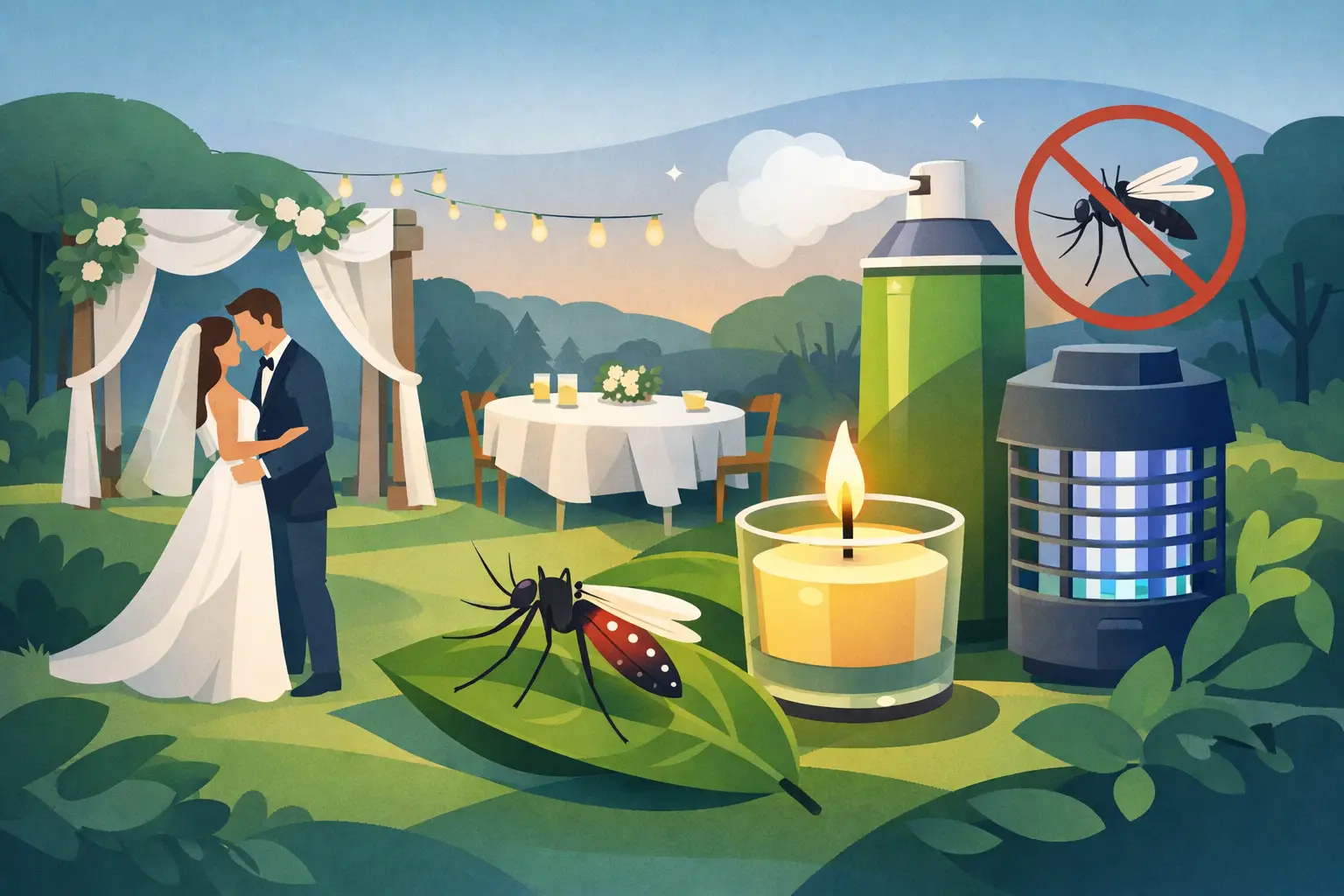
A beautiful outdoor wedding can turn uncomfortable fast when mosquitoes show up before the first toast. If you’re planning an event in Ontario, outdoor wedding mosquito control is not a nice-to-have – it’s part of protecting your guests, your photos, and the overall experience.
Mosquitoes do more than annoy people. They interrupt ceremonies, send guests indoors early, and leave everyone distracted during the moments you actually want them to remember. If children are attending, or if pets are part of the celebration, the stakes feel even higher. Good mosquito control is really about creating a space where people can relax and stay present.
Why outdoor wedding mosquito control matters more than most couples expect
Most couples think about flowers, seating, catering, and weather. Fewer think seriously about mosquitoes until they do a site visit at dusk and realize the problem is bigger than expected. By then, options can feel rushed.
Ontario properties can be especially challenging because many wedding venues and private properties are exactly the kind of places mosquitoes like – treed edges, shade, damp ground, gardens, hedges, and nearby water. Even a very well-kept yard can have pressure from neighbouring properties, drainage areas, or low spots that hold moisture after rain.
That is why mosquito control for an outdoor wedding works best when it is planned early. The goal is not to spray blindly and hope for the best. The goal is to treat the areas where mosquitoes rest and breed so the event space feels usable when guests arrive.
What actually causes mosquito problems at weddings
Mosquitoes are predictable in some ways. They look for moisture to breed and shaded foliage to rest during the day. Around event spaces, that often means the perimeter matters just as much as the ceremony area itself.
A lawn that looks open and sunny may still be surrounded by dense shrubs, cedars, tree lines, or decorative plantings that hold mosquitoes close by. Add warm weather, recent rain, and an evening schedule, and pressure can rise quickly. That is why some weddings seem fine at noon but become miserable by dinner.
Timing matters too. Evening weddings are often the hardest because mosquito activity tends to increase as temperatures soften and light drops. If the property also has ponds, marshy edges, birdbaths, clogged eavestroughs, or containers that collect water, the problem can build over time.
The best approach is layered, not last-minute
The most effective outdoor wedding mosquito control plan usually combines property prep with targeted treatment. Relying on citronella candles alone rarely solves anything on a larger property. They may help in very small zones, but they do not address where mosquitoes are actually coming from.
A better approach starts with the site itself. Any standing water should be addressed well before the event. That includes buckets, planters, tarps, wheelbarrows, toys, and decorative features that quietly collect rain. If the venue is on private property, trimming back dense vegetation near seating or dining areas can also reduce resting zones.
From there, targeted barrier treatment makes the biggest difference. This is where a professional service stands apart from a generic spray approach. Mosquitoes rest on leaf surfaces, shaded shrubs, tall grasses, and other protected areas around the usable space. Treating those zones with precision helps reduce mosquito activity where guests will actually be walking, sitting, and celebrating.
For weddings, customization matters. A family backyard in Kemptville needs a different plan than a rural venue near Smiths Falls with more tree cover and higher moisture. The property, event timing, and layout all affect the right treatment strategy.
When to schedule treatment before the wedding
One of the most common questions is how far in advance mosquito treatment should happen. The honest answer is that it depends on the property and pressure level, but waiting until the day before is rarely ideal.
For many outdoor events, treatment a few days ahead gives the best balance. It allows time for the product to settle and do its job while keeping protection aligned with the event date. On higher-pressure properties, especially those with lots of vegetation or nearby water, earlier planning may also make sense so the site can be assessed and any trouble spots handled properly.
Weather plays a role. Heavy rain and strong wind can affect timing, which is another reason to plan ahead instead of treating mosquito control like an afterthought. A professional provider will factor in conditions, property layout, and event timing rather than using a one-size-fits-all schedule.
Safety should be part of the decision, not a footnote
For weddings, people are often balancing comfort with safety. That is completely reasonable. Guests may include infants, small children, grandparents, and pets. No one wants to solve one problem by creating another.
That is why treatment method matters. Lower-volume, targeted applications can reduce unnecessary exposure while still delivering meaningful results. The best event treatments focus on where mosquitoes rest instead of soaking the entire property. That approach is more precise and more practical for households and venues that care about child- and pet-conscious service.
If your venue has dogs on site, children playing on the lawn, or a large guest list moving through different parts of the property, ask direct questions about application method, timing, re-entry guidance, and how the treatment plan is adapted to the space. Clear answers matter.
What to do beyond spraying
Mosquito control works better when the event setup supports it. If you are planning an evening celebration, fans can help in key guest areas because mosquitoes are weak fliers. Covered dining spaces, tented zones, and open airflow near seating can all improve comfort.
Guest flow also matters. If cocktail hour is placed beside hedges, wooded edges, or damp gardens, people will notice mosquitoes more quickly. Even moving seating, bar service, or photo locations a short distance away from heavy vegetation can make a visible difference.
Lighting can have an indirect effect as well. Lights do not create mosquitoes, but warm, stagnant gathering areas can keep people in bug-prone zones longer. Good layout planning helps the treatment do its job.
What not to rely on for a wedding
There is a reason many DIY options disappoint hosts. Bug zappers do little for mosquito control in most event settings. Scent-based products have limited range. Store-bought foggers may provide uneven results and can create more worry than confidence when used right before a formal event.
The bigger issue is consistency. A wedding is not the night to experiment. You need a treatment plan that reflects the property, the season, and the event schedule. If guests are arriving dressed for an outdoor ceremony, they should not have to spend the evening swatting and reapplying repellent.
Choosing the right provider for outdoor wedding mosquito control
If you are hiring help, look for a company that treats event mosquito control as a custom service, not a generic add-on. The right provider should ask about the size of the property, ceremony and reception areas, nearby vegetation, water sources, and the time of day your event is happening.
They should also be able to explain how they reduce mosquito pressure with targeted treatment rather than simply applying as much product as possible. More spray is not automatically better. In many cases, a lower-volume, property-specific approach is both smarter and more responsible.
That is especially relevant for weddings at homes, farms, and private venues across communities like Merrickville, Brockville, and Carleton Place, where properties vary widely and mosquito pressure can change from one site to the next.
Mosquito Pros approaches special event treatment with that kind of customization in mind, which is exactly what outdoor weddings need.
Plan for comfort, not just pest control
The best weddings feel effortless to guests, even when a lot of planning went on behind the scenes. Mosquito control is part of that invisible work. When it is done properly, people stay longer, enjoy the outdoor space, and remember the celebration instead of the bites.
If your wedding is outdoors, think about mosquito control at the same stage you think about tents, seating, and weather backup plans. It is not overreacting. It is practical event planning for Ontario conditions.
A calm, comfortable yard or venue gives your ceremony room to breathe. And when guests can focus on the vows, the meal, and the dance floor instead of brushing bugs off their ankles, the whole day feels the way it should.

