
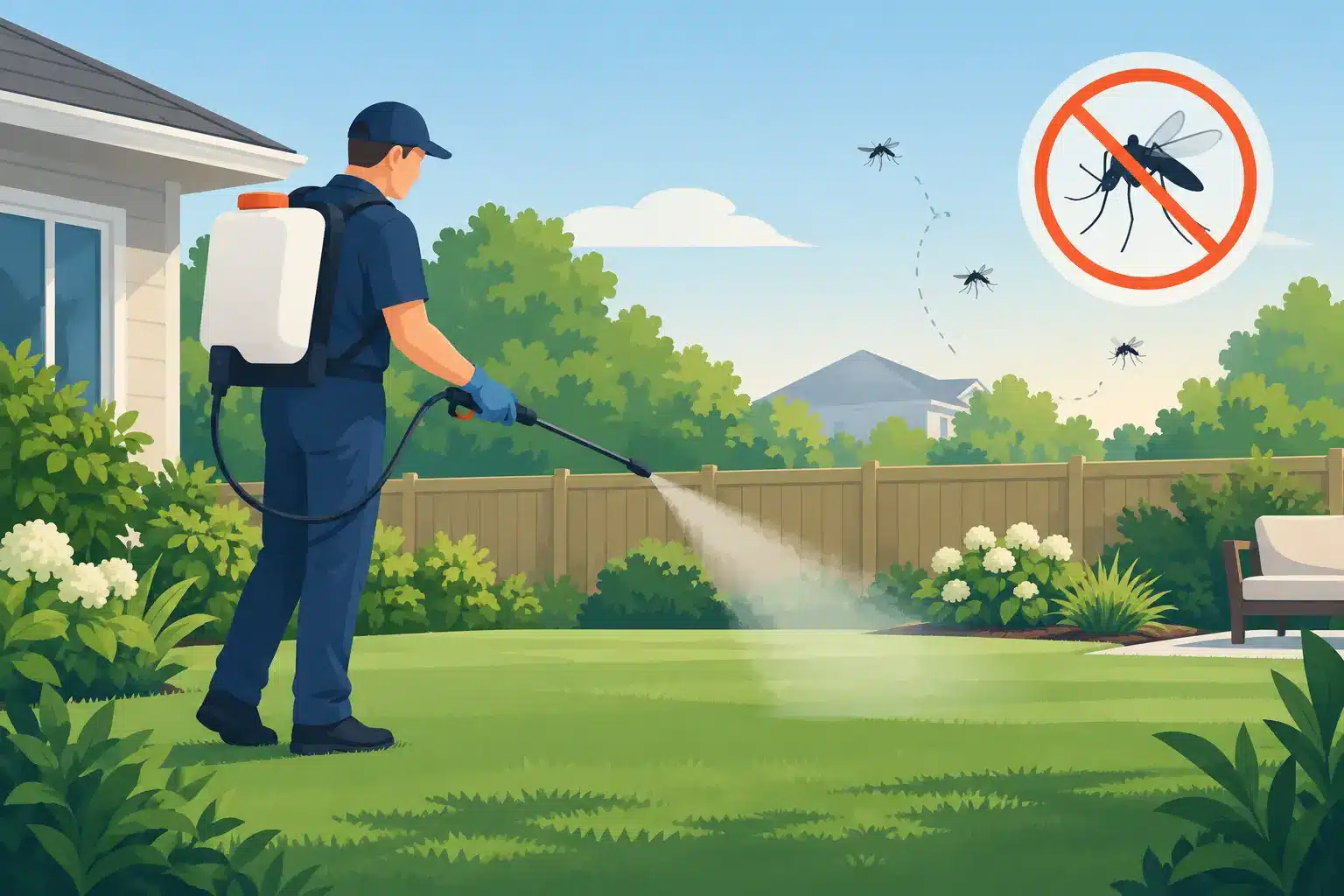
The first warm stretch of spring can make a yard look ready for patio season, but it can also wake up the pests that make families head back indoors. Homeowners often ask, “when should yards be sprayed?” The short answer is before mosquito populations build and as soon as tick activity becomes a concern. In Eastern Ontario, that often means planning early rather than waiting until bites are already disrupting evenings outside.
The best schedule depends on your property, weather, nearby water, vegetation, pets, and how you use your outdoor space. A shaded yard beside woods or a wet ditch may need attention sooner than an open, sunny lot. A custom assessment helps focus treatment where mosquitoes and ticks actually rest and travel, rather than applying product broadly where it will not provide much value.
When should yards be sprayed in Ontario?
For most Eastern Ontario properties, mosquito and tick control should begin in spring, typically once temperatures are consistently mild and vegetation is filling in. Mosquito activity increases as temperatures rise and standing water becomes available for breeding. Ticks can be active even earlier, particularly during mild periods when snow has melted and the ground is no longer frozen.
Waiting for the first major mosquito outbreak is rarely the most comfortable approach. By then, adult mosquitoes may already be resting in dense shrubs, under decks, along fence lines, and in cool, damp vegetation. Starting seasonal protection before peak summer pressure gives homeowners a better chance of enjoying the yard from the first barbecue onward.
For many properties, treatments continue at regular intervals through the warm season. The exact timing should follow the product label, weather conditions, pest pressure, and the way the property is used. A cottage near water, a yard bordering woodland, or a home with heavy shade may need a different plan than a small, open backyard.
Spring is the best time to get ahead of mosquitoes and ticks
Spring treatment is about prevention, not just relief. As leaves emerge and ground cover thickens, mosquitoes gain protected places to rest during the day. Ticks also become more likely to move through brush, tall grass, leaf litter, and the edges where lawns meet natural areas.
A professional early-season visit should look beyond the lawn itself. The most productive treatment zones are often the perimeter of the property, ornamental shrubs, low branches, dense hedges, under-deck spaces, woodpile edges, and moisture-prone areas. This targeted approach helps reduce contact with the pests where they hide while avoiding unnecessary application across open turf.
Spring is also the time to remove conditions that encourage mosquitoes. Empty and refresh birdbaths regularly, clear clogged eavestroughs, cover rain barrels, and remove containers that collect water. Barrier treatments target adult mosquitoes resting in vegetation, while source reduction helps limit the next generation before it develops.
Schedule around weather, not just the calendar
A dry, calm day is generally best for a yard treatment. Rain soon after an application can reduce performance, and strong wind can make precise placement more difficult. Professional technicians monitor conditions and follow label instructions so products are applied only when the weather supports an effective, responsible treatment.
If rain is in the forecast, do not assume the appointment must automatically be cancelled. The amount of rain, timing, product used, and treatment area all matter. Your provider should advise whether the service can proceed, should be moved, or requires a follow-up based on the conditions at your property.
Hot, humid weather often brings the heaviest mosquito pressure, especially after periods of rainfall. That is a good reason to maintain protection throughout summer rather than booking only after a long weekend becomes uncomfortable. It is much easier to keep a population suppressed than to regain control after conditions have allowed it to surge.
Plan ahead for outdoor events
A one-time treatment can be a practical option for weddings, family reunions, backyard birthdays, cottage weekends, and outdoor business events. For an event, timing matters. Booking several days ahead provides time to assess the property, target the resting areas, and avoid last-minute problems caused by rain or wind.
Do not leave an event treatment until the morning guests arrive. An application needs the appropriate drying period, and the property should be ready for treatment. Mow tall grass if needed, move toys and patio items from key treatment zones, and let the technician know where guests, children, pets, gardens, ponds, and food areas will be located.
One-time service can make an occasion more comfortable, but it is not a substitute for seasonal management on a property with ongoing mosquito or tick pressure. If evenings outside are repeatedly being cut short, a recurring plan is usually the better fit.
Keep children, pets, and pollinators in mind
Families should expect clear instructions before and after treatment. Pets and children should remain indoors during the application and stay out of treated areas until the product has dried or for the interval specified on the label. Pet bowls, toys, outdoor play equipment, and any items that could be touched or mouthed should be moved or covered as directed.
Gardens require special attention. Flowering plants and areas actively visited by bees and other pollinators should be identified during the assessment. A responsible mosquito and tick program does not treat every green surface the same way. It focuses on pest harborage while respecting label directions and the unique features of the yard.
Natural treatment options may also be available for homeowners who prefer them. These options can be a useful part of a family-conscious plan, though they may have different residual performance and may require a different service schedule. The right choice comes down to your expectations, the severity of pest activity, and how the property is used.
Signs your property may need treatment sooner
Some yards consistently experience higher pest pressure than others. You may want to arrange service early if mosquitoes are active in shady areas during daylight, if you see ticks on pets or clothing, or if family members avoid using the yard at dawn and dusk.
Properties near wetlands, ponds, drainage areas, woods, thick hedges, unmanaged lots, or dense ground cover often benefit from a proactive plan. Mosquitoes do not need a large pond to become a problem. Water held in tarps, planters, wheelbarrows, children’s toys, and blocked drainage areas can be enough to support breeding.
Tick concerns deserve prompt attention as well. Ticks can be carried into the yard by deer, rodents, and other wildlife, then wait in vegetation along walking routes and property edges. Treatment can help reduce exposure, but it should be paired with practical habits: keep grass trimmed, create separation between play spaces and brush, check people and pets after time outdoors, and speak with a veterinarian about appropriate tick prevention for pets.
What a professional treatment schedule looks like
A dependable program starts with a property-specific plan, not a blanket promise. At Mosquito Pros, treatment areas are selected around the shaded, vegetated, perimeter, and moisture-prone locations where mosquitoes and ticks are most likely to live and hide. This lower-volume approach can use up to 94% less product than traditional high-volume spraying while still targeting the areas that matter most.
Your technician should also explain what service can and cannot do. No outdoor treatment can eliminate every mosquito or tick from a property forever, particularly when neighbouring vegetation, wildlife, and weather continually introduce new pest pressure. The goal is meaningful reduction, more usable outdoor space, and a schedule that responds to your yard rather than a generic calendar.
If your family is already avoiding the deck, checking pets for ticks after every walk, or planning an outdoor gathering, it is a good time to arrange an assessment. Acting before peak season gives you more scheduling flexibility and more time to enjoy the yard you have worked hard to create.


