
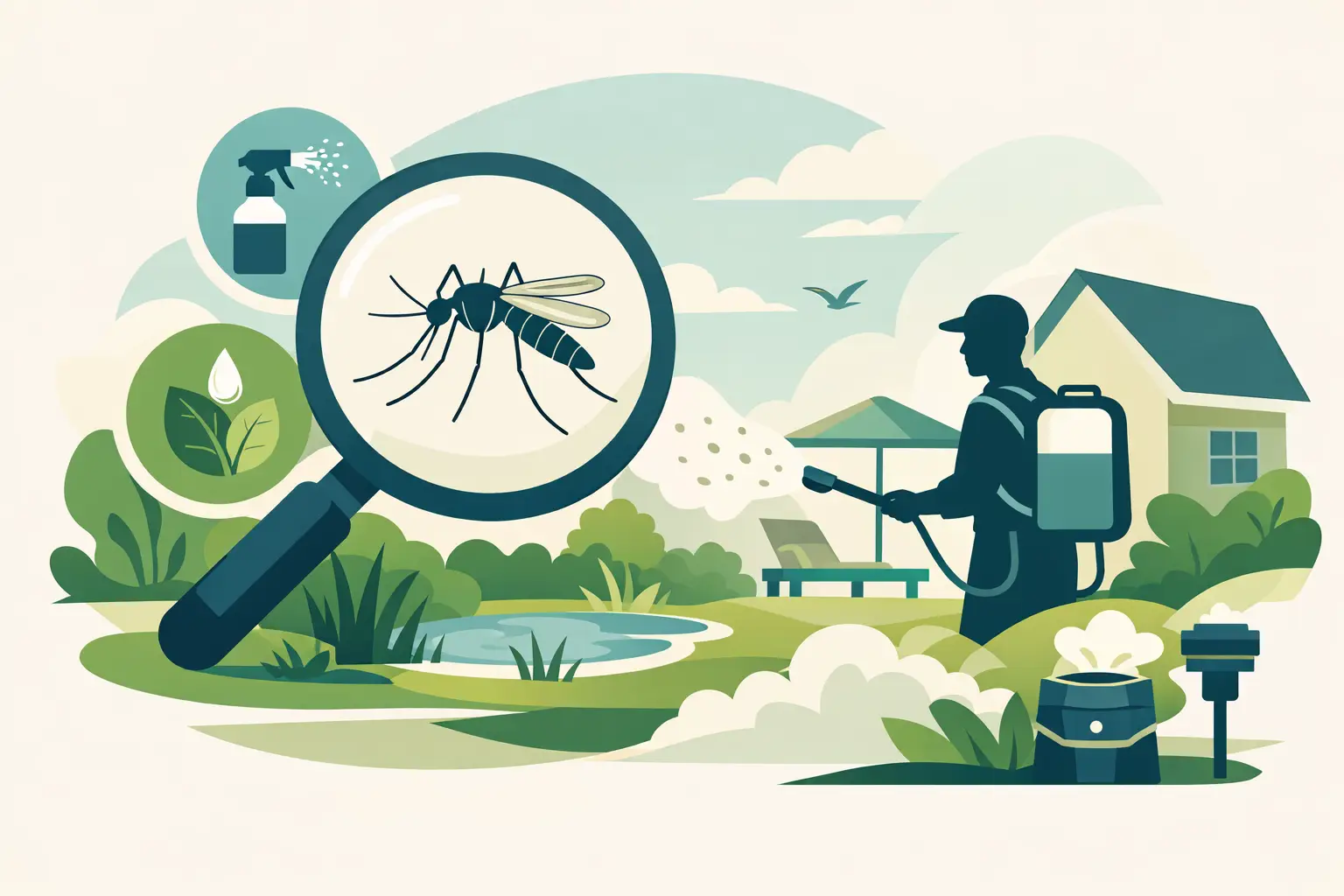
A backyard should be a place for dinner on the patio, children playing in the grass, and dogs running without every outing ending in bites. But when mosquitoes build up around a property, citronella candles and a quick spray before guests arrive rarely solve the real problem. Knowing how to choose mosquito treatment means looking beyond the bottle or price tag and choosing a plan that fits your yard, your household, and the length of Ontario’s mosquito season.
The right treatment should reduce mosquito activity where people and pets actually spend time while using a thoughtful, targeted approach. It should also account for the conditions that keep mosquitoes coming back: shade, dense shrubs, standing water, nearby drainage, and untreated neighbouring habitat.
Start with your property, not a one-size-fits-all package
Mosquitoes do not use every part of a yard equally. They rest in cool, protected vegetation during the day, then become active around patios, decks, pools, play areas, and doorways when temperatures rise. A small, sunny lot may need a very different approach than a wooded property with hedges, a ravine edge, or several damp low spots.
Before choosing treatment, take a walk around the property and consider where bites are happening most often. Are mosquitoes concentrated near the back deck? Do they appear after rain? Is the problem worst along a fence line, beside a shed, or around a heavily planted garden? These details help determine where a barrier treatment will have the greatest effect.
A quality provider should assess the property rather than apply the same volume of product to every yard. Targeted service can focus on mosquito resting areas and high-use outdoor spaces, helping reduce unnecessary spray while still delivering meaningful protection.
How to choose mosquito treatment based on your needs
The best option depends on whether you need season-long support, help for a specific event, or a lower-impact approach for a family-focused yard. Start by being clear about the outcome you want.
If mosquitoes make your yard uncomfortable week after week, recurring barrier treatments are usually the most practical option. These treatments are applied to vegetation and other mosquito harbourage areas at regular intervals through the active season. A recurring schedule helps maintain control as weather, rainfall, and new mosquito activity change throughout the summer.
If you are planning an outdoor wedding, family reunion, barbecue, or corporate gathering, special event treatment may be a better fit. Event service is designed around a specific date and treated area. It can make an outdoor space much more comfortable, but it is not a replacement for an ongoing program when mosquitoes are a regular property-wide issue.
Natural treatment options may appeal to households that prefer plant-based products or have particular concerns about conventional treatments. These options can be useful, but they may require more frequent applications or have different performance expectations depending on mosquito pressure, weather, and the property itself. Ask directly how long the treatment is expected to last and what follow-up plan is available if mosquito activity remains high.
Safety should be a clear part of the conversation
For parents and pet owners, safety is not an extra feature. It is central to the decision. Ask any provider what product type they use, where it will be applied, what precautions are required, and when people and pets can return to the treated area.
A responsible treatment plan focuses on precision. The goal is not to blanket the entire property. It is to treat mosquito resting zones strategically, avoid unnecessary application near sensitive areas, and follow product label directions carefully. If you keep bees, maintain a vegetable garden, have a pond, or have a pet with health concerns, mention it before service is scheduled. Those details can affect where and how treatment should be performed.
You should also expect straightforward aftercare instructions. In many cases, families and pets need to remain out of treated areas only until the application has dried, but instructions vary by product and conditions. A provider should never leave you guessing.
Mosquito Pros, for example, builds custom treatment plans around the property and uses a lower-volume approach designed to use 94% less spray than many standard programs. The value is not simply using less product. It is applying it where it can make the most difference for the people, pets, and outdoor spaces being protected.
Look at treatment timing, not just treatment type
Mosquito control is easier when it begins before the population becomes overwhelming. In eastern Ontario, activity often increases with warmer weather and can surge after periods of rain. Waiting until every person in the yard is being bitten can mean you are starting from behind.
For seasonal programs, early service helps establish a protective barrier before peak outdoor use. Regular follow-ups then help maintain results through the summer. The exact interval depends on the treatment selected, weather patterns, vegetation growth, and pressure around the property.
Timing also matters for event treatments. Book early enough that the provider can assess the site and schedule service appropriately before guests arrive. Last-minute treatment may still help, but it leaves less room to address standing water, heavy vegetation, or unexpected weather.
Ask how the provider handles breeding sites
Barrier sprays target adult mosquitoes where they rest, but standing water is where mosquitoes breed. A complete plan should address both sides of the problem.
Walk the yard after rain and empty or refresh water that collects in items such as buckets, toys, planters, tarps, birdbaths, and wheelbarrows. Clean gutters, cover rain barrels, and make sure low areas are draining properly where possible. Even a small amount of still water can support mosquito development.
Some water cannot simply be removed. Ponds, drainage areas, and larger landscape features need a more careful approach. Ask whether the provider offers site advice or larval control options for appropriate areas. Never add products to water without confirming they are suitable for that setting and used according to their directions.
This work does not replace professional treatment, especially on properties with dense vegetation or high mosquito pressure. It does, however, reduce the conditions that allow the problem to rebuild between visits.
Compare providers on service quality, not the lowest quote
A low price can be appealing, but mosquito treatment is not a product that should be judged on price alone. Compare what is actually included. Does the quote cover an inspection or property assessment? Is the treatment customized? How often are visits scheduled? Is there a clear re-treatment policy if conditions affect results? Will the technician explain what was treated and what you can do between services?
It is also reasonable to ask about experience with your type of property. A compact in-town yard in Kemptville may have different mosquito conditions than a larger, tree-lined rural property near Merrickville or North Augusta. Local experience matters because effective treatment reflects local weather, vegetation, and seasonal insect pressure.
Be wary of promises that sound absolute. No responsible company can guarantee that you will never see another mosquito, particularly after heavy rain or where surrounding habitat is favourable. What a professional program should deliver is a noticeable reduction in mosquito activity, a plan for maintaining that reduction, and clear communication when weather or site conditions create limits.
Do not overlook ticks when choosing yard protection
Many households begin searching for mosquito control because of bites and outdoor discomfort, but ticks deserve equal attention. Ticks often use the same types of edges, tall grass, leaf litter, shrubs, and wooded transitions where families and pets spend time. In Ontario, reducing exposure matters because ticks can carry Lyme disease, while mosquitoes can spread illnesses that affect people and pets, including heartworm risk for dogs.
If your property has wooded borders, frequent wildlife activity, long grass, or pets that spend time outdoors, ask whether mosquito service can be paired with tick treatment. A combined plan can be more practical than addressing each concern separately, provided the service is tailored to the areas where exposure is most likely.
Choose a plan you can maintain
The most effective mosquito treatment is one that fits your real routine. If you host outdoors every weekend, have young children playing outside daily, or rely on a patio for summer living, recurring service may offer better value and more reliable comfort than occasional one-off treatments. If your concern is limited to a single celebration, event treatment may be the sensible choice.
Whichever option you select, keep up the simple property habits that support it: remove standing water, trim back overgrown vegetation near seating areas, and report any changes in mosquito activity to your provider. A treatment plan works best when it is treated as ongoing yard protection, not a one-day fix.
The right choice should leave you feeling informed, not pressured. Ask clear questions, expect a plan built for your property, and choose the level of protection that lets your family, pets, and guests enjoy the outdoors with far fewer interruptions.

