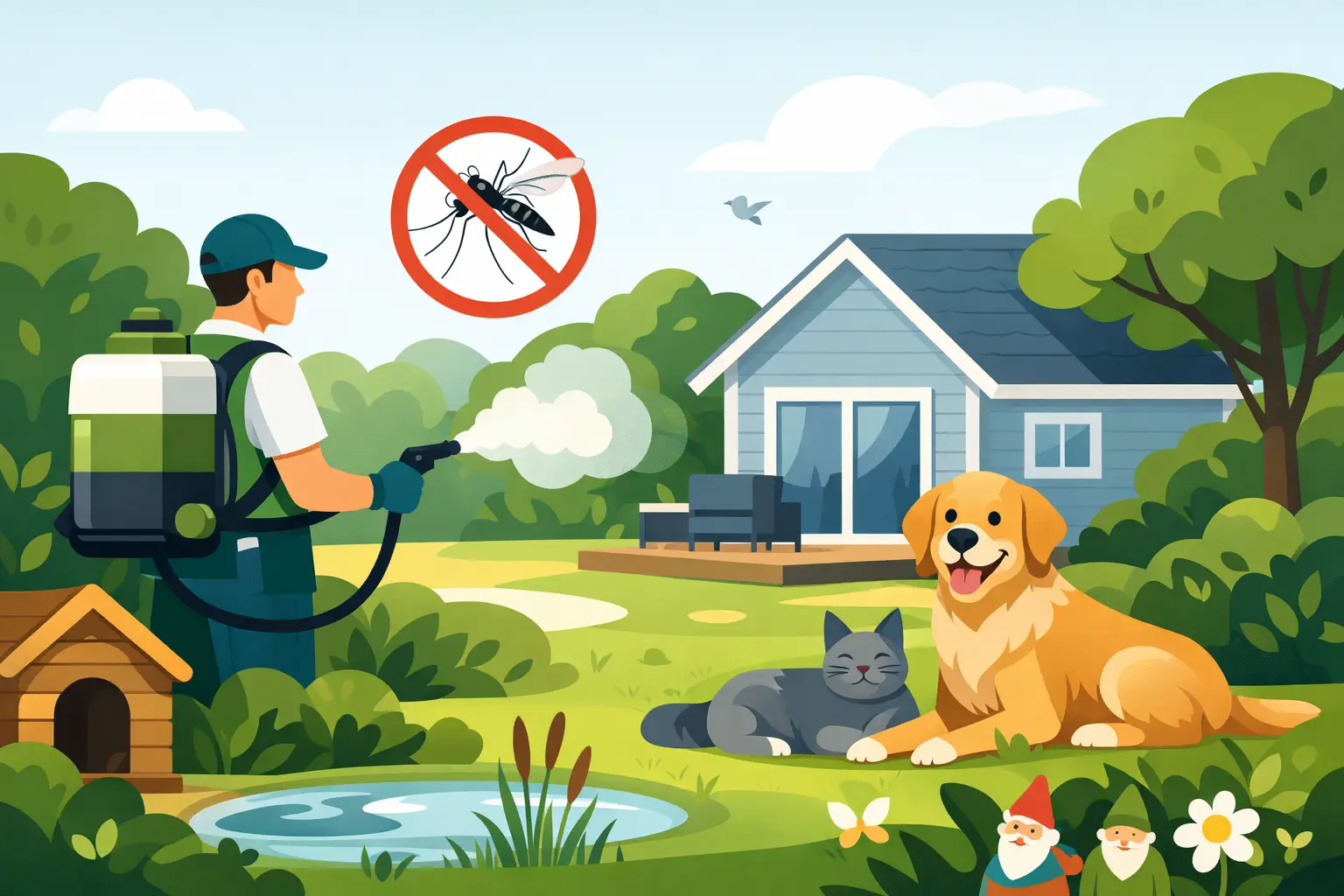
A backyard should be where your dog chases a ball, your children eat dinner on the patio, and guests stay for one more visit – not where everyone retreats indoors to avoid bites. A pet safe mosquito service Ontario homeowners can rely on is about more than reducing nuisance insects. It is about protecting the outdoor space your family actually uses during Ontario’s short, valuable warm season.
For pet owners, the concern is real. Mosquitoes can transmit heartworm to dogs, while ticks can expose people and pets to Lyme disease. No outdoor treatment can remove every risk or replace veterinary prevention, but a properly planned mosquito and tick program can significantly reduce the number of biting insects around your property.
What “Pet Safe” Should Mean for Yard Treatments
“Pet safe” should never mean spraying without a plan. It means choosing a provider that assesses the property, uses products according to their label directions, applies only where treatment is needed, and gives clear instructions for re-entry.
At Mosquito Pros, the goal is targeted protection rather than blanket spraying. Mosquitoes rest in shaded, humid vegetation such as hedges, under decks, around shrubs, tall grass, and the edges of wooded areas. Treating these specific resting zones allows for effective coverage with substantially less product than a broad, one-size-fits-all application. Our lower-volume approach uses up to 94% less spray than many conventional programs.
For most barrier treatments, pets and people should stay off treated areas until the application has dried. Your technician will provide property-specific guidance, but this typically means keeping dogs, cats, children, and other animals indoors during service and for the recommended drying period afterward. It is a straightforward precaution that helps protect the people and animals you care about.
Why a Custom Mosquito Service Matters in Ontario
Ontario yards are not all built the same. A compact lot in Kemptville with mature cedars needs a different approach than a rural property near Merrickville with tree lines, drainage areas, and larger shaded zones. Standing water, dense vegetation, neighbouring woods, pets’ favourite paths, and how you use the yard all affect where mosquitoes gather.
A custom treatment begins with those details. The technician identifies likely mosquito resting areas and common tick habitat, then focuses treatment where it will do the most good. This provides a more responsible alternative to applying product evenly across open lawn, patios, and spaces where there is little value in treating.
Mosquito pressure also changes through the season. Rain can create new breeding opportunities, hot weather can increase activity, and a single untreated wet corner can quickly become a problem. Recurring seasonal service helps maintain protection through the months when outdoor living is at its peak. The right schedule depends on your property and local conditions, not a calendar copied from another region.
Mosquito Control Starts with the Yard, Not Just the Spray
Professional treatment works best alongside a few practical property habits. Check for water collecting in planters, toys, tarps, wheelbarrows, and clogged eavestroughs. Refresh pet water regularly, keep grass and vegetation maintained, and repair screens around outdoor storage areas where water may collect.
These steps do not replace a professional barrier treatment when mosquito pressure is high. They reduce the breeding opportunities that keep the problem going between visits. A good service provider should help you understand both parts of the plan instead of presenting treatment as the only answer.
Protecting Dogs, Cats, and the Wildlife Around Your Property
Pets explore the yard differently than people do. Dogs push through shrubs, investigate under decks, drink from outdoor bowls, and lie down in cool shaded grass – which are also places mosquitoes and ticks may be active. That is why a pet-conscious plan considers more than the patio.
Before your appointment, bring pet bowls, toys, bedding, and any movable items inside or cover them as directed. Tell your technician about vegetable gardens, ponds, beehives, chickens, outdoor cats, or areas where your dog spends most of the day. This information helps shape the treatment plan and any precautions required for your property.
Fish ponds and water features deserve special attention. They should be identified before treatment so the technician can protect them appropriately and avoid unnecessary application nearby. The same applies to pollinator gardens. Effective mosquito control should be precise, not careless.
It is also wise to continue veterinarian-recommended heartworm and tick prevention. Yard treatments reduce exposure in the environment, while veterinary products protect your individual pet. Together, they offer stronger protection than either step alone.
Natural Options: What They Can and Cannot Do
Many Ontario homeowners ask for natural mosquito treatment options, especially when children and pets use the yard every day. Natural-based treatments can be a worthwhile choice for properties where ingredient preferences are a priority, and they can help reduce mosquito activity when applied correctly.
The trade-off is that natural options may not last as long or perform the same way under heavy mosquito pressure, after frequent rain, or on properties bordered by dense vegetation and wet areas. They often require more frequent service to maintain results. A knowledgeable provider should explain that honestly, then help you choose a program that matches your comfort level, budget, and mosquito problem.
For some households, a natural program is the right fit. For others, a targeted conventional treatment applied with strict label-directed precautions delivers the best balance of longevity and control. There is no single answer for every yard.
Tick Control Deserves Its Own Plan
Mosquitoes may get the attention because bites are immediate, but ticks are a serious concern across Ontario. They often wait in tall grass, leaf litter, ground cover, wooded edges, and along trails where pets and people brush against vegetation.
A mosquito treatment alone is not automatically a tick-control program. Ask whether the service specifically addresses tick habitat and whether the treatment zones include the perimeter areas where ticks are likely to be found. Keep pathways clear, remove leaf litter where practical, and check pets after walks or time near wooded edges.
If you find a tick attached to yourself or a pet, remove it promptly and follow appropriate medical or veterinary guidance. Reducing tick habitat around the home is valuable, but it should be part of a wider prevention routine.
Questions to Ask Before Booking a Pet Safe Mosquito Service Ontario
Before selecting a provider, ask how they assess your property, where they apply treatment, what precautions they recommend for pets, and whether they offer natural options. You should also ask how long you should wait before allowing pets back outside and what happens if rain affects a scheduled treatment.
Clear answers matter. A reputable company will not promise a mosquito-free property forever, because outdoor pests can fly in from nearby areas and weather changes quickly. What they should promise is a deliberate, property-specific approach designed to reduce activity where your family spends time.
For a backyard birthday, a wedding, or a busy restaurant patio, timing also matters. Special-event mosquito control can be scheduled around the date of your gathering, giving guests a more comfortable experience without leaving planning to the last minute.
The best time to address mosquitoes and ticks is before they dictate how you use your yard. Walk your property, note the shaded and damp areas your pets frequent, and arrange a customized assessment early in the season so protection is in place when outdoor life begins.

