
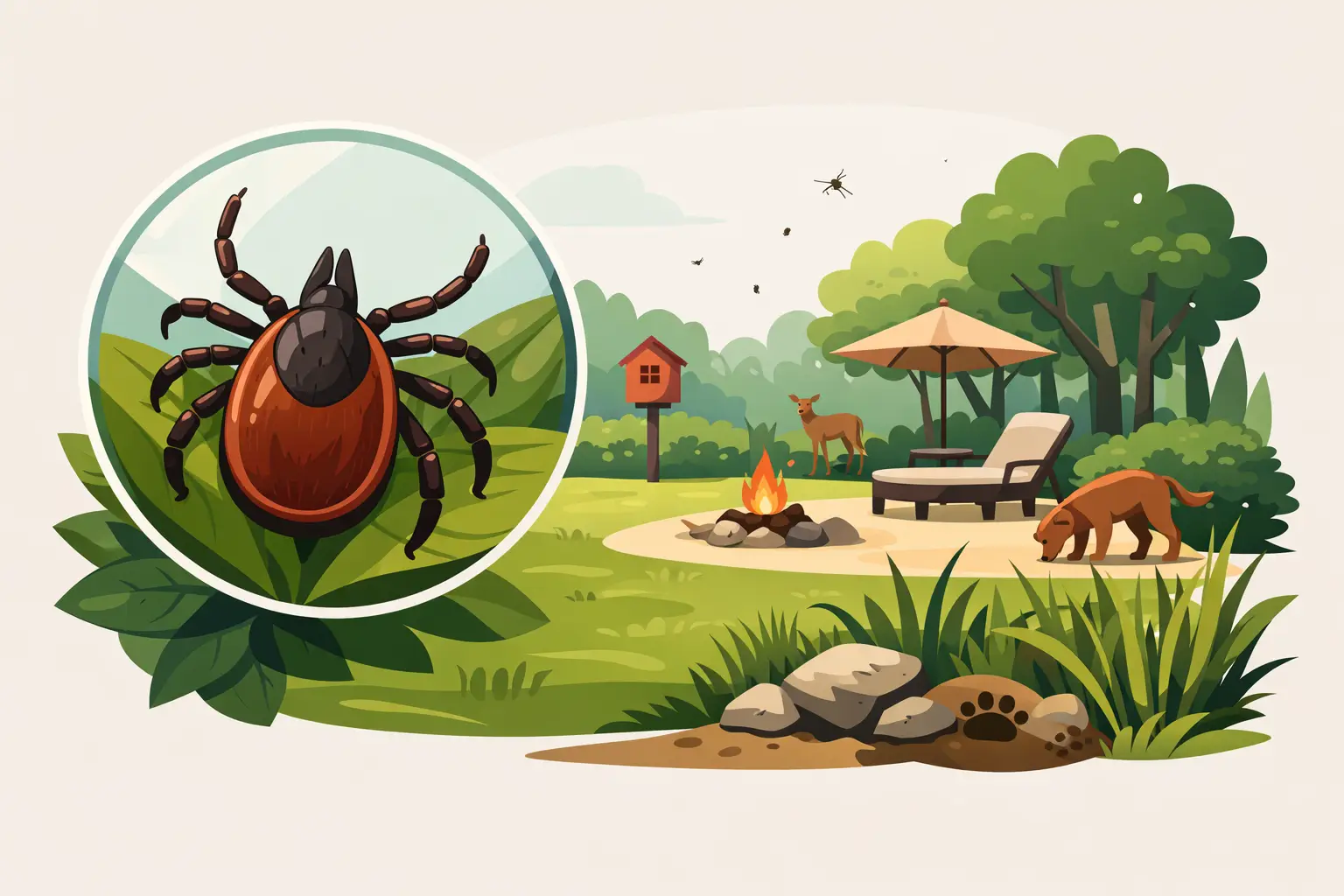
If you keep finding ticks near the deck, along the fence line, or on your dog after a quick trip outside, it helps to know what attracts ticks to backyards in the first place. Ticks do not appear at random. They settle where conditions help them survive, where animals carry them in, and where they can wait for a person or pet to brush past.
In Ontario, that often means the problem starts in the parts of the yard people pay the least attention to. It is usually not the centre of the lawn. It is the damp edge behind the shed, the overgrown garden border, the pile of leaves beside the fence, or the strip where your property meets a wooded area.
What attracts ticks to backyards most often
Ticks are drawn to shelter, moisture, and access to hosts. Unlike mosquitoes, they are not hunting by sound or swarming around open space. They survive by staying low in protected areas and latching onto passing animals or people.
That is why yards with shade, ground cover, and regular wildlife traffic tend to have a higher tick presence. A dry, sunny, open lawn is less appealing. A yard with dense vegetation, cluttered edges, and frequent visits from deer, mice, or rabbits is much more likely to support them.
The key point is that ticks need the right environment more than they need a specific backyard. If your property gives them cool, humid hiding spots and a steady supply of hosts, they can settle in very quickly.
Shade and moisture make a yard more tick-friendly
Ticks dry out easily. That is one of the biggest reasons they prefer hidden, humid areas over exposed ground. When a backyard holds moisture, ticks have a better chance of surviving long enough to find a host.
Heavily shaded spaces are a common issue. Trees, dense shrubs, tall ornamental grasses, and thick ground cover can all create cooler pockets where moisture lingers. Even if the rest of the yard feels dry, those protected zones can stay damp enough for ticks.
Leaf litter also matters more than many homeowners realize. A thin layer of leaves along the back fence or under hedges can hold moisture and create ideal cover. The same goes for wood piles, brush piles, and neglected corners where debris collects. These areas do not just hide ticks. They also attract the small animals that carry them.
This is where many properties become tricky. A natural-looking yard can be beautiful and practical, but the more sheltered and damp the landscape becomes, the more it may support tick activity. It does not mean you need to remove every tree or shrub. It means those features need to be managed with tick pressure in mind.
The problem with overgrown edges
Ticks are especially common at transitions. That includes the edges where lawn meets woods, gardens meet fence lines, or patios back onto unmanaged growth. These border areas give ticks both cover and access to hosts.
If grass is tall, shrubs are touching the ground, or weeds have filled in along the perimeter, ticks have more places to wait. People and pets also tend to brush against these edges while mowing, gardening, or playing, which increases the chance of contact.
Wildlife brings ticks into the yard
A backyard does not need to produce ticks on its own to end up with a tick problem. Often, wildlife is what introduces and spreads them.
Deer are well-known carriers, but they are not the only concern. Mice, voles, raccoons, rabbits, and other small mammals can all help move ticks through a property. Birds can also transport ticks from one area to another. If your yard offers food, shelter, or nesting space for these animals, the risk tends to go up.
That is why tick activity is often worse in yards near ravines, brush, fields, or wooded lots. In places like Merrickville, Kemptville, or Smiths Falls, where residential properties may back onto natural areas, homeowners can face more consistent pressure simply because wildlife movement is part of the landscape.
Mice matter more than most people think
When people think about ticks, they often picture deer first. But small rodents play a major role, especially in the tick life cycle. Mice can host immature ticks, and they thrive in wood piles, stone walls, sheds, and cluttered yard edges.
A tidy yard will not eliminate wildlife entirely, but reducing hiding spots can make the property less attractive. That matters because the more host animals move through your yard, the more chances ticks have to establish themselves.
Pets and people can carry ticks through the property
Dogs do not attract ticks in the way standing water attracts mosquitoes, but they do give ticks easy opportunities. If your dog runs through long grass, wooded trails, or overgrown yard edges, ticks can hitch a ride and drop off elsewhere on the property.
The same goes for people. Clothing, gardening gear, and outdoor cushions moved from one area to another can all play a small part. Usually, wildlife is the bigger driver, but high traffic in tick-prone spaces can help spread them around.
This is one reason tick control works best when it is not limited to one habit, like checking the dog after walks. Personal prevention matters, but if the yard itself remains a good habitat, the pressure stays in place.
Landscaping choices can increase or reduce tick pressure
Some landscaping features make a yard more comfortable and usable. Others quietly create the exact conditions ticks prefer.
Dense plantings around patios, deep mulch that stays wet, ivy-like ground cover, unmanaged garden beds, and stacked materials tucked into shady corners can all contribute. None of these automatically mean you will have ticks, but together they can create a property that holds moisture and supports wildlife movement.
By contrast, trimmed edges, more sunlight at ground level, cleaner transitions, and reduced clutter can make a yard less inviting. Even a simple gravel or mulch buffer between a wooded edge and the lawn can help reduce tick movement into active family spaces.
There is always a balance. Some homeowners want privacy screening, naturalized gardens, or wooded character, and that is reasonable. The goal is not to strip the yard bare. It is to recognize which features raise risk and then manage them intentionally.
What attracts ticks to backyards near family spaces
One of the more frustrating parts of tick activity is that it often develops close to the areas families use most. Play sets near tree lines, fire pits beside overgrown fences, and dog runs along shaded property edges can all sit beside prime tick habitat.
Ticks do not target children, pets, or gathering spaces on purpose. They simply wait where conditions are right. But when those conditions exist beside outdoor seating, gardens, or play areas, exposure risk goes up.
That is why tick prevention should focus not just on whether ticks are present, but where they are likely to be present. A backyard can look well kept overall and still have a few high-risk zones doing most of the damage.
How to make your yard less attractive to ticks
The most effective approach is usually a combination of habitat reduction and targeted treatment. Yard maintenance lowers the chances that ticks will settle in, while professional treatment helps reduce active populations in the areas where they hide.
Start with the basics. Keep grass cut, trim back overgrowth, remove leaf litter, and clear brush or yard waste from fence lines and shaded corners. Store firewood neatly and away from frequently used areas if possible. If wildlife is using the yard heavily, reducing food sources and shelter can help limit traffic.
Then look at where people and pets actually spend time. Those are the areas worth protecting first. Property-specific treatment is especially useful when a yard backs onto woods, has thick landscaping, or includes shaded zones that cannot realistically be removed.
A blanket approach is not always the smartest one. Some properties need attention along the perimeter and transition zones more than the entire lawn. That is where a customized program can make a real difference, especially when it is designed to reduce exposure without overapplying product.
For families who want to use their yard with more confidence during tick season, professional treatment often fills the gap between basic maintenance and real protection. Mosquito Pros focuses on that kind of tailored outdoor control, with lower-volume applications designed around how the property is used.
Ticks thrive when a yard gives them three things: moisture, shelter, and hosts. If you take away even one of those advantages, the space becomes less comfortable for them. If you address all three, your backyard becomes a much safer place for kids, pets, and summer time outside.
