
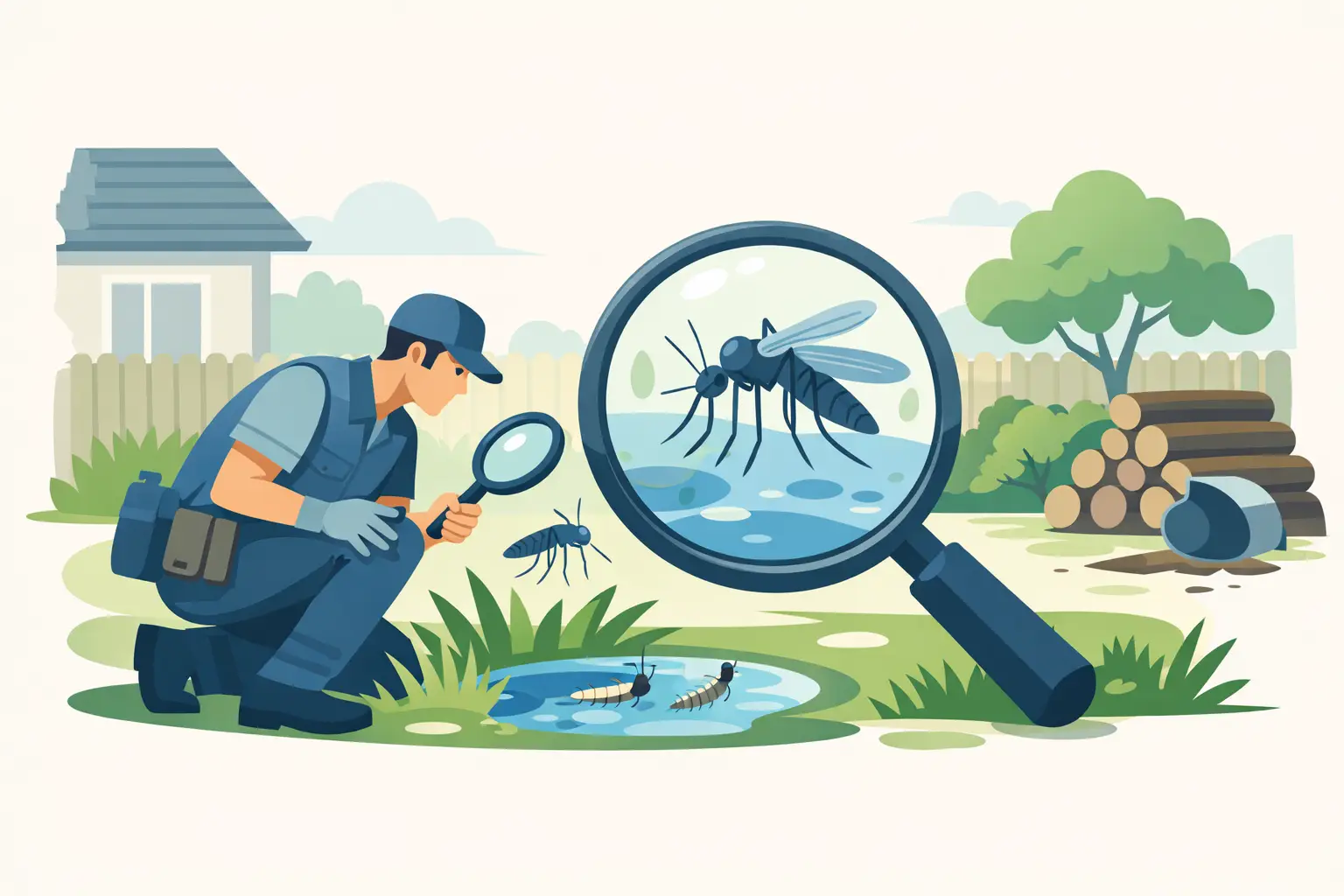
The difference between a treatment that brings real relief and one that feels short-lived often starts before any product is applied. A yard inspection before mosquito treatment identifies where mosquitoes breed, where they rest during the day, and where your family and pets spend time outside. That information allows for a more precise plan, rather than treating every corner of a property the same way.
For homeowners across eastern Ontario, mosquito pressure can change quickly after rain, during humid stretches, and around shaded yards with dense vegetation. A careful inspection helps target the conditions attracting mosquitoes while keeping spray volume low and protection focused where it matters most.
Why a Yard Inspection Comes First
Mosquitoes do not use a yard evenly. They need standing water to reproduce, but adult mosquitoes also need cool, protected places to rest between feeding periods. A patio may be the place you notice bites, while the source of the problem could be a clogged gutter, a shaded hedge, or a low area collecting water several metres away.
Treating without inspecting can miss those connections. A property-specific assessment helps determine whether the main concern is active breeding, adult mosquito harbourage, or both. It also helps a technician account for the people using the space: children playing near the lawn, dogs moving through the yard, guests gathering around a deck, or customers using an outdoor seating area.
The goal is not to coat a yard in product. The goal is to reduce mosquito activity where it creates the greatest nuisance and exposure risk.
What a Professional Looks for During a Yard Inspection Before Mosquito Treatment
A thorough inspection begins with the areas mosquitoes need most: water, shelter, and access to people or pets. The technician walks the property, reviews the layout, and looks beyond the obvious puddle in the middle of the lawn.
Standing Water and Hidden Breeding Sources
Mosquitoes can breed in surprisingly small amounts of still water. Birdbaths, plant saucers, toys, tarps, wheelbarrows, pool covers, rain barrels, clogged gutters, and unused containers can all hold water long enough to become a concern. Low spots near sheds, fences, or downspouts may also stay wet after rain, even if they look dry most of the week.
Not every water feature needs to be removed. A well-maintained pond, for example, may be managed differently than a neglected container holding stagnant water. The inspection helps separate what needs immediate attention from what can be handled through maintenance or a targeted recommendation.
Shady Resting Areas for Adult Mosquitoes
Adult mosquitoes commonly rest in dense, humid, shaded vegetation during the heat of the day. Technicians pay close attention to the undersides of leaves, hedges, shrubs, tall grass, brush piles, and the space beneath decks. These are often the areas where a custom barrier treatment can be most effective.
This is why an open lawn is rarely the main treatment target. Mosquitoes may cross the lawn, but they are more likely to shelter along its edges or in the vegetation surrounding it.
High-Use Outdoor Spaces
The inspection also considers how you use your property. A backyard patio, pool area, fire pit, playset, dog run, front entry, or outdoor dining space may need more attention than an unused corner of the lot. For an event, the priority may be a ceremony area, tent location, food station, or guest path.
A treatment plan should reflect the space you want to enjoy. This is especially valuable for families who want children and pets to be able to spend time outdoors with fewer interruptions from biting insects.
How Property Conditions Affect Treatment Decisions
There is no single mosquito treatment that suits every yard. The amount of shade, type of landscaping, recent weather, lot size, drainage, and nearby natural areas all affect how mosquitoes behave and how a treatment should be applied.
A heavily treed property may require attention to several shaded perimeter zones. A newer subdivision lot with fewer shrubs may have less adult mosquito shelter but more issues around drainage and water collection. Properties near wetlands, fields, or wooded edges can experience ongoing mosquito pressure from nearby habitat, even when the yard itself is well maintained.
That does not mean treatment cannot help. It means expectations and timing should be realistic. Removing standing water on your own property reduces local breeding opportunities, while targeted barrier treatment helps reduce adult mosquitoes resting and moving through treated areas. When neighbouring properties or natural areas contribute to the population, recurring seasonal service may provide more dependable comfort than a one-time visit.
What Homeowners Can Do Before the Inspection
You do not need to prepare your yard perfectly before a professional visit. In fact, seeing the property as it normally functions can help reveal the real problem areas. Still, a few simple steps make the assessment more useful.
Empty any containers that are easy to access, and make a note of spots where water keeps returning after rain. If you have noticed mosquitoes at a particular time or location, mention it. Perhaps they are worst around the deck at dusk, near the dog run in the morning, or beside a back door after watering the garden.
It is also helpful to point out any sensitive areas, including vegetable gardens, flowering plants, ponds, bee activity, children’s play equipment, and places where pets spend most of their time. These details help shape a careful, family-conscious treatment approach.
If possible, keep gates accessible and trim back vegetation that blocks entry to key areas. You should not need to remove healthy landscaping simply to control mosquitoes. However, clearing excessive brush and allowing airflow around dense shrubs can reduce some of the cool, damp shelter mosquitoes prefer.
Safety, Precision, and Lower-Spray Treatment
For many homeowners, the first question is not whether mosquitoes are a problem. It is whether treatment can be performed thoughtfully around children, pets, and outdoor living spaces. That concern is reasonable.
A detailed inspection identifies vegetation and mosquito resting zones that may need attention. Technicians can then focus treatment on relevant areas instead of following a broad, one-size-fits-all routine, while observing product label directions and the property’s layout.
Treatment recommendations should always account for conditions on site. Wind, rain, flowering plants, ponds, and the presence of people or pets can affect timing and application decisions. You may be asked to keep children and pets indoors during service and until treated areas have dried. Following those directions helps protect everyone while the treatment is being completed.
Natural treatment options may also be appropriate for some households. They can be a good fit for certain preferences and situations, although they may require different timing or more frequent service to maintain results. The best option depends on mosquito pressure, the property layout, and your priorities for the yard.
Why Inspections Matter for Tick Awareness Too
Mosquito inspections often reveal conditions that can also support ticks: tall grass, leaf litter, brushy borders, wooded edges, and unmanaged vegetation around frequently used areas. Ticks do not breed in standing water, so mosquito control is not tick control. Still, reviewing the full yard gives homeowners a clearer picture of where exposure may occur.
In Ontario, reducing tick contact is especially relevant for families and pet owners concerned about Lyme disease. Pets can also be affected by mosquito-borne heartworm. A professional can identify areas where mosquito and tick services may work well together, while recommending practical property maintenance such as mowing, clearing leaf debris, and keeping play areas away from dense brush.
After the Inspection: A Plan That Fits Your Yard
Once the inspection is complete, you should understand what is driving mosquito activity on your property, which areas will be treated, and what maintenance steps can support better results. A good plan also explains whether one service is appropriate for a special event or whether recurring visits make more sense through peak mosquito season.
Weather remains a factor. Heavy rain can create new standing water, and persistent humidity can increase mosquito activity between visits. That is why the best mosquito protection combines targeted treatment with regular checks for water collection and vegetation that has become overgrown.
Before your next backyard dinner, weekend playdate, or evening with the dog on the patio, take a close look at the spaces mosquitoes may be using when you are not outside. A short inspection can turn a frustrating yard into a more comfortable place to gather, play, and breathe easier.


