
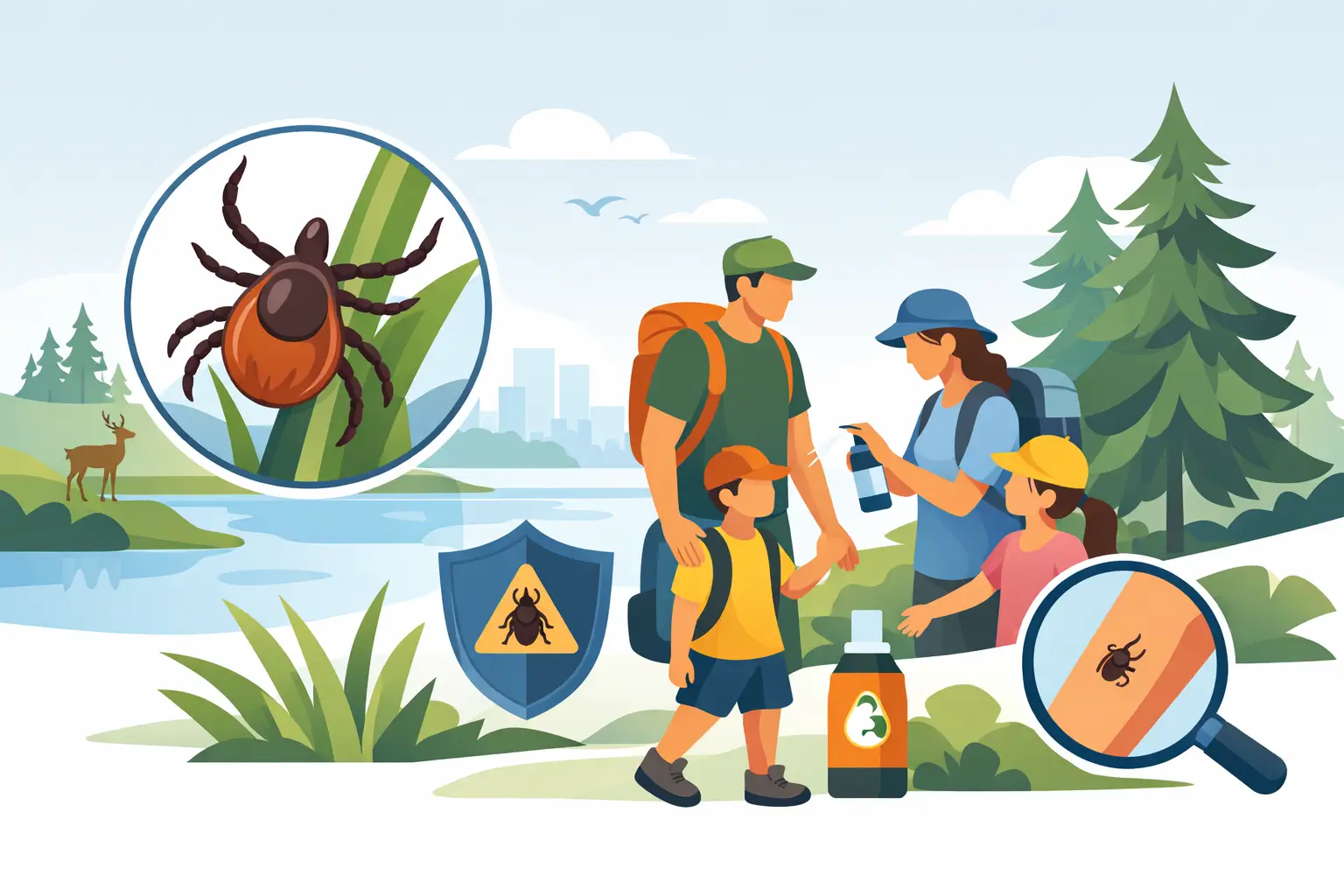
A child coming in from the backyard with grass on their socks or a dog racing through the brush can be part of a great Ontario day. It can also be the moment a tick finds its way home. This Ontario tick season safety guide gives families practical ways to reduce tick exposure without giving up the trails, gardens, and outdoor spaces they enjoy.
Blacklegged ticks, the species that can carry the bacteria associated with Lyme disease, are active in many parts of Ontario. Their activity is not limited to the hottest months. Ticks can become active whenever temperatures rise above freezing, which means spring and fall deserve just as much attention as summer.
Know When Tick Risk Is Highest
Ontario tick activity often starts as snow recedes and continues well into the fall. Nymphs, which are immature ticks, are especially easy to miss in late spring and early summer because they can be no larger than a poppy seed. Adult blacklegged ticks are more commonly encountered in the fall and are easier to see, though they can still attach unnoticed in hair, behind knees, or around waistbands.
Risk depends on where you spend time, not just the calendar. Ticks wait in tall grass, leaf litter, wooded edges, stone walls, brushy trails, and the transition areas between lawn and forest. A neatly maintained lawn can lower the chance of contact, but it does not eliminate it. Wildlife, including deer, rodents, and birds, can bring ticks onto a property.
Not every tick carries disease, and a tick bite does not automatically mean infection. Still, quick prevention and prompt removal are worthwhile because they reduce the opportunity for a tick to stay attached.
Ontario Tick Season Safety Guide: Personal Protection
Start with simple barriers when your family is walking trails, working in the garden, camping, or spending time near long grass. Wear light-coloured clothing so ticks are easier to spot, closed-toe shoes, and long pants when conditions allow. Tucking pants into socks may not be fashionable, but it creates a useful barrier for hikes and brushy areas.
Use an insect repellent approved for use in Canada and follow the product label carefully. Repellent should be applied as directed, particularly for children. Some clothing and gear treatments are designed to repel ticks as well, but they must be used only according to their instructions. Keep treatments away from pets unless the label specifically says they are appropriate.
Stay on the centre of trails where possible. Ticks do not jump or fly. They climb onto people and pets when clothing or fur brushes against vegetation. Avoiding overgrown edges makes a real difference, especially on properties with wooded lots or unmanaged borders.
Make Tick Checks Part of the Routine
A tick check should happen after time outdoors, not only after a deep-woods hike. It takes less than a minute to check children before bath time or to run your hands through a dog’s coat after a backyard visit.
Check the scalp and hairline, around ears, under arms, inside and behind knees, around the waist, between legs, and around sock lines. On pets, look closely around the ears, collar area, eyelids, toes, groin, and under the front legs. Ticks can be hidden beneath thick fur, so use your fingertips as well as your eyes.
Showering soon after coming indoors can help wash away unattached ticks and provides a good opportunity for a full check. Place outdoor clothing in a hot dryer before washing if the fabric allows. Heat helps kill ticks that may be clinging to clothing.
If You Find an Attached Tick
Remove an attached tick as soon as you notice it. Use clean, fine-tipped tweezers to grasp the tick as close to the skin as possible. Pull upward with steady, even pressure. Do not twist, crush, burn, or cover the tick with petroleum jelly. Those methods can make removal harder and are not recommended.
After removal, clean the bite area and your hands with soap and water or an appropriate antiseptic. If small mouthparts remain in the skin, do not dig aggressively. Keep the area clean and seek medical advice if you are concerned.
Take a clear photo of the tick if you can, and note the date and location where exposure may have occurred. Watch for symptoms over the following days and weeks. A spreading rash, fever, chills, headache, unusual fatigue, muscle aches, joint pain, or facial weakness should be discussed with a health-care professional promptly. Lyme disease does not always begin with the familiar bull’s-eye rash, so changes in how you feel matter.
For pets, contact your veterinarian if you find a tick, especially if your dog seems tired, sore, feverish, or off food. Ask your veterinarian about tick prevention suited to your pet’s age, health, and lifestyle. Human repellents and pet tick products are not interchangeable.
Make Your Yard Less Tick-Friendly
The most effective property strategy focuses on the places where ticks rest and where people or pets make contact with them. Keep grass cut, remove leaf piles, trim back dense vegetation, and create a clear separation between play areas or patios and brushy edges. Store firewood neatly in a dry area away from the home when possible, since woodpiles can shelter small animals that support tick populations.
Pay attention to the high-traffic zones rather than treating every square metre the same way. The path from the driveway to the garden, a children’s playset near a tree line, a dog run beside shrubs, or a patio bordered by tall plantings may need more attention than open lawn.
There is a trade-off with any yard approach. Landscaping changes can reduce tick habitat but may take time and ongoing maintenance. Personal protection works immediately but relies on consistent habits. Targeted professional treatments can add another layer of protection for properties with persistent tick pressure, particularly around perimeter vegetation and outdoor living areas. No treatment should be presented as a reason to skip tick checks.
Mosquito Pros uses property-specific treatment plans designed to reduce tick activity around the areas families and pets use most, while using lower-volume, family-conscious methods. A tailored assessment is especially useful for homes near wooded edges, rural properties, and yards where ticks are found repeatedly.
Protect Pets Without Guesswork
Dogs often pick up ticks first because they spend more time close to grass and shrubs. A reliable veterinary prevention plan is one of the strongest protections you can provide, but product choice depends on your pet. Age, weight, medical history, other medications, and whether there are cats in the household can all affect what is appropriate.
Do not wait until you find a tick to make a plan. Ask your veterinarian before peak outdoor season begins, then keep checking your pet even when they are on prevention. Products can lower risk substantially, but no approach replaces awareness after a walk, kennel visit, or afternoon in the yard.
Keep Outdoor Plans Comfortable and Practical
Tick safety should fit real life. For a birthday party, wedding, or weekend barbecue, mow and tidy the event area ahead of time, keep seating away from brush, and encourage guests to use repellent if they will be near vegetation. For children, a quick check when they come inside is more realistic than trying to keep every game away from the lawn.
Families in Merrickville, Kemptville, Smiths Falls, Carleton Place, Brockville, and nearby communities often enjoy properties with the exact mix ticks prefer: trees, gardens, trails, and open space. That is a reason for a plan, not a reason to stay indoors. Build tick checks into the routine, keep yard edges managed, and get targeted help when your property needs an added layer of protection. A safer outdoor season starts with the small actions you repeat every day.

