
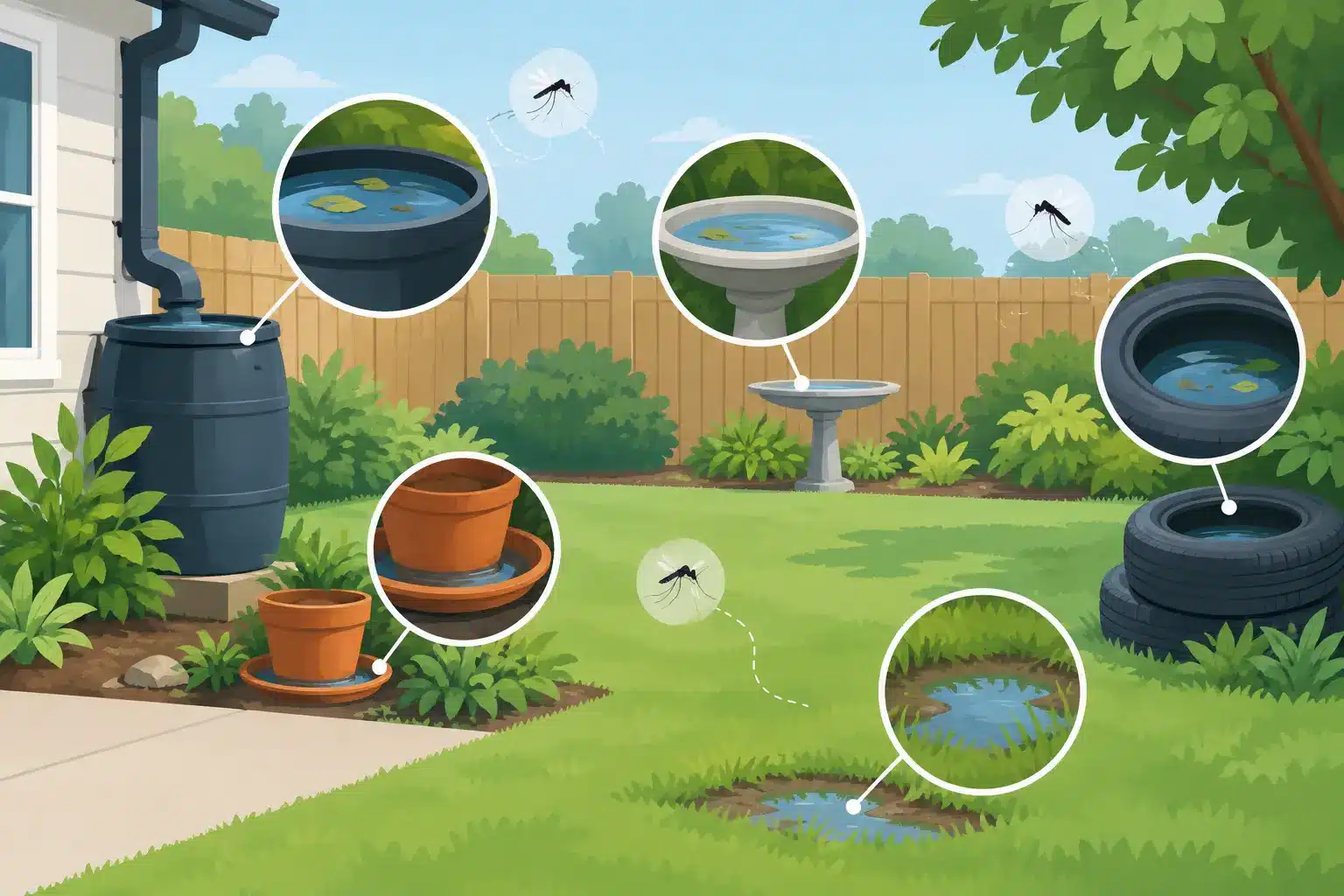
A single rain-filled flowerpot saucer can produce a new wave of mosquitoes in less time than most homeowners expect. The top mosquito breeding sites are often not the obvious swampy corner of the property. Around Eastern Ontario homes, they are commonly small, overlooked pockets of standing water close to the deck, play area, garden, or back door.
Mosquitoes need water to complete their life cycle, but they do not need much of it. Many species lay eggs in containers, clogged drainage areas, or low spots that hold water after rain. Others rest in cool, shaded vegetation during the day before moving out to feed in the evening. Effective mosquito reduction starts by dealing with both parts of the problem: the water where larvae develop and the sheltered areas where adult mosquitoes hide.
Why Breeding Sites Matter So Much
Mosquito control is most effective before mosquitoes become flying, biting adults. Eggs, larvae, and pupae develop in water, and warm weather can speed up the process considerably. That means a container holding water after a weekend rainfall may become a problem before the next one.
Removing standing water will not eliminate every mosquito on a property. Mosquitoes can fly in from nearby ditches, wetlands, wooded edges, and neighbouring yards. Still, reducing the water available on your own property limits the number emerging right where your family, pets, and guests spend time outdoors.
This is particularly valuable around cottages, rural properties, and homes near the Rideau River, creeks, drainage corridors, or heavily wooded lots. The goal is not to make an Ontario yard unnaturally dry. It is to prevent small, avoidable water sources from becoming mosquito nurseries.
Top Mosquito Breeding Sites to Check First
1. Buckets, toys, tarps, and other containers
Any item that catches rain can become a breeding site. Buckets, wheelbarrows, watering cans, recycling bins, plastic toys, spare tires, uncovered barbecue covers, and folded tarps are frequent culprits. A tarp does not need to look full of water to matter. The shallow folds around its edge may hold enough water for mosquito larvae.
Walk the property after a rainfall and look at it from a mosquito’s perspective. Turn containers upside down, store them under cover, or drill drainage holes where appropriate. For items that must remain outside, empty and scrub them at least once a week during mosquito season. Scrubbing matters because some mosquito eggs can stick to the inside surface just above the water line.
2. Eavestroughs and downspouts
Clogged eavestroughs are easy to miss because the water is above eye level. Leaves, pine needles, shingle grit, and small branches can block drainage and create a sheltered pool that remains wet long after rain has stopped. Mosquitoes may breed there, while the vegetation and roofline make the site difficult to notice.
Check that eavestroughs flow freely and that downspouts direct water away from the foundation. If the same area stays soggy after every storm, the grading or drainage setup may need attention. This protects the home from moisture issues as well as reducing mosquito habitat.
3. Birdbaths, pet bowls, and outdoor water features
Water features can be part of a comfortable, attractive yard, but still water needs regular maintenance. Birdbaths should be emptied, rinsed, and refilled every few days. Pet water bowls need fresh water daily, which usually prevents larvae from developing.
Ponds are different. A healthy pond with circulation, appropriate filtration, and fish may be less suitable for mosquitoes than a stagnant container. The trade-off is that neglected ponds, disconnected pumps, or shallow plant-filled edges can create quiet water where larvae survive. If you have a pond, maintain circulation and inspect its edges rather than filling it in unnecessarily.
4. Pool covers, hot tub covers, and neglected pools
A properly maintained swimming pool is not usually a mosquito breeding site. A neglected pool, an unused kiddie pool, or the puddles sitting on top of a pool cover can be. The same goes for hot tub covers that sag and collect rainwater.
Remove water from covers promptly and keep the cover taut when possible. If a pool is closed for the season, check it periodically instead of assuming the cover has solved the problem. This simple habit can make a noticeable difference around patios and backyard seating areas.
5. Poor drainage and low spots in the lawn
Some breeding sites are built into the landscape. Compacted soil, ruts from equipment, uneven lawn areas, and low spots near sheds or fences can hold water for days. These sites are especially common after spring thaw or repeated summer storms.
Aeration, topdressing, grading improvements, and better drainage may help, depending on the cause. The right solution depends on the property. A low area that stays wet because of a broken downspout extension needs a different fix than a naturally damp section near a wetland. Avoid directing runoff toward a neighbour’s property or into an area where it will simply create a new standing-water problem.
6. Plant saucers, rain barrels, and garden supplies
Gardens offer plenty of hiding places and water sources. Plant saucers, nursery pots, trays, overturned lids, and open compost containers often collect rain. Rain barrels are useful for conserving water, but they should have tight-fitting lids and properly screened openings. Without a screen, they can become one of the most productive mosquito breeding sites on the property.
Dense garden beds can also provide resting areas for adult mosquitoes, especially when they are close to a seating area. You do not need to remove every shrub or shade plant. Instead, keep vegetation trimmed back from patios, doorways, and play spaces, and remove debris that traps moisture underneath.
7. Ditches, catch basins, and drainage channels
Properties in rural and semi-rural Eastern Ontario may border roadside ditches, swales, culverts, or drainage channels. These features are designed to move water, not necessarily to stay dry. If water is slow-moving or stagnant, they can support mosquito development.
Do not block drainage ditches or alter municipal drainage systems without approval. Homeowners can, however, keep private culverts clear of leaves and debris, report blocked public infrastructure, and prevent yard waste from collecting in drainage paths. When a larger water source cannot be removed, professional treatment may be a more practical part of a seasonal mosquito plan.
Do Not Forget Adult Mosquito Resting Areas
Breeding water is only half the picture. Adult mosquitoes avoid direct sun and wind during the hottest part of the day. They rest in tall grass, thick shrubs, brush piles, hedges, under decks, and shaded perimeter vegetation.
That is why a yard can still feel mosquito-heavy even after every bucket has been emptied. Trim tall grass, clear unnecessary brush, and create a little breathing room around decks, walkways, and outdoor seating. These changes also make it easier to inspect the property for hidden water.
For families with pets, this work supports more than comfort. Mosquitoes can transmit heartworm to dogs, while ticks thrive in many of the same shaded, vegetated areas. Keeping these zones managed helps reduce exposure where pets and children are most likely to play.
A Weekly Routine That Actually Works
The best prevention plan is simple enough to repeat. After rain, take 10 minutes to walk the yard. Empty anything holding water, inspect covers and tarps, look under decks and behind sheds, and check that drainage is moving as it should.
Weekly attention is more effective than a major cleanup once or twice a summer. It interrupts the mosquito life cycle before a small issue becomes a persistent biting problem. During wet stretches, check more often, particularly around cottages and properties that are vacant during the week.
When mosquitoes remain active despite cleanup, the source may be outside your immediate control or adults may be resting in dense vegetation around the property. Mosquito Pros assesses each yard individually, focusing treatment where mosquitoes live and hide rather than relying on blanket, high-volume spraying. That targeted approach is useful when you need dependable protection for a patio, family yard, outdoor event, or cottage weekend.
A dry bucket and a clear eavestrough may seem like small victories, but mosquito prevention is built on small actions repeated at the right time. Start after the next rainfall, protect the spaces your family uses most, and deal with standing water before mosquitoes have the chance to make it home.


