
Mosquitoes rarely take over a yard because of one big problem. More often, they build up around a handful of overlooked wet spots: a clogged eavestrough, a tarp holding rainwater, a shaded corner where grass stays damp, or a planter saucer near the patio. This natural mosquito control guide focuses on reducing the conditions mosquitoes need before they turn evenings outdoors into a battle of swatting and covering up.
For Ontario families, the goal is not to make a property sterile or avoid the outdoors all summer. It is to make the yard less attractive to mosquitoes while protecting children, pets, pollinators, and the spaces where people gather. Natural methods can make a meaningful difference, especially when they are used consistently and matched to the property.
Start Where Mosquitoes Start: Standing Water
Mosquitoes need water to reproduce. Even a small amount can support larvae, and warm periods after rain can speed up the cycle. A weekly walk around the property is one of the most effective low-impact habits a homeowner can adopt during mosquito season.
Empty and refresh water in bird baths, pet bowls, plant saucers, wheelbarrows, toys, buckets, and patio furniture covers at least once a week. Turn over items that collect rain, including canoes, kiddie pools, unused flowerpots, and recycling bins left outdoors. If a rain barrel is part of your watering plan, fit it with a secure fine mesh screen so mosquitoes cannot access the water.
Some water features are worth keeping. A pond with movement, healthy circulation, and fish is far less likely to become a mosquito nursery than still water. Small fountains and pond pumps can help, but they must run reliably. If water cannot be drained or covered, such as a rain collection area or ornamental pond, a biological larvicide containing Bti may be appropriate when used exactly according to its label. Bti targets mosquito larvae rather than adult mosquitoes and is often a practical option for contained water.
Drainage deserves equal attention. Clear eavestroughs, extend downspouts away from the foundation, and fill low spots that hold water after a storm. In Eastern Ontario, spring thaw and summer thunderstorms can leave moisture behind for days, particularly around cottages, sheds, and shaded lawns. If puddles consistently return in the same location, the long-term fix may be grading, drainage improvements, or a change in landscaping rather than repeated temporary measures.
Make Resting Areas Less Comfortable
Adult mosquitoes do not spend all day flying around your deck. They rest in cool, protected vegetation, especially during hot daylight hours. Dense shrubs, long grass, leaf piles, and damp areas along fences can give them exactly the shelter they need.
Keep grass cut, trim back overgrown shrubs, and remove leaf litter or brush piles close to patios, play areas, and doors. This does not mean stripping a property bare. Native planting and wildlife-friendly gardens still have value. The practical approach is to create some separation between dense planting and the places your family uses most. Keep vegetation maintained along pathways, around outdoor seating, and beside areas where pets run or children play.
Pay close attention to the perimeter of the yard. Mosquitoes often shelter along wooded edges, hedges, under decks, and near stacked materials where shade and moisture meet. Those are also areas where ticks may be present. Keeping woodpiles neat and away from frequently used living spaces can reduce habitat for small animals that carry ticks while making the area easier to inspect and maintain.
Use Physical Barriers Where People Gather
A natural strategy works best when it protects people directly as well as reducing mosquito habitat. Screens on windows, porch openings, gazebos, and patio enclosures create a reliable barrier without adding anything to the air or landscape. Repair small tears early. A gap around a screen door can undo the benefit of an otherwise well-maintained outdoor room.
For open patios, airflow is one of the simplest tools available. Mosquitoes are weak fliers, so an oscillating fan aimed across a seating or dining area can make a noticeable difference. It is especially useful for backyard dinners, cottage decks, and outdoor celebrations because it provides immediate relief without relying on scented products.
Light-coloured, loose-fitting clothing offers another layer of protection when mosquitoes are active at dawn, dusk, or after rainfall. Long sleeves and pants are particularly useful in tall grass, wooded areas, or around the edge of a property where ticks may be waiting. For personal repellents, choose a product registered for use in Canada and follow the label carefully, particularly for children and pets.
Be Realistic About Natural Repellents
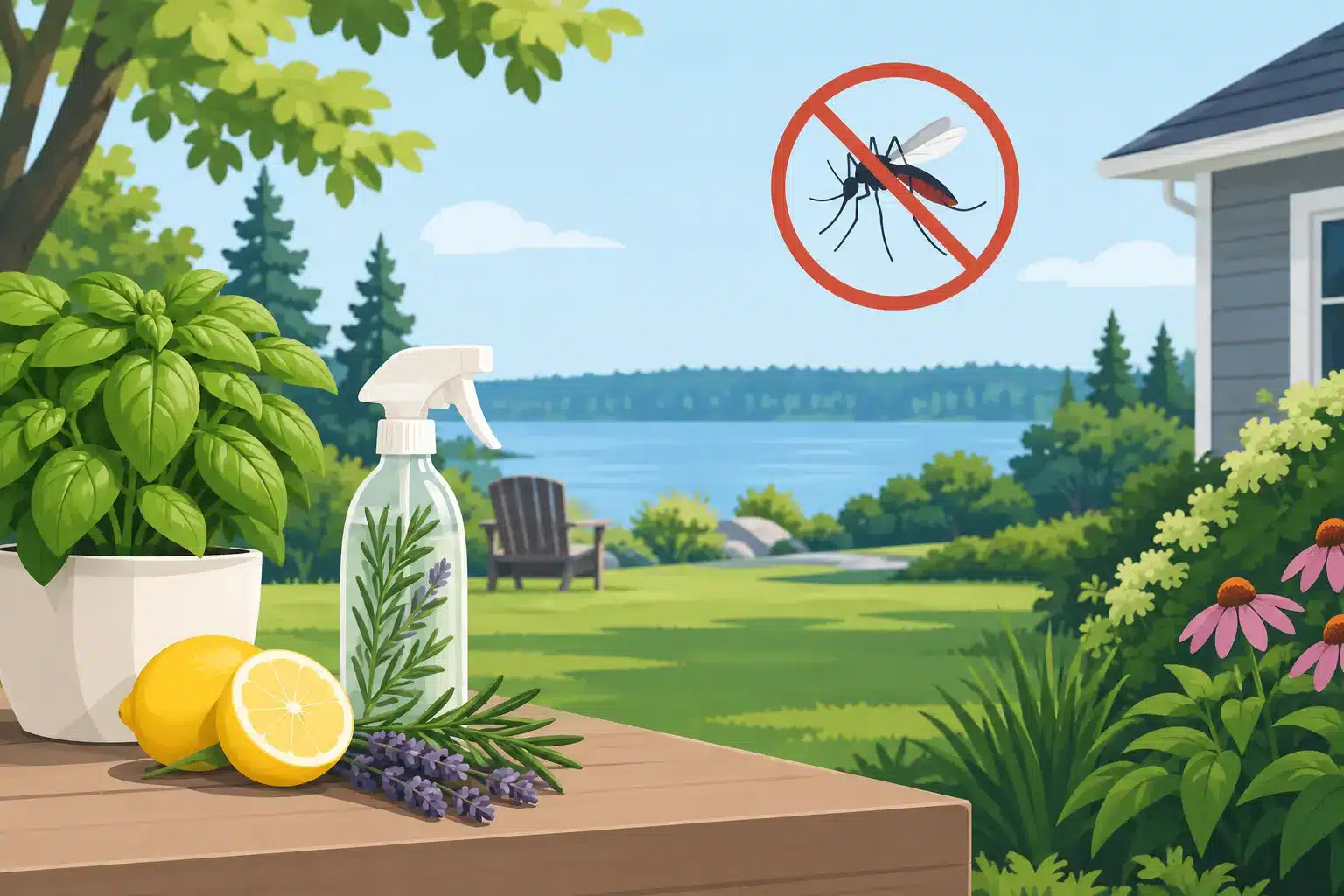
Citronella candles, essential-oil sprays, and mosquito-repelling plants are popular because they feel like an easy natural answer. Their value is limited. A citronella candle may help very close to the flame on a calm evening, but it will not protect an entire deck when mosquitoes are active. Lavender, marigolds, basil, and similar plants can make a garden enjoyable, but planting them around a patio will not replace drainage, maintenance, or personal protection.
Essential oils also require care. Natural does not automatically mean safe for every person, pet, surface, or garden. Concentrated oils can irritate skin, trigger sensitivities, and be harmful if misused around animals. Avoid homemade mixtures with uncertain dilution rates, and do not apply products to pets unless they are specifically labelled for that purpose.
The trade-off is simple: scent-based products can support a layered plan, but they should not be the main defence on a property with persistent mosquito pressure. When bites are frequent, the source of the problem needs attention.
Natural Mosquito Control Guide for Events and Cottages
Mosquitoes can turn a wedding, family barbecue, or cottage weekend into an uncomfortable experience quickly. For one-time gatherings, preparation should begin before guests arrive, not when the first mosquitoes appear.
Start by removing standing water and mowing or trimming areas near seating at least several days ahead. Set up fans where guests will eat or visit, and consider screened spaces for food service or children’s activities. Plan outdoor activities for the brighter, breezier parts of the day when possible. If the event runs into the evening, make personal repellent available and encourage guests to use it.
Cottage properties may need more frequent inspection because they are not always occupied. Check docks, boats, tarps, outdoor storage, and rain barrels each visit. Shoreline vegetation and wooded edges can create persistent resting areas, while seasonal wet spots can be easy to miss until mosquito numbers rise.
When a Natural Plan Needs Professional Support
Home maintenance is the foundation of mosquito reduction, but some properties face conditions that cannot be solved with a quick cleanup. Large wooded lots, dense vegetation, wetland-adjacent yards, drainage limitations, and heavy shade can all create ongoing pressure. The same is true when a family wants to use its deck, pool area, or play space every day during peak season.
A professional assessment can identify where mosquitoes are actually resting and breeding instead of treating the whole yard as if every area carries the same risk. Mosquito Pros offers customized natural treatment options and targeted seasonal plans for homes, cottages, businesses, and special events across Eastern Ontario. The focus should be on the shaded, vegetated, perimeter, and moisture-prone areas where mosquitoes hide, while following product labels and property-specific instructions.
Natural control is not an all-or-nothing choice. Some households can manage mosquito pressure well with regular water management, yard maintenance, screens, and fans. Others need those same habits paired with a targeted treatment plan for dependable outdoor comfort. The right approach depends on the property, the season, and how much time your family wants to spend outside.
A yard should feel like part of home, not a place everyone leaves at sunset. Start with the wet spots and shaded edges this week, then build protection around the places your family and pets use most.


