
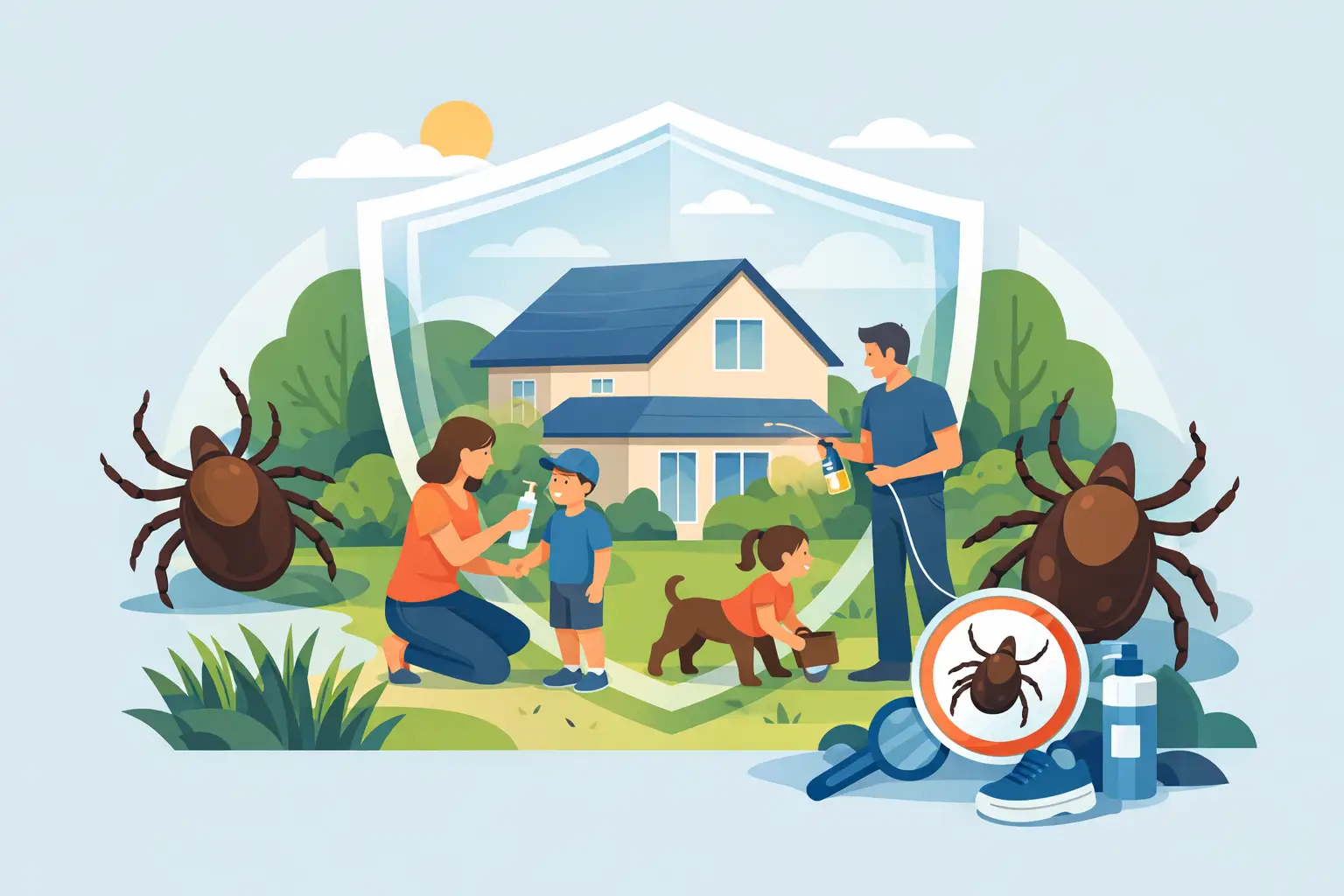
A tick does not need much time to create a serious problem. One walk through tall grass, one afternoon in the yard, or one dog brushing past a fence line can be enough. When families ask about the best tick protection for families, they are usually not looking for one product. They want a practical way to keep kids, pets, and outdoor spaces safer all season.
What the best tick protection for families really looks like
The most effective approach is layered protection. Ticks are persistent, and no single step covers every risk. A spray on its own is not enough if the yard is overgrown. A tidy yard is helpful, but it does not protect a child playing near a wooded edge or a dog moving through shaded brush. Good family protection comes from combining personal habits, pet protection, property maintenance, and targeted outdoor treatment.
That matters even more in Ontario, where tick activity has become a growing concern and Lyme disease remains top of mind for many homeowners. If your family spends real time outside – on the lawn, around play structures, near gardens, or along tree lines – your protection plan needs to match how your property is actually used.
Start with the places ticks like most
Ticks are not spread evenly across a yard. They prefer shaded, humid areas where they can wait on long grass, weeds, brush, and leaf litter. The highest-risk zones are often the least obvious ones: along fences, behind sheds, near wood piles, under dense shrubs, and where lawn meets trees or unmanaged growth.
This is why generic, one-size-fits-all treatment plans often miss the mark. A family with a wide open sunny lot has different needs than a family whose yard backs onto bush, a ravine, or a trail. The best tick protection for families begins with understanding where exposure is most likely on that specific property.
If you have children, think about movement patterns. Where do they cut through the yard? Where do they kick off shoes, sit in the grass, or chase the dog? If you have pets, pay attention to the routes they use every day. These are the areas that deserve the most attention.
Yard changes that actually lower tick pressure
Basic yard maintenance does more than improve appearance. It removes the conditions ticks rely on.
Keeping grass cut short helps reduce humidity at ground level and makes the space less attractive to ticks. Clearing leaf litter, trimming back overgrown shrubs, and opening up dense edges can make a big difference, especially in spring and early summer. If there is a wood pile on the property, storing it in a dry, orderly area away from play spaces helps reduce harborage for small animals that can carry ticks.
There is a limit, though. Yard work lowers pressure, but it does not create a sealed barrier. If your property borders unmanaged land or wildlife corridors, ticks can still be introduced regularly. That is where families often need more than maintenance alone.
Clothing and personal protection still matter
For active families, personal protection is part of the full picture. Light-coloured clothing makes ticks easier to spot. Long socks, closed shoes, and long pants help when children are in taller grass or wooded areas, although that is not always realistic in hot weather.
Tick checks are one of the simplest and most important habits. They work best when done right away after outdoor time, not hours later. Parents should check behind knees, around waistbands, under arms, around ears, at the hairline, and anywhere clothing fits snugly. Pets need checks too, especially around the ears, neck, toes, and under the collar.
This step is easy to overlook because it feels small. It is not small. Prompt removal can reduce the chance of disease transmission, and it also helps you notice patterns – like whether ticks are being picked up near a certain hedge line, garden edge, or back corner of the lot.
Pet protection is family protection
If you have a dog or outdoor cat, tick control for pets is part of household protection. Pets move through the exact spaces where ticks wait, then bring that risk back toward people, patios, mudrooms, and furniture.
Veterinary tick prevention is important, but it should not be treated as the whole answer. Pet products help protect the animal. They do not reduce the number of ticks in the yard. If your dog runs the perimeter every day or rests under shrubs, the environment still needs attention.
For many households, this is the turning point. Once a family starts finding ticks on pets, the issue no longer feels occasional. It feels like a property problem, because that is often what it is.
When professional treatment makes sense
A professionally treated yard is often the missing piece for families who want consistent outdoor protection. This is especially true if you have children who play outside often, pets that roam the property, or a yard near woods, long grass, or naturalized areas.
The goal is not to blanket every inch of the property without thinking. The goal is to target the areas where ticks actually live and travel. Done properly, a custom barrier treatment focuses on problem zones such as fence lines, shaded edges, ornamental beds, perimeter brush, and transition areas between lawn and cover.
That targeted approach matters for two reasons. First, it tends to work better because it matches tick behaviour. Second, it supports a more safety-conscious treatment model. Families do not want unnecessary spray volume around the home. They want effective coverage where it counts.
This is where a property-specific program stands apart from a generic package. A lower-volume treatment plan that is built around your yard, your family, and your exposure points is usually a better fit than broad application for the sake of appearance.
Choosing the best tick protection for families with kids and pets
If safety is your top concern, ask a simple question: is this plan designed around my household, or is it the same plan everyone gets?
For families with young children and pets, the best option is usually one that balances effectiveness with precision. That means clear communication about where ticks are likely to be, how treatment zones are chosen, what precautions are recommended, and how the program supports regular use of the yard through the season.
It also means being realistic. Even the best treatment program does not replace common-sense habits. Children should still avoid deep brush and unmanaged edges when possible. Pets should still stay on prevention from their veterinarian. Families should still do tick checks after time outdoors. Strong protection comes from combining these steps, not swapping one for another.
Timing matters more than many homeowners realize
Tick protection works best when it starts before exposure peaks. Waiting until you have already found multiple ticks on a child, pet, or patio area can put you in catch-up mode.
In many Ontario communities, early seasonal planning gives homeowners a better chance to reduce tick pressure before it builds. That is particularly useful in places with larger rural and semi-rural properties, including areas like Kemptville, Smiths Falls, and Merrickville, where yards often border natural cover and outdoor living is a big part of the season.
If your family spends weekends outside, hosts gatherings, or simply wants to use the backyard without constant worry, earlier action usually leads to better results than a reactive approach.
What families should avoid
The biggest mistake is relying on one tactic because it feels easy. A single yard cleanup, one can of store-bought spray, or pet medication alone may help, but each leaves gaps.
Another mistake is treating all yards the same. A townhouse lawn with full sun and little vegetation is not the same as a shaded property with mature trees and thick borders. Protection should reflect that difference.
It is also worth avoiding the idea that visible ticks are the only issue. Many families act only after they have seen a tick on a person or pet. By that point, exposure may already be regular. Prevention works better when it starts from risk, not just from sightings.
A better standard for family tick protection
The best tick protection for families is not about doing the most. It is about doing the right things, in the right places, at the right time. Keep the yard less inviting. Protect pets. Build tick checks into your routine. And if your property has consistent pressure, use a custom treatment plan that focuses on the areas that matter most.
That is the kind of protection that helps families actually enjoy their outdoor space. If your yard has become a source of concern instead of comfort, it may be time to treat tick prevention like any other part of home care – practical, seasonal, and worth getting right before the next bite happens.
