
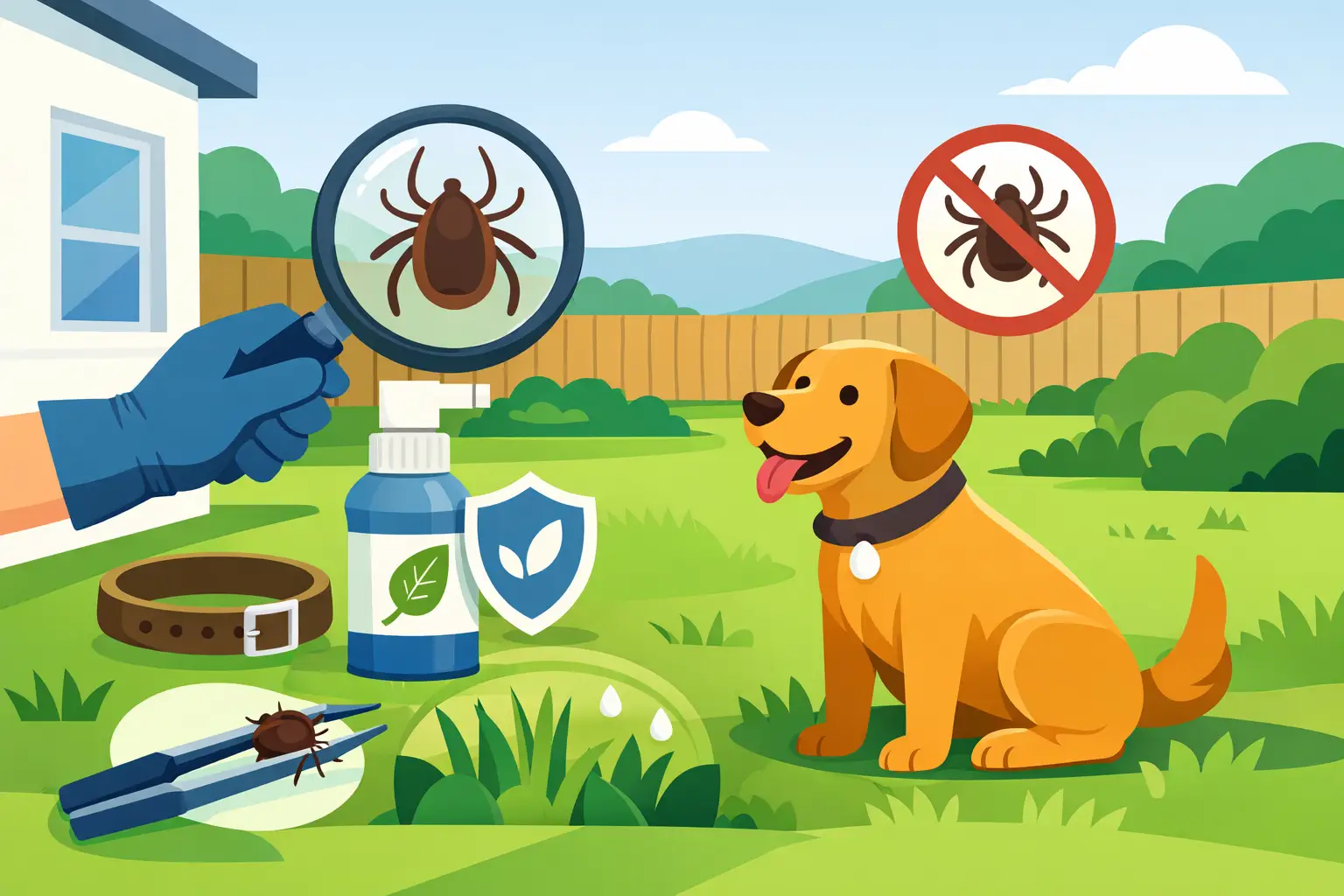
One weekend your dog is tearing around the yard like usual. Later that night, you find a tick tucked behind an ear. That is often how the problem starts – not with a walk in the woods, but with your own property. If you are wondering how to protect dogs from ticks in yard spaces around your home, the answer is rarely one single fix. It takes a mix of yard management, dog-safe prevention, and targeted treatment where ticks actually live.
For Ontario pet owners, that matters. Tick activity has become a real concern across many communities, especially in properties with long grass, tree lines, ground cover, and shaded edges. Dogs do not need to wander far to pick up ticks, and once ticks are established in a yard, the exposure risk can continue all season.
Why yard tick control matters for dogs
Ticks are not just a nuisance. They can carry diseases that affect both pets and people, including Lyme disease. Dogs are especially vulnerable because they spend time close to the ground, push through brush, and often rest in the very areas ticks prefer.
Many homeowners assume ticks are only a problem in rural bush lots. In reality, suburban and small-town yards can be just as attractive if the conditions are right. Moist shade, overgrown borders, leaf litter, and animal traffic all help ticks survive. If deer, rodents, or other wildlife cut through your property, ticks can follow.
The biggest mistake is waiting until you see multiple ticks on your dog. By then, the yard may already be supporting an active tick population.
How to protect dogs from ticks in yard areas
The most effective approach is layered. You want to make the property less hospitable to ticks, reduce the chance your dog brushes against them, and add a treatment plan that fits the layout of the yard.
Start with the places your dog uses most. The lawn itself is not always the highest-risk zone. Ticks typically prefer transition areas such as fence lines, gardens, ornamental grasses, wooded edges, under decks, and damp shaded corners. That is where prevention should be focused.
Cut back the habitat ticks like
Shorter grass helps, but mowing alone is not enough. Ticks are more likely to hold in protected, humid areas than out in the middle of a hot, open lawn. Clearing leaf litter, trimming back dense vegetation, and opening up shady borders can make a noticeable difference.
If your yard backs onto trees or a ravine, create clearer separation between the lawn and the natural edge. A tidier border gives ticks fewer places to wait for a host. It also makes treatments more precise because the problem zones are easier to identify.
Ground cover is another common issue. Thick ivy, pachysandra, and unmanaged planting beds can create cool, damp conditions that support tick survival. That does not mean every garden needs to be stripped down. It means high-risk areas should be maintained with tick pressure in mind.
Limit wildlife traffic through the yard
Ticks often arrive with animal hosts. Deer are a well-known source, but mice and other small mammals also help maintain tick populations. If your yard regularly attracts wildlife, the problem can persist even if the lawn looks well kept.
Bird feeders near dog play areas, wood piles against the house, and brushy hiding spots can all encourage the wrong kind of traffic. Moving or cleaning up those features may reduce the number of animals carrying ticks into your yard. It will not eliminate every risk, but it can lower the pressure.
Make your dog’s favourite areas safer
Think about where your dog actually spends time. Maybe that is the run along the fence, the shaded patch near the deck, or the path to the back gate. These are the areas worth prioritizing.
If possible, keep dog zones open, dry, and easy to inspect. Gravel or mulch borders can help separate play areas from dense vegetation. Regular cleanup also matters. Toys, brush piles, and stored materials can create small protected pockets where ticks and their hosts linger.
Tick prevention for the dog and the yard work together
Even a well-maintained yard is not a guarantee. Dogs can still pick up ticks from neighbouring properties, parks, trails, or wildlife movement. That is why yard reduction and on-dog prevention should work together.
Speak with your veterinarian about tick preventives that suit your dog. Topicals, oral medications, and tick collars all have pros and cons depending on age, health, coat type, and lifestyle. A dog that swims often may need a different option than a dog that mostly stays home.
What matters most is consistency. If the yard is being managed but your dog has no veterinary prevention in place, there is still a gap. The reverse is also true. If the dog is protected but the property remains tick-friendly, you may still be bringing ticks to the door.
Check your dog after yard time
One of the simplest habits is still one of the best. After time outside, do a quick tick check. Run your hands over the coat and pay attention to ears, around the collar, under the legs, between toes, around the eyes, and under the tail.
Long-haired dogs can make this harder, so slow down in thick areas of coat. If you find a tick, remove it carefully with fine-tipped tweezers or a proper tick remover, gripping close to the skin and pulling straight out. If you are unsure whether the tick was attached long enough to raise concern, call your veterinarian.
Tick checks are not a replacement for prevention, but they do reduce the chance of a bite going unnoticed.
When professional yard treatment makes sense
If you are finding ticks repeatedly, have a heavily treed or shaded property, or live in an area where tick activity is growing, professional treatment is often the most practical next step. This is especially true for households with dogs that use the yard every day.
A good tick program should not treat the whole property the same way by default. Effective control depends on identifying where ticks are most likely to rest and travel. That usually means targeting perimeter zones, brush lines, undergrowth, and damp harbourage areas rather than simply applying more product everywhere.
This is where homeowners often see the difference between a generic spray program and a property-specific plan. A tailored treatment can reduce tick activity while using less material overall, which matters when families and pets use the space regularly. For many homes in places like Kemptville, Smiths Falls, Brockville, and nearby communities, that targeted approach makes more sense than broad, repetitive spraying.
Timing matters too. Tick control is not just a midsummer concern. Early-season service can help get ahead of activity before it builds, and follow-up treatments may be needed depending on weather, property conditions, and surrounding habitat.
What does not work well on its own
There is a reason tick problems linger on some properties. Homeowners are often sold one simple answer when the reality is more complicated.
Natural remedies may sound appealing, but results can be inconsistent. Some products can help as part of a broader strategy, especially for homeowners trying to reduce overall chemical use, but they are not always enough for higher-pressure properties. Likewise, mowing more often helps with appearance and exposure, but it will not solve a tick issue hiding in shaded borders and leaf litter.
DIY sprays can also be hit or miss. If the wrong areas are treated, or if the product is applied without regard to where ticks actually harbour, you can spend time and money without seeing much improvement.
A safer tick strategy for pet owners
The safest plan is one that balances effectiveness with how your family actually uses the yard. That means thinking beyond the idea of spraying everything and hoping for the best. For most pet owners, the better route is reducing habitat, protecting the dog directly, and using focused yard treatments when conditions call for them.
If you want stronger results, look for a provider that understands pet-heavy properties and can explain how treatment areas are selected, what products are being used, and how timing works around family and dog routines. Clear answers matter.
At Mosquito Pros, that kind of customization is central to the work. Not every yard in Ontario has the same tick pressure, and not every dog uses the property the same way. A treatment plan should reflect that.
Protecting dogs from ticks is really about making the yard less risky day after day, not chasing the problem after another tick turns up. When your dog can run, sniff, and sprawl out on the grass with fewer risks built into the space, that is the kind of outdoor peace of mind worth aiming for.

