You notice it fastest at dusk. One minute the kids are still outside, the dog is circling the lawn, and the patio feels usable. Ten minutes later, everyone is swatting. If you are looking for a natural mosquito treatment for backyard spaces, the goal is usually the same – fewer bites, less chemical exposure, and a yard that feels comfortable again.
That is a reasonable goal, but it helps to be clear about what natural treatment can and cannot do. Some options genuinely reduce mosquito pressure. Others mostly smell pleasant and offer very short-lived relief. The difference matters, especially if you have children, pets, standing water nearby, or a property that seems to attract mosquitoes every summer.
What a natural mosquito treatment for backyard spaces should actually do
A useful treatment should reduce adult mosquito activity where people spend time, target the areas mosquitoes rest during the day, and fit the way your property is laid out. That last part is often where homeowners run into trouble. Mosquitoes do not use every part of a yard equally. They hide in shade, damp plant growth, under decks, along fences, and around low branches. Treating wide open sunny lawn and ignoring those zones usually leads to disappointing results.
Natural mosquito control also works best when it is part of a broader plan. If the yard keeps producing mosquitoes because water is collecting in planters, toys, eavestroughs, or tarps, even a good treatment will have limits. Mosquitoes breed fast in Ontario summers, especially after rain and humid stretches. One neglected source can keep the cycle going.
So when people ask whether natural treatment works, the honest answer is yes, sometimes very well – but not as a magic fix. Results depend on the product, the application method, the timing, and the property itself.
The most effective natural options
The strongest natural treatments for backyards are usually plant-based barrier applications made with active ingredients such as garlic-based formulations or essential-oil-derived compounds. These are designed to be applied to mosquito resting areas rather than broadcast heavily across the entire yard. When done properly, they can reduce mosquito activity in a meaningful way without relying on a conventional synthetic approach.
This is where customization matters. A wooded lot, a small in-town yard, and a property near water do not need the same strategy. A lower-volume, targeted application can often make more sense than a blanket spray, especially for families trying to balance effectiveness with caution around children and pets.
That said, natural products usually do not last as long as stronger conventional materials. They may need more frequent service during peak mosquito season, and they can be more sensitive to heavy rain, intense sun, and dense mosquito pressure. For some homeowners, that trade-off is completely worth it. For others, especially on properties with severe mosquito problems, a hybrid or alternative treatment plan may deliver better overall control.
What usually does not work well on its own
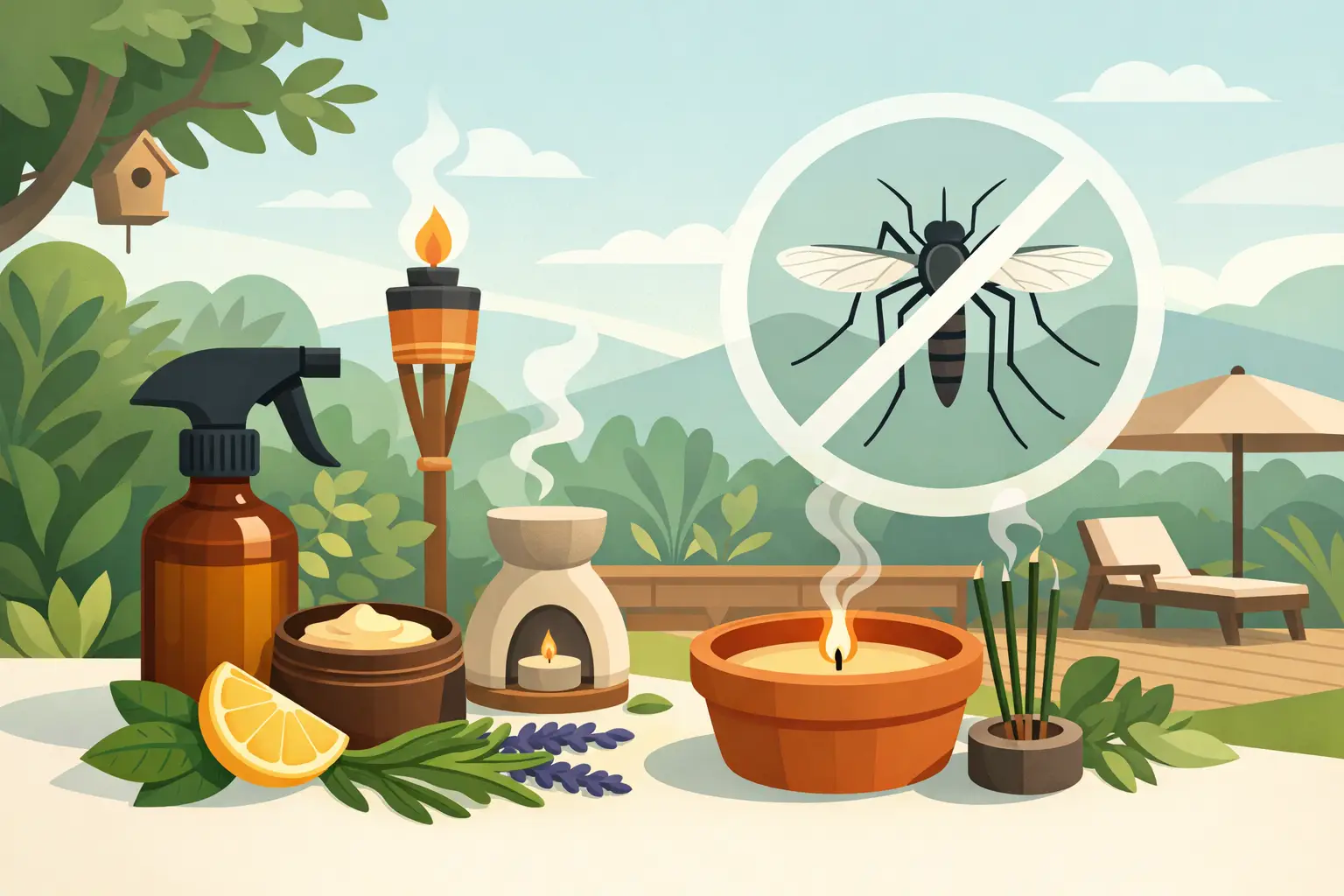
Citronella candles have their place, but only in a small, immediate seating area and only when conditions are calm. They do not protect an entire yard. The same goes for torches, wearable bands, patio fans used alone, and most plug-in gadgets marketed as yard-wide solutions.
Backyard plants such as lavender, basil, marigolds, and mint are often mentioned as mosquito deterrents. They can be pleasant additions to a garden, but they are not a reliable treatment plan. A few mosquito-repelling plants around the deck will not control mosquitoes breeding and resting throughout the property.
Homemade sprays are another mixed bag. Some may offer very short-term repellency in a small area, but coverage is inconsistent and reapplication is frequent. If you are trying to protect a family backyard used every day, especially during evening hours, homemade solutions rarely hold up well enough on their own.
Why source reduction matters more than most people think
Even the best natural mosquito treatment for backyard areas works better when breeding sites are reduced first. Mosquitoes do not need a pond. They need a small amount of still water and a bit of time.
Check the common problem spots around your property. Bird baths, buckets, wheelbarrows, kids’ toys, clogged gutters, old tires, planters without drainage, pool covers, and low spots in the lawn can all contribute. Change water regularly where you can, store containers upside down, and correct drainage issues if they are creating recurring puddles.
If your property backs onto a ditch, wooded area, or marshy section, you may not be able to eliminate every source. That is common in communities around Kemptville, Smiths Falls, and other rural or semi-rural areas where moisture and tree cover create ideal mosquito habitat. In those cases, controlling resting areas around the home becomes even more important.
The safety question most homeowners are really asking
When people say they want natural treatment, they are often really asking a safety question. They want to know what can be used around children, dogs, and the places where people gather outside.
That is a smart question, and the answer should never be vague. A responsible treatment plan should clearly explain what is being applied, where it is applied, how much is used, and when the treated area can be used again. Lower-volume, targeted application matters here. More product is not automatically better. Precision often matters more than volume.
For families and pet owners, the best approach is usually one that reduces unnecessary exposure while still addressing the actual mosquito pressure on the property. If a treatment is too weak to make a difference, you end up repeating it constantly and still living with bites. If it is broader than necessary, you may be treating areas that do not need it. A tailored plan solves both problems.
When natural treatment is a good fit
Natural treatment is often a good fit for households that want reduced mosquito activity around patios, play areas, pools, and outdoor seating without choosing the strongest possible intervention. It can work especially well on properties where mosquito pressure is moderate, breeding sources are managed, and treatments are timed consistently through the season.
It is also a strong option for special events. If you are planning an outdoor gathering, wedding, or family celebration, a natural barrier treatment ahead of the event can help make the space more comfortable. Timing matters here, because the goal is to reduce activity during the hours guests will actually be outside.
Where natural programs can struggle is on heavily treed properties, lots near standing water, or yards with persistent moisture issues and high mosquito populations. In those settings, you may still get improvement, but expectations should be realistic. The best result may come from a custom seasonal plan rather than a one-time treatment.
What professional natural treatment changes
Professional service is not just about access to products. It is about identifying where mosquitoes are hiding, applying treatment to those zones with purpose, and adjusting the plan based on what the property is doing through the season.
That matters because mosquito pressure changes. A wet June is different from a dry July. One property may need focus around cedar hedges and the underside of a deck. Another may need extra attention along fence lines and rear shade cover. A one-size-fits-all approach misses those details.
Mosquito Pros focuses on property-specific treatment because that is what gets better results with less waste. For homeowners who want a natural option, that kind of targeted service can make the difference between a yard that is slightly better and one that actually feels usable.
How to choose the right approach for your yard
Start with a simple question: is your main problem occasional annoyance, or are mosquitoes actively limiting how you use your outdoor space? If it is occasional, source reduction and a lighter natural approach may be enough. If family dinners, kids’ playtime, or pet time outdoors are getting cut short every evening, you likely need something more deliberate.
Then think about the property itself. Shade, moisture, nearby vegetation, neighbouring water, and how often the yard is used all affect what will work. The right answer is not always the strongest treatment, and it is not always the most natural-sounding one either. It is the option that fits your risk level, your comfort level, and the actual mosquito conditions on site.
A backyard should not become off-limits every summer. The right natural plan can absolutely help, especially when it is targeted, realistic, and built around how mosquitoes behave on your property – not around a generic promise on a label.

