
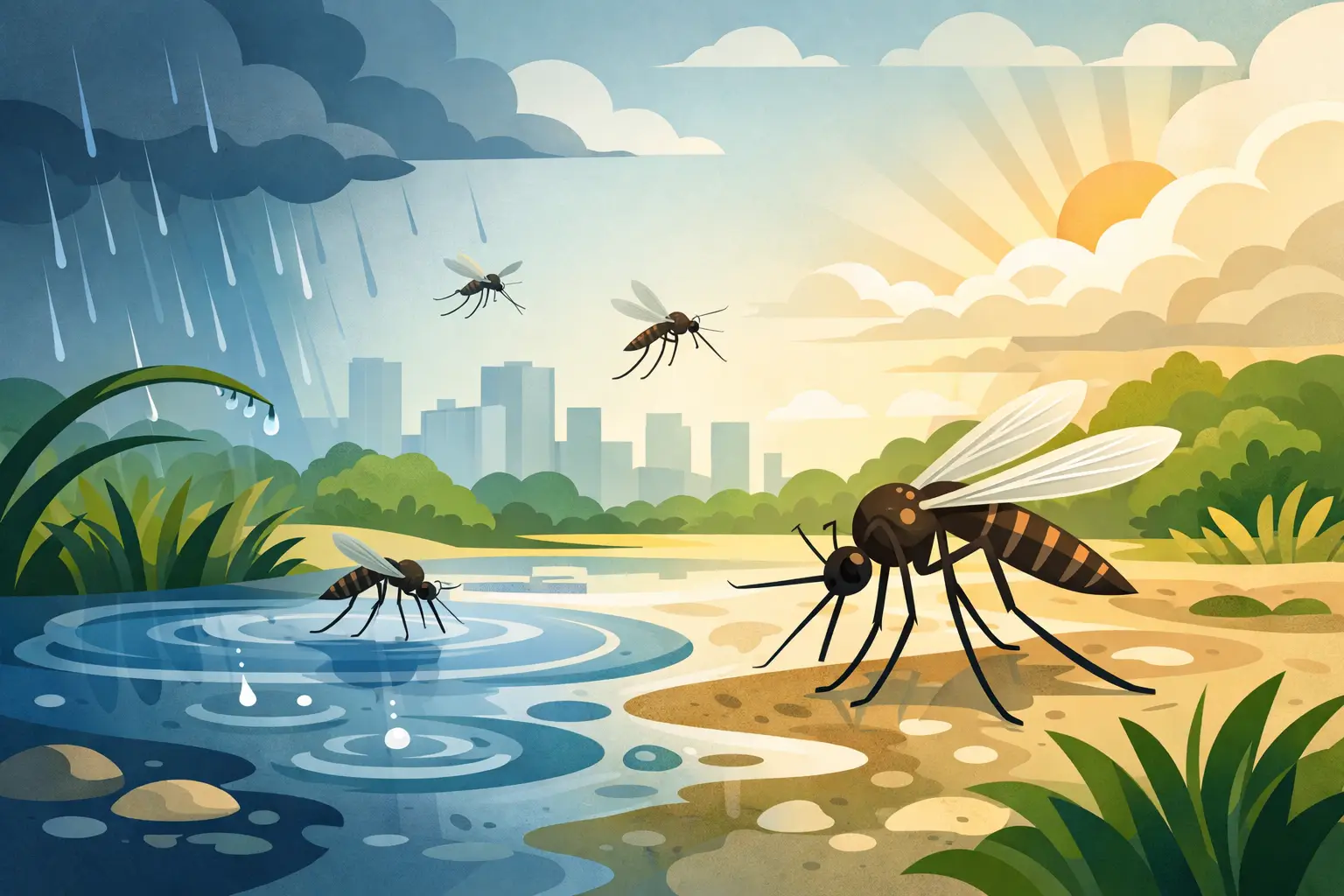
You step outside after a summer rain, expecting cooler air and a bit of relief, and instead you get chased back in by mosquitoes. If you have ever wondered why are mosquitoes worse after rain, the short answer is that rain creates exactly the kind of conditions mosquitoes need to breed, hatch, and stay active.
For homeowners in Ontario, that matters for more than comfort. More mosquitoes can mean more bites, less use of your yard, and greater concern about insect-borne illness for families and pets. Rain does not create mosquitoes out of nowhere, but it can quickly turn an ordinary property into a much better mosquito habitat.
Why are mosquitoes worse after rain? It starts with water
Mosquitoes need water to reproduce. Female mosquitoes lay eggs in standing water or in spots that will soon fill with water. After a rainfall, yards suddenly offer more breeding sites than they did a day earlier. That can include bird baths, clogged gutters, kiddie pools, wheelbarrows, plant trays, tarps, old toys, and low spots in the lawn.
It does not take much water, either. Some mosquito species can breed in very small amounts, which is why a yard can seem fine at a glance but still support a growing mosquito population. A few overlooked containers or a patch of pooled water near shrubs may be enough.
This is one of the biggest reasons people notice a spike in mosquito pressure after storms or several rainy days in a row. The rain resets the environment in the mosquito’s favour.
Rain helps eggs hatch and larvae develop
Not every mosquito egg hatches the moment it is laid. Some species lay eggs in damp soil or areas prone to flooding, where the eggs can wait until rain arrives. Once those areas fill with water, hatching begins.
That means a heavy rainfall can trigger a wave of mosquito development that was already waiting on your property or nearby. Depending on temperature, mosquito larvae can develop quickly. In warm summer conditions, the full life cycle from egg to biting adult may take only about a week.
This is where timing matters. Right after rain, you may notice adult mosquitoes becoming more active because of the humidity and cooler conditions. Several days later, you may also be dealing with a fresh generation that developed in newly formed breeding sites.
Humidity makes adult mosquitoes more active
Standing water explains breeding, but it is not the only answer to why are mosquitoes worse after rain. Adult mosquitoes also do better in humid conditions.
Mosquitoes are vulnerable to drying out. After rain, the air tends to be more humid, which helps them survive longer and stay active. They do not lose moisture as quickly, especially in shaded areas with trees, tall grass, dense landscaping, or hedges. That is why heavily landscaped backyards often feel much worse than open areas after wet weather.
Humidity can also make mosquitoes more willing to fly and feed. If the rain is followed by warm temperatures and calm air, conditions are especially favourable. In Ontario summers, that combination is common.
Rain can change where mosquitoes rest
Mosquitoes do not spend all their time flying around looking for people. During the day, many rest in cool, shaded, protected areas. After rainfall, those resting sites become even more comfortable for them.
Wet leaves, dense shrubs, long grass, and wooded edges hold moisture and create shelter from wind and sun. When evening arrives, mosquitoes emerge from those protected spots and become far more noticeable around patios, decks, play areas, and pools.
So even if your yard does not seem to have obvious standing water, nearby vegetation may still support a strong adult mosquito population. In many cases, the issue is both breeding habitat and resting habitat working together.
Not every rainstorm has the same effect
A light rain, a day-long drizzle, and a major thunderstorm do not affect mosquito activity in exactly the same way. It depends on how much water is left behind, how warm it gets afterward, and how your property drains.
A brief rain that leaves puddles and boosts humidity can increase adult activity quickly. Several days of repeated rain can create a more serious problem by adding breeding sites across the yard and preventing them from drying out. On the other hand, a very heavy downpour can sometimes wash larvae out of certain areas, at least temporarily.
That said, washout is not something homeowners should count on. In most residential settings, rain leaves behind more small water sources than it removes. Containers refill, low areas hold water, and sheltered spots remain wet long after the storm passes.
Why some properties get hit harder than others
Two homes on the same street can have very different mosquito pressure after rain. Usually, that comes down to layout, drainage, and landscaping.
Properties with poor drainage, lots of shade, mature trees, dense gardens, and multiple decorative or functional water-holding features tend to support more mosquitoes. Homes near wooded areas, creeks, wetlands, or farmland may also see stronger activity because mosquitoes do not stay neatly inside property lines.
This is why a one-size-fits-all approach often falls short. What works on a sunny lot with fast drainage may not be enough for a shaded property with hedges, play structures, and several hidden places where water collects.
What homeowners can do after rain
The most useful step is to walk the property once the rain stops and look for places where water is collecting. Empty containers, refresh bird baths, clear gutters, and check tarps, toys, bins, and plant saucers. If part of the lawn stays soggy, drainage may need attention.
It also helps to cut back overgrown vegetation and keep grass under control. Mosquitoes rest in cool, protected spots, so reducing dense cover can make your yard less inviting. This will not eliminate mosquitoes on its own, especially during peak season, but it can reduce pressure.
If you are hosting an outdoor event, timing matters. A rainstorm a few days before a wedding, barbecue, or family gathering can set the stage for a noticeable surge in mosquito activity. Waiting to see how bad it gets is risky when guests are involved.
When DIY steps are not enough
The challenge with mosquitoes is that the problem is rarely limited to one puddle. By the time you notice more biting activity, mosquitoes may already be breeding in several overlooked areas or resting throughout the property in shaded zones that are hard to treat effectively with off-the-shelf products.
That is where a targeted treatment plan can make a real difference. A professional service can identify the specific conditions on your property, focus on high-activity and high-resting areas, and help reduce mosquito pressure without blanketing the entire yard unnecessarily.
For families and pet owners, that targeted approach matters. It is not just about spraying more. It is about treating smarter, with attention to how the property actually functions after rain and during the height of mosquito season.
In communities like Kemptville, Smiths Falls, Brockville, and surrounding areas, summer weather often creates repeated cycles of rain, heat, and humidity. That pattern is ideal for mosquitoes, which is why seasonal protection tends to work better than reacting only after a bad hatch.
Why quick action matters after rainfall
Mosquito populations can build fast when warm temperatures follow rain. If standing water remains for days, the window for breeding opens wide. If humid weather lingers, adult mosquitoes remain active and harder to avoid.
That is why early action usually gets better results than waiting until your yard becomes uncomfortable. Removing water promptly helps. So does monitoring problem areas after each rainfall. And if mosquitoes are already interfering with outdoor time, a custom treatment program can help restore the space faster.
At Mosquito Pros, the focus is on property-specific mosquito control that reduces exposure where families, pets, and guests actually spend time. For many homeowners, that is the difference between avoiding the yard and enjoying it.
Rain is part of summer in Ontario, and no one can stop the weather. But you can make your property less attractive to mosquitoes and respond before a wet week turns into a biting problem. The sooner you deal with the conditions rain leaves behind, the easier it is to protect the outdoor spaces you want to use.
Quick answers about mosquitoes and rain
Does rain wash away mosquito treatment?
Light rain does not automatically make a properly applied mosquito treatment ineffective. Timing, product selection, drying time, and the amount of rainfall all matter. Mosquito Pros schedules and applies treatments around local conditions so the product can dry and bond properly. If severe weather affects a planned visit, the treatment timing can be adjusted. Read whether rain affects mosquito treatments for a detailed explanation.
When should homeowners act after rain?
Check the property within 24 to 48 hours. Empty water from buckets, toys, tarps, plant saucers, clogged gutters, and other containers before mosquitoes can complete their breeding cycle. If biting activity remains high, professional mosquito control can target the shaded and damp areas where adult mosquitoes rest.
Need help after a wet stretch? Request a mosquito-control quote from Mosquito Pros.


