
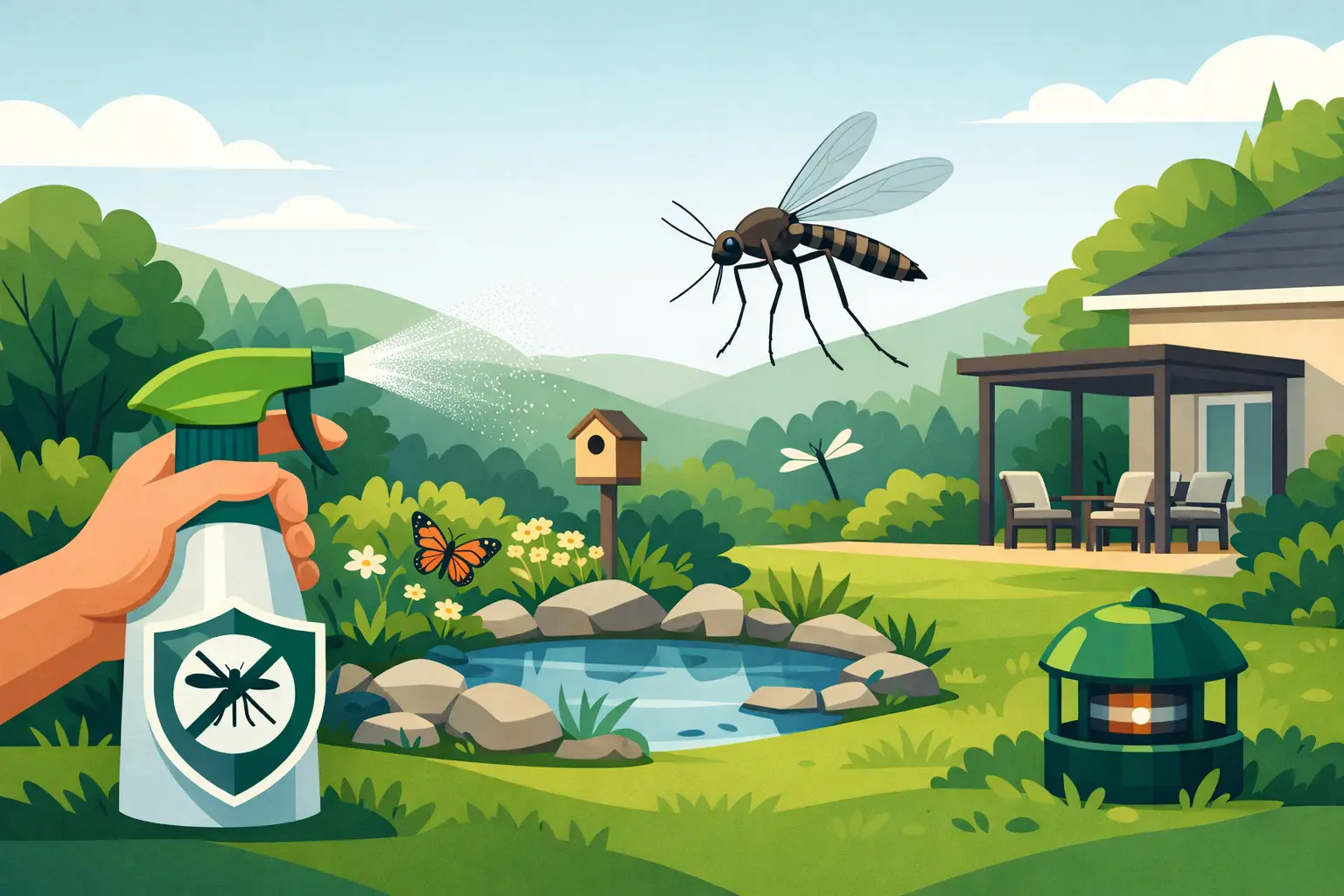
A low spray mosquito control guide starts with a simple idea: your whole property does not need to be treated the same way. Mosquitoes rest, breed, and travel through very specific parts of a yard. When treatment focuses on those areas, Ontario families can spend more time outside while using less product overall.
That matters when children play in the grass, dogs explore the fence line, and summer plans revolve around decks, pools, gardens, and backyard dinners. The goal is not to blanket-spray every open space. It is to reduce mosquito pressure where it begins and where it affects your family most.
What low-spray mosquito control actually means
Low-spray mosquito control is a targeted treatment approach that uses a smaller volume of product than broad, one-size-fits-all spraying. A technician assesses the property, identifies mosquito harbourage areas, and treats foliage and shaded spaces where adult mosquitoes rest during the day.
Mosquitoes do not usually spend their time in the middle of a sunny lawn. They tend to shelter beneath decks, around dense shrubs, along damp fence lines, in tall grass, under leaf cover, and beside shaded patio areas. Treating these targeted zones is more efficient than spraying areas where mosquitoes are unlikely to rest.
A lower-volume approach does not mean a weaker one. Effectiveness comes from applying the right treatment, at the right time, to the right places. It also depends on addressing standing water, because even an excellent barrier treatment cannot stop new mosquitoes from developing in water left untreated around the property.
For families and pet owners, this method offers a practical balance: meaningful protection for the spaces you use, with a safety-conscious approach that avoids unnecessary application.
Why precision matters in Ontario mosquito season
Mosquito activity in Ontario can build quickly after spring rain and remain frustrating through the warmest part of summer. Properties near trees, drainage areas, ponds, wooded lots, or dense vegetation often face more persistent pressure. Even a well-kept suburban yard can become a mosquito hotspot when water collects after rainfall.
Mosquitoes are more than a comfort issue. Bites can limit how often children play outside, make evening gatherings unpleasant, and create concerns for pet owners. Mosquitoes can transmit heartworm to dogs, while ticks in our region can expose people and pets to Lyme disease risk. Yard management cannot eliminate every risk outdoors, but it can reduce exposure around the home.
Precision also protects the value of your outdoor space. If a patio, fire pit, gazebo, or pool area goes unused at dusk because everyone is swatting and covering up, the yard is not working as it should. A custom mosquito program is designed around those high-use areas rather than a generic route map.
How a targeted mosquito treatment works
A professional low-spray service begins with an inspection of the conditions that support mosquitoes. The technician looks beyond visible insects to find resting areas and breeding opportunities. Dense vegetation, accumulated organic debris, clutter under a deck, and containers that hold water all help shape the treatment plan.
The barrier treatment is then applied carefully to appropriate vegetation and other mosquito resting zones. Mosquitoes that contact treated surfaces are controlled, reducing the number that move into your patio or play area. Treatments are commonly repeated through the season because rain, new foliage growth, and ongoing mosquito activity can reduce the residual effect over time.
The schedule should reflect your property, local weather, and how you use the space. A yard beside a wooded area may need a different plan than an open lot with little shade. A family hosting frequent weekend gatherings may prioritize deck and patio coverage. A commercial property may need a plan that protects entranceways, outdoor seating, and customer-facing areas.
Mosquito Pros designs low-spray treatment around each property’s vegetation and outdoor use. Targeting mosquito resting sites helps avoid unnecessary blanket application while keeping the plan practical for families and pets.
Low-spray mosquito control works best with source reduction
Treatment can reduce adult mosquito activity, but water management is the other half of reliable control. Mosquitoes need water to develop, and small amounts are enough. A forgotten bucket or clogged eavestrough can become a breeding site after a few warm days.
Walk your property after rain, especially in late spring and early summer. Empty or refresh water in bird baths regularly, turn over unused containers, and check outdoor toys, planters, tarps, wheelbarrows, and pool covers. Keep eavestroughs flowing and fill low spots that repeatedly collect water where practical.
Some water cannot simply be removed. Ornamental ponds, drainage ditches, and natural wet areas require a more considered plan. Do not treat these areas with household products unless they are specifically labelled for that use and you understand the environmental requirements. In these cases, a property assessment can identify which nearby resting areas should be targeted instead.
Preparing your yard for a lower-volume treatment
A little preparation makes a targeted treatment more effective and helps ensure technicians can reach the areas where mosquitoes hide. You do not need to overhaul the yard, but it helps to make access clear and reduce obvious mosquito habitat before the appointment.
Before service, aim to:
- Mow overgrown grass and trim back vegetation that blocks access to key yard edges.
- Pick up children’s toys, pet bowls, buckets, and other movable items that may collect water.
- Clear leaves and stored items from beneath decks, around sheds, and along fence lines.
- Keep pets and people indoors during application, then follow the technician’s re-entry guidance.
Re-entry times and care instructions can vary by treatment and weather conditions. A professional should explain exactly what to do before and after service, including when children and pets can use the treated areas again. If you have a vegetable garden, pollinator garden, pond, or sensitive landscaping, point it out during the assessment so the treatment plan can account for it.
Natural options and their trade-offs
Some homeowners prefer natural mosquito treatment options, particularly around family spaces, gardens, and pets. Botanical-based products can be part of a lower-spray strategy, but it is worth setting realistic expectations. Their residual performance may be shorter than conventional options, particularly after rain or intense sun, so they can require more frequent service.
Natural does not automatically mean risk-free, and conventional does not automatically mean inappropriate. The best choice depends on the product, the application method, the property, and your household’s priorities. A good provider will explain the expected duration, the treatment areas, and any trade-offs instead of promising identical results from every option.
For many properties, the strongest plan combines targeted professional service with practical maintenance. Reducing standing water, keeping vegetation manageable, and treating resting zones at regular intervals creates more reliable relief than relying on citronella candles or occasional yard fogging alone.
When to book mosquito control
The best time to begin is before mosquito pressure becomes overwhelming. Early seasonal service can reduce the number of adult mosquitoes establishing themselves around your property, while recurring treatments help maintain coverage during peak activity.
If you are planning an outdoor wedding, birthday, family reunion, or business event, book well ahead of the date. Event mosquito control can focus on guest areas such as tents, patios, pathways, ceremony spaces, and outdoor seating. It cannot guarantee that no mosquito will enter the area, particularly near wetlands or after heavy rain, but it can make a major difference in comfort.
A custom low-spray plan gives your yard a better chance of staying usable through the season without treating more area than necessary. Start with the places your family and pets use most, keep water from collecting, and choose a provider that treats your property as its own environment. That is how backyard protection becomes a practical part of summer, not another item to worry about.


