
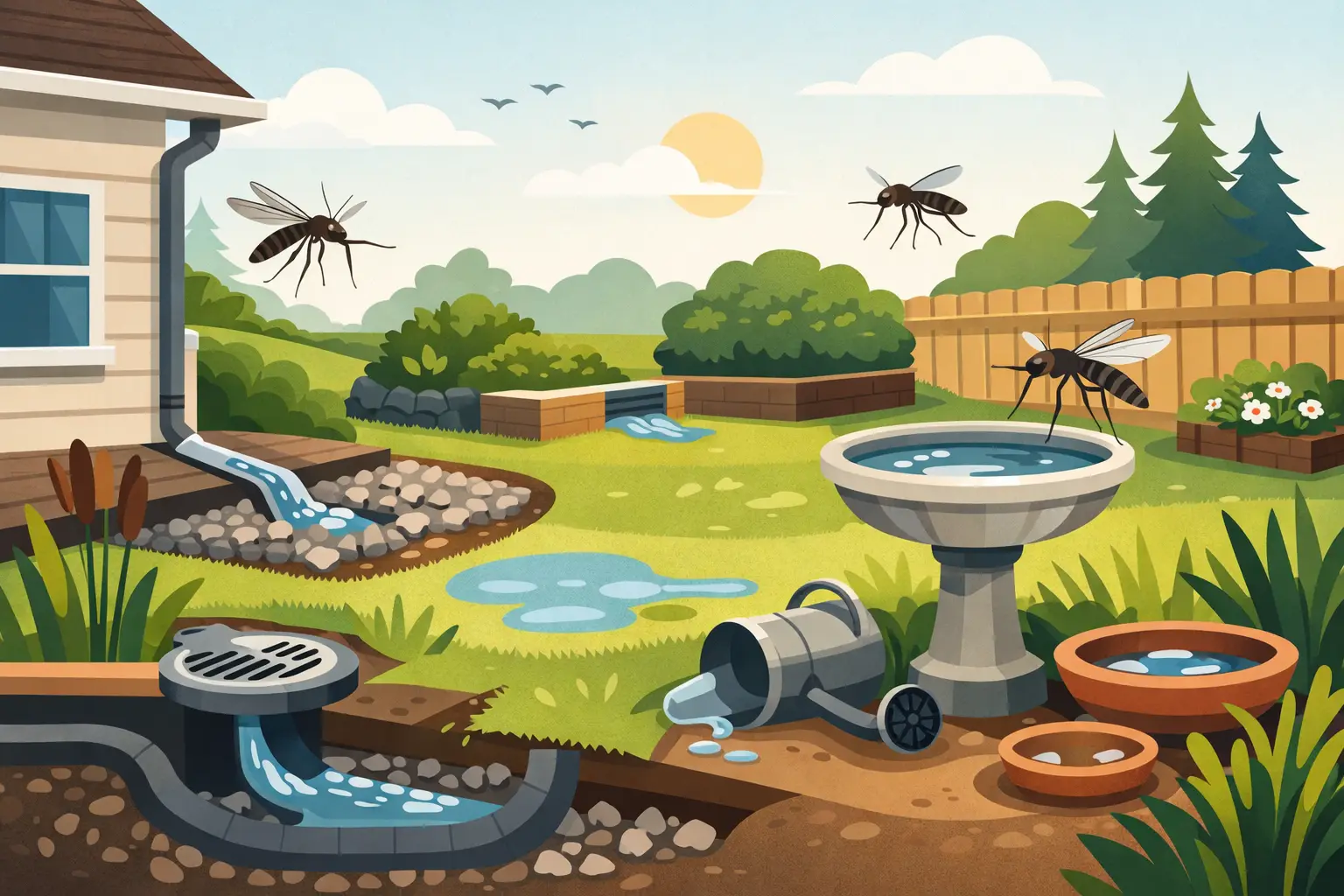
A low spot beside the deck, a clogged eavestrough, or a forgotten bucket can become a mosquito nursery faster than most homeowners expect. This backyard drainage mosquito guide explains how to find and correct the wet areas that give mosquitoes a place to breed, while keeping your Ontario yard safer for children, pets, and outdoor time.
Mosquitoes do not need a pond to become a problem. Many species can lay eggs in very small amounts of still water, and warm weather can speed up their development. If water remains in one place for several days, it deserves attention.
Why drainage problems bring mosquitoes closer to home
Adult mosquitoes rest in cool, shaded vegetation during the day, then look for blood meals near dusk. Standing water gives them the other thing they need: a place for eggs and larvae to develop. When breeding sites are close to your patio, play area, dog run, or garden, the next generation of mosquitoes is already living where your family spends time.
Ontario’s spring thaw and heavy summer storms make this especially common. Soil can become compacted, downspouts may empty too close to the foundation, and older yards often settle over time. A property does not have to look flooded to hold enough water for mosquito activity.
Drainage work will not eliminate every mosquito. They can fly in from neighbouring properties, wooded areas, and nearby wetlands. But removing water that stays put on your own property reduces the number developing close to home and makes professional mosquito treatments more effective.
Start your backyard drainage mosquito guide after rain
The best time to inspect your yard is 24 to 48 hours after a steady rainfall. Walk the property slowly, including areas you rarely use. Look beyond the obvious puddles. Water hiding beneath shrubs, behind a shed, or inside outdoor equipment is easy to miss.
Pay close attention to the perimeter of patios and walkways, the ground beneath decks, low spots along fences, and the area around air-conditioning units. Check eavestroughs and downspouts as well. A blocked eavestrough can hold water for days, while a short downspout can create a persistent muddy patch beside the house.
Containers deserve the same attention as drainage features. Turn over wheelbarrows, children’s toys, plant trays, tarp folds, spare pots, and unused birdbaths. Refresh pet water dishes daily. If a rain barrel is part of your watering routine, it needs a secure, fine mesh screen over every opening.
The 72-hour rule
As a practical standard, water that has not drained within about 72 hours should be investigated. Some mosquitoes can develop quickly in warm conditions, so waiting for a puddle to become visibly full of larvae is not a good strategy.
A brief puddle after a major storm is usually less concerning than a shallow depression that returns after every rainfall. The repeated wet spot is the one worth fixing. Take a photo after rain so you can compare conditions and confirm whether your solution is working.
Fix the water source before adding mosquito control
The right drainage repair depends on where the water starts and where it can safely go. The goal is not simply to push water into a neighbour’s yard or toward your foundation. It is to move it gradually toward an appropriate drainage area while protecting the structure and avoiding erosion.
Improve grading around the home
If the ground slopes toward the foundation, water can pool near the house and contribute to moisture issues indoors. Adding and compacting clean fill can often improve the grade, but the final slope needs to direct water away from the home. For significant grading concerns, a drainage or landscaping professional can assess soil conditions, utilities, and proper runoff routes.
Small lawn depressions may be corrected with topsoil and reseeding. Avoid using loose soil alone in a spot that regularly receives runoff. Without compaction and established grass, it can wash away in the next storm.
Extend and direct downspouts
Downspouts should discharge far enough from the foundation that water is not collecting against the home or saturating one patch of lawn. An extension or splash pad may solve a simple issue. On properties with frequent runoff, a buried solid pipe leading to a suitable outlet may be a better option.
Keep eavestroughs clear of leaves, needles, and shingle grit. When water spills over the side, it can create wet planting beds and muddy edges that remain damp long after the rest of the lawn has dried.
Consider a French drain or catch basin for persistent areas
A French drain can help collect and redirect subsurface water in a problem area. A catch basin may be useful where surface water gathers near a driveway, patio, or low section of lawn. These are not automatic solutions for every wet yard. Poorly installed drainage can clog, settle, or send water in the wrong direction.
Before installing any buried system, identify utility locations and consider the outlet carefully. In Merrickville, Kemptville, Smiths Falls, and surrounding rural properties, soil type, ditch access, and lot grading can vary significantly. A solution that works on one property may not suit the next one.
Keep landscape features mosquito-resistant
Healthy landscaping can help water move through the yard, but it needs routine care. Thick, overgrown shrubs beside a wet area provide shade and resting habitat for adult mosquitoes. Pruning vegetation to improve airflow and access makes inspections easier and reduces the cool, humid cover mosquitoes prefer.
Use mulch thoughtfully. Mulch is valuable for plants, but overly thick layers can hold moisture around beds and obscure small puddles. Keep it at a sensible depth and avoid blocking the flow of water away from the house.
Rain gardens can be a good option when designed correctly. They are intended to temporarily hold runoff and allow it to soak into the soil. A properly designed rain garden should drain within a short period, not stay waterlogged. If it is holding water for days, the plant mix, soil profile, or drainage plan may need adjustment.
Ponds are different from puddles. A maintained pond with circulation, appropriate filtration, and a balanced ecosystem is less likely to become a major mosquito source than stagnant water in a neglected container. Still, dead zones around pond edges and clogged pumps should be addressed promptly.
Pair drainage with targeted mosquito protection
Drainage control removes local breeding opportunities, but it does not create a mosquito-free boundary around your property. Mosquitoes can arrive from places beyond your control, especially near woods, fields, wetlands, or neighbouring yards with standing water.
That is where a tailored yard treatment plan can help. A professional treatment focuses on the shaded foliage and resting areas where adult mosquitoes spend their time, rather than applying a generic, high-volume spray across the whole property. The approach should consider where your family gathers, where pets play, and which areas have the highest mosquito pressure.
For homes with children and pets, ask clear questions about application methods, timing, and re-entry guidance. Mosquito Pros provides property-specific mosquito treatment plans using lower-volume, family-conscious methods, including natural treatment options for homeowners who prefer them. Drainage improvements and targeted treatment work best as part of the same seasonal plan.
A simple routine that prevents repeat problems
Mosquito prevention is easier when it becomes part of normal yard maintenance. After rain, walk the property and empty containers. Each week, inspect eavestroughs, downspout outlets, tarps, and water-holding equipment. Once a month, look at grading and recurring soft spots before they become larger drainage repairs.
Do not overlook seasonal items. Pool covers, canoes, unused trailers, outdoor furniture covers, and holiday decorations stored outside can all trap rainwater. Before hosting an outdoor gathering, inspect these areas several days ahead, then arrange mosquito control early enough for the yard to be ready.
A dry, well-managed yard is not only less attractive to breeding mosquitoes. It is easier to mow, safer for children and pets to use, and more comfortable for the evenings you actually want to spend outdoors. If one wet corner keeps returning after every storm, address it before mosquito season turns a minor drainage issue into a backyard problem.


