
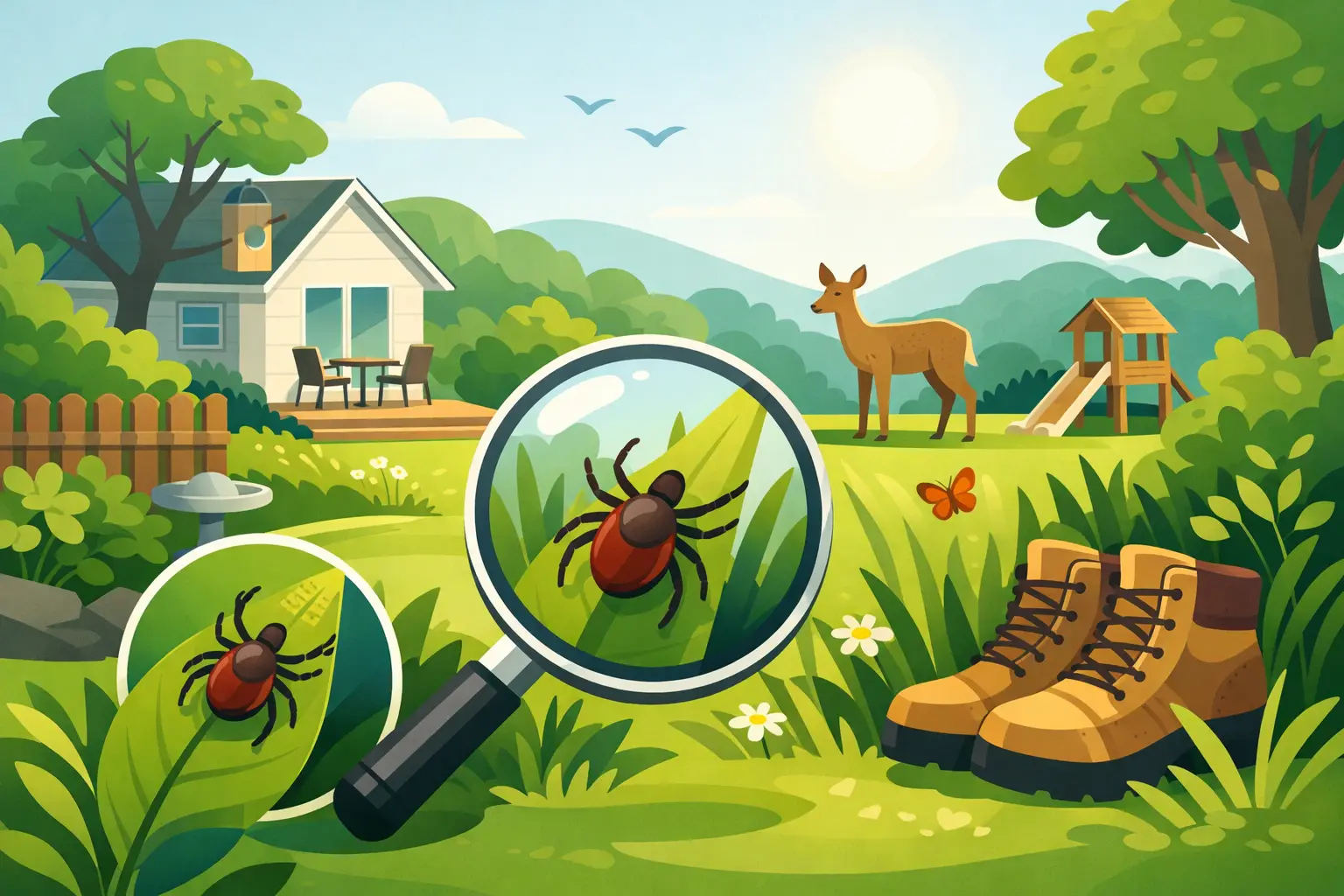
A child running through the grass, a dog exploring the edge of the woods, and a quiet afternoon on the patio should be simple parts of an Ontario summer. Lyme disease awareness helps families keep those moments enjoyable by recognizing where ticks live, reducing contact with them, and acting quickly when a tick is found.
Lyme disease is a bacterial infection spread through the bite of an infected blacklegged tick, sometimes called a deer tick. Ticks are small, patient, and easy to miss. They do not fly or jump. Instead, they wait on tall grass, leaf litter, brush, and low vegetation, then climb onto people or pets as they pass.
For homeowners, the goal is not to create fear around the outdoors. It is to make smart protection part of the routine, especially when tick activity increases in spring, summer, and fall.
Why Lyme Disease Awareness Matters in Ontario
Blacklegged ticks are established in many parts of Ontario, including rural and wooded areas where properties often back onto fields, trails, naturalized lots, or bush. That does not mean every tick carries Lyme disease, and a tick bite does not automatically lead to illness. Still, exposure is possible wherever suitable tick habitat exists.
Ticks can be active whenever temperatures are mild enough, including on warmer days outside the usual summer season. This is one reason a quick check after yard work, hiking, gardening, or walking the dog is more reliable than assuming the risk has passed because it is early spring or late fall.
The risk of transmission generally rises the longer an infected tick remains attached. Finding and removing a tick promptly can reduce risk, but it does not replace watching for symptoms or speaking with a health-care provider when appropriate. If you are unsure how long a tick was attached, whether it was fully embedded, or what follow-up is needed, get medical advice promptly.
Know the Signs Without Waiting for a Bullseye Rash
The best-known sign of Lyme disease is a spreading circular rash that may look like a bullseye. It is a useful warning sign, but it is not the only one. Not everyone develops that classic pattern, and a rash can appear in a different shape or be mistaken for an ordinary skin irritation.
Early symptoms may include fever, chills, fatigue, headache, muscle aches, joint pain, or swollen lymph nodes. These symptoms can resemble a summer virus, which is why mentioning a recent tick bite or time spent in tick habitat matters when speaking with a health-care provider.
Without appropriate care, Lyme disease can become more serious and may involve persistent joint pain, nerve symptoms, or heart-related concerns. Early assessment and treatment are important. Do not rely on an online photo comparison or wait for symptoms to become severe if a suspicious rash or flu-like illness follows a tick exposure.
What to Do When You Find a Tick
Finding a tick can be unsettling, particularly on a child or pet, but calm, careful removal is the right first step. Use fine-tipped tweezers to grasp the tick as close to the skin as possible. Pull upward steadily, without twisting or crushing it. Then clean the bite area and your hands with soap and water or an appropriate antiseptic.
Avoid folk remedies such as petroleum jelly, nail polish, heat, or essential oils to force a tick out. These methods can irritate the tick and delay proper removal.
After removal, make a note of the date and where the exposure likely happened. If possible, take a clear photo of the tick or keep it in a sealed container. This information may be helpful if you later speak with a health-care provider or local public health unit. Monitor the bite area and watch for symptoms over the following weeks.
Pets need attention too. A tick can attach around the ears, collar line, between toes, under the front legs, or around the tail. Your veterinarian can recommend tick prevention products suited to your pet’s age, health, and lifestyle. Lyme disease awareness should include pet protection because dogs spend more time close to the grass, brush, and vegetation where ticks wait.
Reduce Tick Habitat Around the Places You Use Most
Ticks thrive in shaded, damp, undisturbed areas rather than open, sunny lawns. You do not need to remove every natural feature from your property, but a few targeted changes can make the areas closest to your family less inviting to ticks.
Keep grass cut, clear leaf litter from play areas and patio edges, and trim back dense vegetation along paths, fences, sheds, and outdoor seating areas. Move woodpiles away from the home where practical, since they can attract small animals that may carry ticks. If children play near a wooded edge, create a defined, maintained zone between the lawn and the brush.
Focus first on the areas people and pets actually use. A large rural property does not need the same approach everywhere. The route from the back door to the garden, the dog run, the pool area, the fire pit, and the space around an outdoor event are higher priorities than distant parts of a lot that see little foot traffic.
Personal Protection Still Matters
Property maintenance can reduce tick habitat, but it cannot guarantee that ticks will stay off a property. When spending time in long grass, woods, or brush, wear closed-toe shoes and long pants when practical. Light-coloured clothing can make ticks easier to spot.
Use an insect repellent approved for the activity and follow the product label carefully. Check yourself, children, and pets as soon as you come indoors. A full-body check is worth the extra minute: ticks often attach behind knees, around the waist, in the groin area, under arms, behind ears, and along the hairline.
Showering after outdoor activity can also be a useful habit, especially for children who may not notice a tick crawling on them. Put outdoor clothing in a dryer on high heat where suitable, rather than leaving it in a hamper where an unnoticed tick may remain.
Where Professional Tick Control Fits
For many homeowners, yard maintenance and personal prevention are enough to lower exposure. For properties with persistent tick activity, heavy vegetation, frequent wildlife movement, or busy outdoor spaces, professional treatment can add another layer of protection.
The key is targeted service, not a one-size-fits-all spray. A thoughtful tick-control plan looks at the shaded perimeter, brush lines, ground cover, fence rows, sheds, pathways, and other likely resting areas. It should prioritize the zones where your family, guests, and pets spend time rather than applying more product than the property needs.
Mosquito Pros uses property-specific treatments designed to reduce mosquito and tick pressure around the outdoor spaces that matter most. For families in areas such as Merrickville, Kemptville, Smiths Falls, Carleton Place, North Augusta, Brockville, North Gower, and Montague, a customized seasonal plan can be particularly useful when a yard borders woods, fields, or dense vegetation.
Professional treatment is not a substitute for tick checks, veterinary prevention, or medical care after a bite. It works best as part of a broader protection plan that includes habitat reduction and daily awareness.
Make Tick Checks a Normal Outdoor Habit
The most effective Lyme disease prevention is often the least complicated: notice the risk, check early, and respond quickly. Build a tick check into the end of a dog walk, gardening session, camping trip, or afternoon in the yard. Children learn these habits easily when they are presented as a normal part of coming inside, like washing hands before dinner.
Outdoor living is one of the best parts of the season. With a maintained yard, practical personal protection, and a plan for handling tick encounters, your family can spend more time enjoying it with greater peace of mind.

