
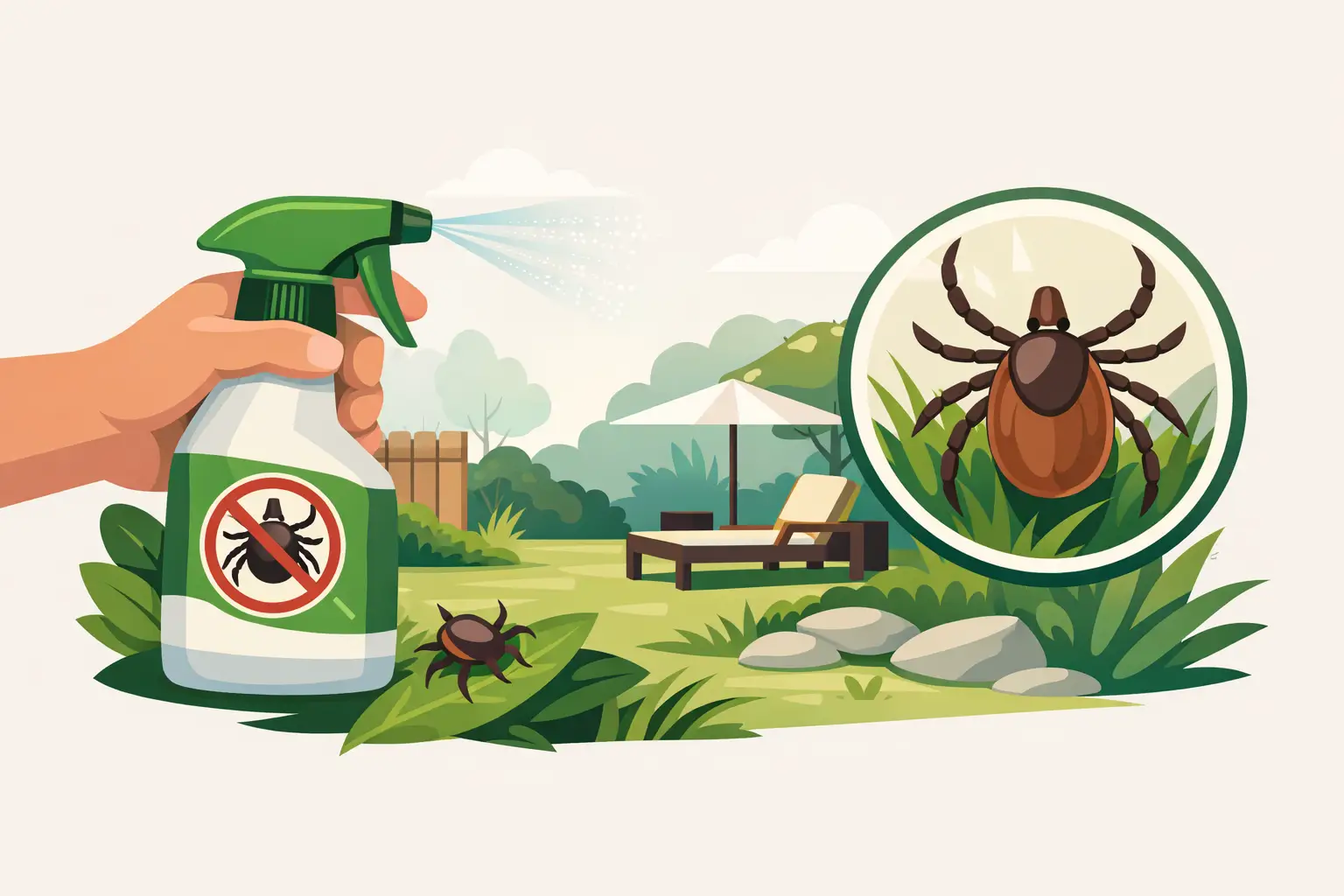
If you have kids cutting through the grass, a dog that noses along fence lines, or a backyard that backs onto trees, tick spray for backyard protection stops feeling optional pretty quickly. In Ontario, tick activity is a real seasonal concern, and waiting until someone finds one attached is the wrong time to start thinking about prevention.
The bigger issue is that not all yard treatments work the same way. Some products promise broad coverage but miss the places ticks actually hide. Others rely on heavy spray volume without much precision. If your goal is to make the yard safer for family, pets, and guests, the better question is not just whether to spray. It is what kind of treatment plan gives you meaningful control without overdoing the application.
Why tick pressure in a backyard is easy to underestimate
Most homeowners picture ticks out in deep bush or tall meadow grass. That is part of the story, but it is not the whole one. Ticks often show up where wooded edges meet the lawn, under shrubs, around leaf litter, near stone borders, and in damp shaded pockets that hold moisture. A backyard can look tidy and still support tick activity.
That is why a one-size-fits-all spray schedule tends to disappoint. The open centre of the lawn is rarely the highest-risk zone. The margins are. If treatment is not built around those risk areas, you can end up spraying a lot and solving very little.
In communities with mature trees, trails nearby, or properties that back onto natural space, this matters even more. Homeowners in places like Kemptville, Smiths Falls, and Carleton Place often have exactly the kind of yard conditions where ticks move in from surrounding habitat.
What good tick spray for backyard treatment should do
A useful treatment should reduce tick activity where people and pets actually move. That usually means creating a targeted barrier around the perimeter of the property, along fence lines, around decks, sheds, wood piles, ornamental plantings, and any shaded transition areas between lawn and brush.
It should also fit the property itself. A flat suburban lot with limited vegetation needs a different approach than a large yard with tree cover, gardens, and naturalized edges. The best results come from treating the right surfaces, at the right intervals, with the right application rate.
This is where many homeowners get frustrated with store-bought options. The label may be straightforward, but the real challenge is coverage. Ticks do not sit out in the open waiting for contact. They stay low, hidden, and protected by vegetation and debris. If the spray does not reach those spots properly, the treatment window can be shorter and the results weaker.
DIY yard sprays versus professional treatment
There is a place for do-it-yourself products, especially for very small properties or as a short-term step while you decide on a seasonal plan. But DIY comes with trade-offs.
The first is consistency. Backyard treatments work best when coverage is even and repeated based on tick pressure, weather, and vegetation growth. Missing a few key pockets along a property edge can leave enough activity behind to keep the problem going.
The second is product choice. Some consumer products are designed for general insect control, not specifically for the low, shaded, protected environments where ticks are most likely to survive. Others require larger spray volumes, which can sound thorough but is not always the same as being precise.
The third is time. Applying and reapplying correctly, managing re-entry timing, and understanding where to focus takes more effort than most people expect. If you are already juggling work, family, pets, and yard maintenance, it often makes more sense to have a property-specific treatment done properly.
A professional service can also account for the parts homeowners tend to miss, like dense groundcover behind a shed, the damp strip beside a fence, or the hidden perimeter route your dog follows every day.
Safety matters as much as effectiveness
When people ask about tick spray for backyard use, what they usually mean is this: will it work, and can I feel comfortable using my yard after treatment?
That is a fair question. Families are not looking for a scorched-earth approach. They want a safer outdoor space without unnecessary exposure for children or pets.
A responsible treatment plan starts with targeted application. Lower-volume, well-placed treatments are often a better fit than blanket spraying every surface in sight. The goal is to reduce tick harbourage areas and travel routes, not to soak the property. That approach can support strong results while keeping the treatment focused.
It also helps when the provider gives clear instructions about timing, re-entry, and what to expect after service. Good communication is part of good pest control. Homeowners should not be left guessing.
Timing makes a difference
One of the most common mistakes is waiting until mid-summer to think about ticks. In Ontario, prevention should start early in the active season and continue through the months when ticks are most likely to be encountered.
That does not mean every yard needs the exact same frequency. It depends on the property, surrounding habitat, weather patterns, pet activity, and how much time your household spends outside. A family hosting weekend barbecues and letting the dog roam the perimeter every evening has different exposure than a household that rarely uses the yard.
This is why custom treatment plans tend to outperform standard packages. If the schedule is built around your actual risk, it is easier to keep control steady instead of reacting after the fact.
Yard changes that improve spray results
Spray can do a lot, but it works better when the property is not inviting ticks in the first place. You do not need to redesign the whole yard. A few practical changes can improve outcomes significantly.
Keep grass cut, especially near edges and outbuildings. Trim back overgrown brush and low branches where shade and moisture collect. Remove heavy leaf litter from play areas, walkways, and transition zones. If there is a wood pile, keep it tidy and away from the main activity area.
These steps will not replace treatment on a higher-risk property, but they make the environment less favourable and help spray reach the places that matter. Think of it as reducing pressure from both sides.
What results should you expect?
A good backyard treatment should lower tick activity, not create a false promise that no tick will ever appear again. Ticks can be reintroduced by wildlife, pets, and movement from surrounding habitat. That is especially true on properties near trees, fields, or creek corridors.
The realistic goal is meaningful reduction in the areas where your family spends time. That means a safer play space, more confidence letting the dog out, and fewer worries around patios, gardens, and gathering areas.
If a company promises instant, permanent elimination from a single visit, that is worth questioning. Outdoor pest control is usually an ongoing management strategy, not a one-time fix. The honest answer is that strong, repeatable control comes from targeted treatment plus the right seasonal timing.
When a custom plan is the better choice
If your backyard has recurring tick sightings, backs onto natural habitat, or gets heavy use from kids and pets, a custom service plan is usually the smarter option. It is also a better fit if you are planning an outdoor event and want the space treated with both comfort and safety in mind.
This is where a local specialist has an advantage. A provider that understands Ontario yard conditions can build treatment around the way ticks actually behave here, not around a generic script. Mosquito Pros takes that tailored approach seriously, with property-specific treatments designed to protect outdoor spaces while using less spray than many broad-application programs.
That matters because effective pest control is not about doing more to the yard. It is about doing the right amount, in the right places, for the right reason.
How to decide if your yard needs treatment
If you are finding ticks on pets, spotting them after gardening, or avoiding parts of the yard because they feel risky, that is already enough reason to look at treatment. You do not need a severe infestation to justify action. For many homeowners, the decision comes down to reducing disease risk before a bigger problem develops.
The best time to deal with ticks is before your backyard starts dictating where your family can relax. A well-planned treatment can give you back that peace of mind, and that is usually the real reason people call in the first place.

