
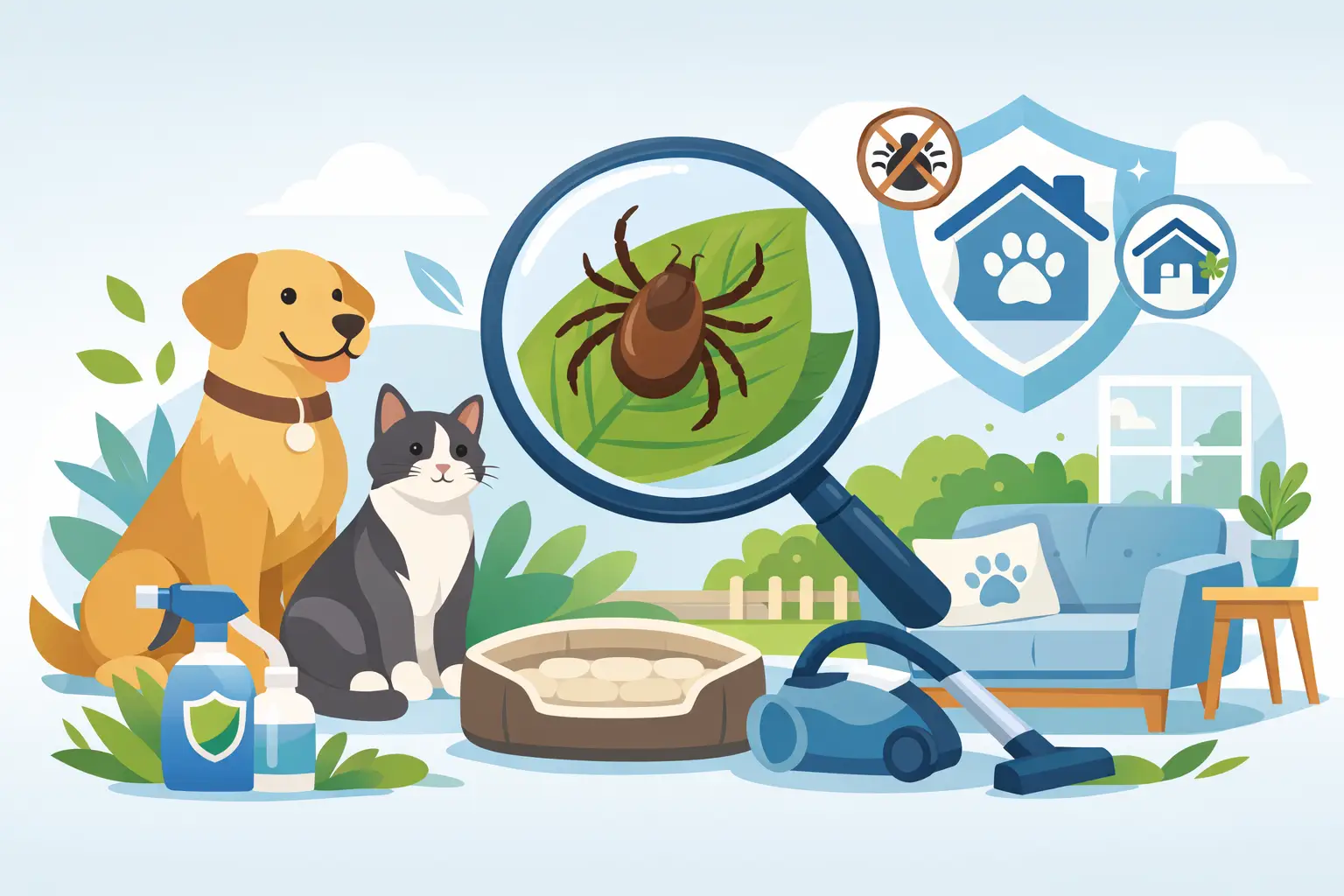
A dog does not need to disappear into deep bush to pick up a tick. In Ontario, many pets are exposed a few steps from the back door – along fence lines, under shrubs, around woodpiles, and in the cool, shaded edges of the yard. That is why tick exposure prevention for pets has to start at home, not just on the trail.
For pet owners, the goal is not perfection. It is reducing risk in the places your dog runs, your cat lounges, and your family spends time outside. Ticks are persistent, and their activity can stretch across much of the season depending on weather. A practical plan focuses on your pet, your property, and the habits that make exposure less likely.
Why tick exposure prevention for pets matters in Ontario
Ticks are more than a nuisance. They can carry pathogens that affect both animals and people, including those associated with Lyme disease. For dogs especially, the concern is not just the bite itself but the possibility of infection after unnoticed exposure. Cats are generally less affected by some tick-borne diseases than dogs, but they are not immune to tick bites or the irritation and health issues that can follow.
Ontario pet owners are dealing with a real outdoor risk, not a rare one. Ticks thrive in moist, shaded areas and often wait on tall grass, low brush, and leaf litter for a host to pass by. If your pet brushes against that vegetation during play, bathroom breaks, or a walk around the property, a tick can attach quickly and remain hidden for hours or days.
That is what makes prevention different from treatment. Once a tick is attached, you are already reacting. Good prevention reduces the chance of that happening in the first place.
The yard is often the first problem
Many people think of ticks as a hiking issue, but residential yards can be one of the most common exposure points. Properties with mature landscaping, natural edges, dense planting beds, ravines, wooded borders, or long periods of shade tend to create better tick habitat. Even well-kept yards can have higher-risk zones if they back onto bush or attract wildlife.
Pets do not use the whole property evenly. They tend to follow the same routes – around decks, along fences, under hedges, and through narrow paths between lawn and garden beds. Those transition areas matter because ticks often shelter where sun and airflow are limited.
If your dog has a favourite shady corner or your cat spends time in protected outdoor spots, that is where to pay attention first. The highest-risk parts of a yard are usually not the open sunny centre. They are the edges.
What works best for tick exposure prevention for pets
The strongest approach combines veterinary prevention, property maintenance, and routine checks. Relying on only one layer can leave gaps.
Pet preventives prescribed or recommended by your veterinarian are one of the most important tools. These products vary. Some repel ticks before they attach, while others kill ticks after contact or attachment. The right option depends on your pet’s age, health, species, and lifestyle. A dog that hikes weekly may need a different approach than a small dog that mostly uses the backyard. If you have cats, be careful not to assume dog products are safe for them. Some are not.
At the property level, reducing tick habitat makes a noticeable difference. Keep grass cut to a practical height, trim back overgrown vegetation, and clear leaf litter where ticks can stay cool and hidden. If there is a woodpile, keep it dry and organized rather than letting it become a sheltered pocket beside active yard space. Creating a cleaner boundary between wooded or brushy areas and the lawn can also help.
Wildlife management plays a role too. Deer and small mammals can contribute to tick presence on a property. You may not be able to control wildlife movement completely, but you can make your yard less inviting by managing food sources, dense cover, and cluttered edge zones.
Then there are post-outdoor checks. They are simple, but they matter. After time outside, run your hands over your pet’s body and check common hiding spots such as around the ears, under the collar, between the toes, under the legs, and around the tail area. Ticks can be small enough to miss at first glance, especially in thick fur, so touch helps as much as sight.
Yard treatments can reduce exposure where pets actually live
For many homeowners, maintenance and pet medication still leave one problem unresolved – the yard itself remains active tick habitat. That is where targeted outdoor treatment can add value.
A property-specific tick control program is not about blanketing everything without a plan. The better approach is to treat the areas where ticks are likely to rest and where pets are likely to pass through. That usually means shaded perimeter zones, ornamental beds, fence lines, under decks, and natural borders rather than every square foot of lawn.
This matters for safety and effectiveness. A tailored treatment strategy can reduce unnecessary spray while still addressing the places that contribute most to exposure. For families with children and pets, that balance is important. Lower-volume, targeted applications are often a better fit than broad, generic spraying because they reflect how the property is actually used.
In communities like Kemptville, Smiths Falls, Brockville, and surrounding areas where yards often back onto natural space or include mature tree cover, customized yard treatment can make outdoor pet routines more manageable through peak tick season. Mosquito Pros takes that property-by-property approach because the highest-risk zones are rarely identical from one yard to the next.
Small changes in routine make a real difference
Prevention does not have to feel complicated. It usually works best when it is built into habits you already have.
If your dog tends to brush through garden edges during bathroom breaks, guide them toward more open paths. If your pet has a long coat, regular grooming makes it easier to spot ticks before they stay attached unnoticed. If your family comes inside through a mudroom or side entrance after yard time, make that the place where leash, towel, and quick tick check happen together.
Outdoor cats are harder to protect because their range is less controlled. If a cat spends time outdoors, consistent veterinary guidance becomes even more important. For some households, reducing unsupervised outdoor access during peak tick activity is worth considering, especially if the property borders high-cover areas.
There is also a seasonal mindset to keep in mind. People often become alert in midsummer, but ticks can be active earlier and later than expected depending on temperatures. Waiting until you see a tick often means starting too late.
What to do if you find a tick on your pet
Even with good prevention, ticks can still happen. If you find one, remove it promptly with fine-tipped tweezers or a proper tick removal tool. Grasp the tick as close to the skin as possible and pull upward steadily without twisting. After removal, clean the area and wash your hands.
Avoid home remedies that involve heat, petroleum products, or other methods meant to force the tick out. They can make removal messier and may increase irritation.
Keep an eye on your pet afterward. If you notice lethargy, lameness, loss of appetite, fever, or unusual behaviour, contact your veterinarian. Not every tick bite leads to illness, but it is better to act early if symptoms appear.
Prevention works best when it matches your property
The biggest mistake homeowners make is assuming every yard has the same level of risk. It does not. A sunny, open lot with minimal vegetation creates a different exposure pattern than a shaded property with brushy edges and wildlife traffic. The right prevention plan depends on where your pet spends time, what your yard looks like, and how much tick pressure your area sees through the season.
That is why broad advice only goes so far. Some households can lower risk significantly with maintenance and pet preventives alone. Others benefit from adding professional yard treatment because the landscape keeps reintroducing the problem.
If your pet uses the yard every day, the outdoor space should be part of your prevention strategy, not an afterthought. A safer property gives your dog more freedom to roam, gives you more confidence during tick season, and helps turn the yard back into what it should be – a place your family can actually enjoy.

