
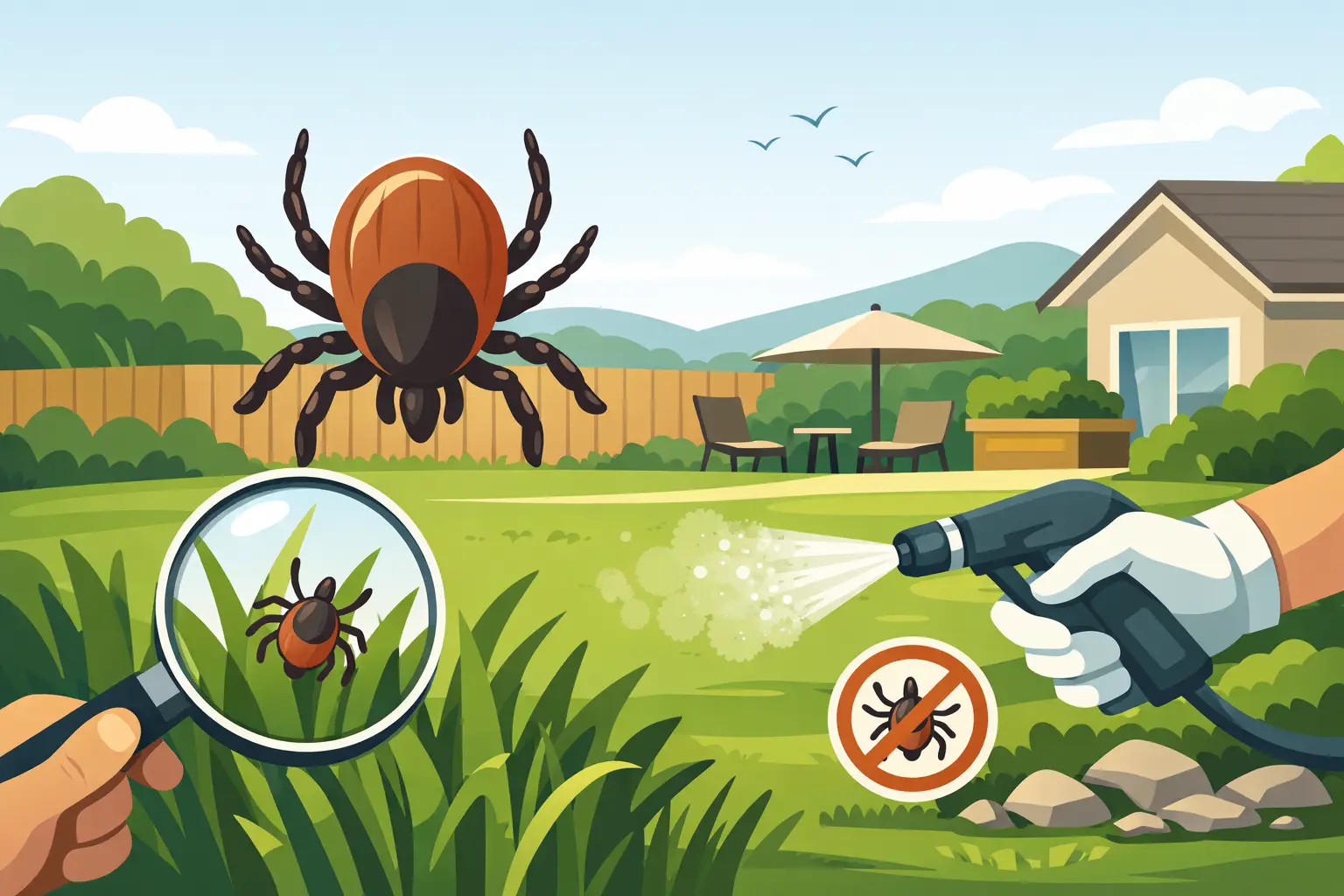
A shaded back fence, a woodpile that stays damp after rain, the strip of tall grass behind the shed – that is where tick problems usually start. When homeowners ask about tick prevention Kemptville yards need most, the answer is rarely one big fix. It is a combination of yard conditions, seasonal timing, and targeted treatment that reduces the places ticks live and the chances of them reaching your family or pets.
In and around Kemptville, ticks are not just a cottage-country issue. They are showing up in everyday residential spaces – along fence lines, near garden edges, around brushy borders, and anywhere wildlife passes through. If you have kids playing in the yard, a dog that noses through shrubs, or a patio you actually want to use all summer, prevention matters before a tick sighting turns into a bigger concern.
Why tick prevention matters in Kemptville yards
Ticks do not need a large wooded property to become a problem. A suburban or semi-rural yard can give them exactly what they need – moisture, shade, ground cover, and access to hosts like mice, deer, rabbits, and pets. Once they are established around the perimeter of a property, they can move into the spaces people use most.
That is the part many homeowners miss. Ticks are not usually spread evenly across a yard. They gather in hot spots. The lawn in full sun may be low risk, while the back corner near cedars or leaf litter may be where exposure really happens. This is why generic spraying often underperforms. Good prevention starts by identifying where ticks are likely to rest and travel.
There is also a health reason to take ticks seriously. In Ontario, blacklegged ticks can carry Lyme disease, and pets are also vulnerable to tick-borne illness. Prevention is about more than comfort. It is about lowering the odds of a bite in the places your family uses every day.
Where ticks hide on residential properties
Most tick activity happens low to the ground and close to cover. They are vulnerable to heat and dry conditions, so they seek out damp, shaded areas where they can wait for a host to pass by. In practical terms, that often means the edges of the yard rather than the centre.
For tick prevention in Kemptville yards, the highest-risk areas tend to be fence lines with overgrowth, unmowed or poorly drained sections, brush piles, leaf litter, wood stacks, stone borders, and the transition zone between lawn and trees. If your property backs onto a ravine, wooded lot, trail, or field, your risk can increase because wildlife is more likely to move through regularly.
That does not mean every natural-looking yard is a problem. It means the details matter. A clean, well-managed property with targeted treatment at the right time is very different from a yard with heavy debris, dense ground cover, and no control plan.
Pets often find ticks before people do
Dogs are especially likely to pick up ticks because they move through the exact areas ticks prefer. The route along the hedge, the shady side of the deck, the patch behind the garage – these are common contact points. If your dog comes inside with ticks, it is often a sign the yard perimeter needs attention, not just the pet.
Cats that spend time outdoors can also be exposed, although the risk pattern looks a little different depending on where they roam. Either way, pet activity is often the best clue that ticks are active on the property.
What actually helps with tick prevention
There is no single step that makes a yard tick-free for the entire season. The most effective approach combines habitat reduction with targeted professional treatment. The balance depends on your property, your tolerance for maintenance, and how much surrounding vegetation or wildlife pressure you are dealing with.
Start with the basics. Keep grass cut regularly, remove leaf piles, trim back dense vegetation, and reduce clutter where moisture stays trapped. If you have stacked firewood, keep it dry and off the ground where possible. If there is a brushy edge between your lawn and a wooded area, that border deserves attention because it is often where ticks concentrate.
Still, yard maintenance has limits. You can tidy a property and still have ticks coming in from neighbouring green space or wildlife traffic. That is where professional barrier treatment can make a real difference. Instead of blanket spraying everything, a property-specific plan focuses on the zones where ticks are most likely to survive and spread.
Timing matters more than many homeowners think
One of the biggest mistakes is waiting until ticks are already being found regularly. By then, activity is established. Preventive service works best when it is timed to the season and adjusted as conditions change.
In Ontario, weather patterns affect when tick pressure rises. A mild spring can lead to earlier activity, while damp periods through summer can keep risky areas active longer. Properties with deep shade or heavy vegetation may hold tick populations even when open lawns seem fine. That is why local knowledge matters. A treatment plan should respond to what is happening on the ground, not just the calendar.
Why custom treatment beats one-size-fits-all spraying
Not every yard in Kemptville needs the same solution. A compact in-town lot with a fenced lawn has different needs than a larger property near trees, trails, or open fields. The right plan depends on where ticks are likely to enter, where they shelter, and how your outdoor space is actually used.
That is the value of custom service. A targeted approach reduces unnecessary product use while focusing effort where it counts. For families and pet owners, that matters. Safety is not just about what is applied. It is also about how much is used, where it goes, and whether the treatment matches the real risk on the property.
This is one reason many homeowners prefer a provider that works with lower-volume, property-specific methods rather than broad, repetitive blanket applications. If the goal is protecting play areas, patios, dog runs, and yard edges without over-treating the whole property, precision matters.
Tick prevention Kemptville yards can sustain long term
The best results usually come from thinking seasonally, not reactively. If your yard has recurring tick pressure, a one-time response may help in the short term, but it may not solve the underlying pattern. Wildlife movement, moisture retention, and perimeter vegetation tend to bring the issue back unless there is a plan to manage it over time.
That does not always mean intensive treatment all season. Some properties need a stronger early-season response followed by maintenance. Others need more consistent attention because of nearby woods, brush, or drainage conditions. It depends on the property and how high the exposure risk is for children, pets, or frequent outdoor use.
A good provider should be honest about that. If your yard only has a few manageable risk zones, you should hear that. If the layout creates repeated pressure from surrounding habitat, you should hear that too. Homeowners make better decisions when the advice matches the property, not a generic package.
What to look for in a tick control service
Homeowners comparing services should pay attention to more than price. Ask whether the treatment is tailored to the property, whether it is designed with pets and children in mind, and whether the provider understands the local conditions that affect tick activity.
It is also worth asking how much product is actually being applied and where. Lower-volume, targeted applications can be a better fit than broad spraying when they are built around real tick harbourage zones. A company that can explain why certain areas are treated and others are not is usually taking a more thoughtful approach.
For households that spend a lot of time outside, that added precision can make the yard more usable without feeling overtreated. That is a practical benefit, not just a technical one.
Small yard changes that support professional treatment
Professional service does the heavy lifting, but homeowners can help the results last. Keep vegetation off fence bottoms where possible. Avoid letting leaf litter build up behind sheds and under decks. If there is a path your dog follows through shrubs or along a tree line, keep that area open and dry when you can.
If you are creating new landscaping, think about tick pressure before planting dense ground cover in shaded zones near active parts of the yard. Attractive landscaping and tick prevention can absolutely coexist, but some designs create more moisture and shelter than others. It is worth planning with that in mind.
For homes hosting backyard gatherings, this matters even more. A patio may look clean and comfortable, but if the perimeter just behind it is overgrown, guests and pets can still be exposed. Prevention works best when the outdoor living area and the yard edges are treated as one system.
For many homeowners in this area, peace of mind comes from knowing the yard is being managed with purpose, not just sprayed and hoped for. That is the difference between reacting to ticks and staying ahead of them. If your property has the kind of shaded borders and wildlife traffic ticks like, the safest move is to address it before the busiest weeks of outdoor season arrive.
