
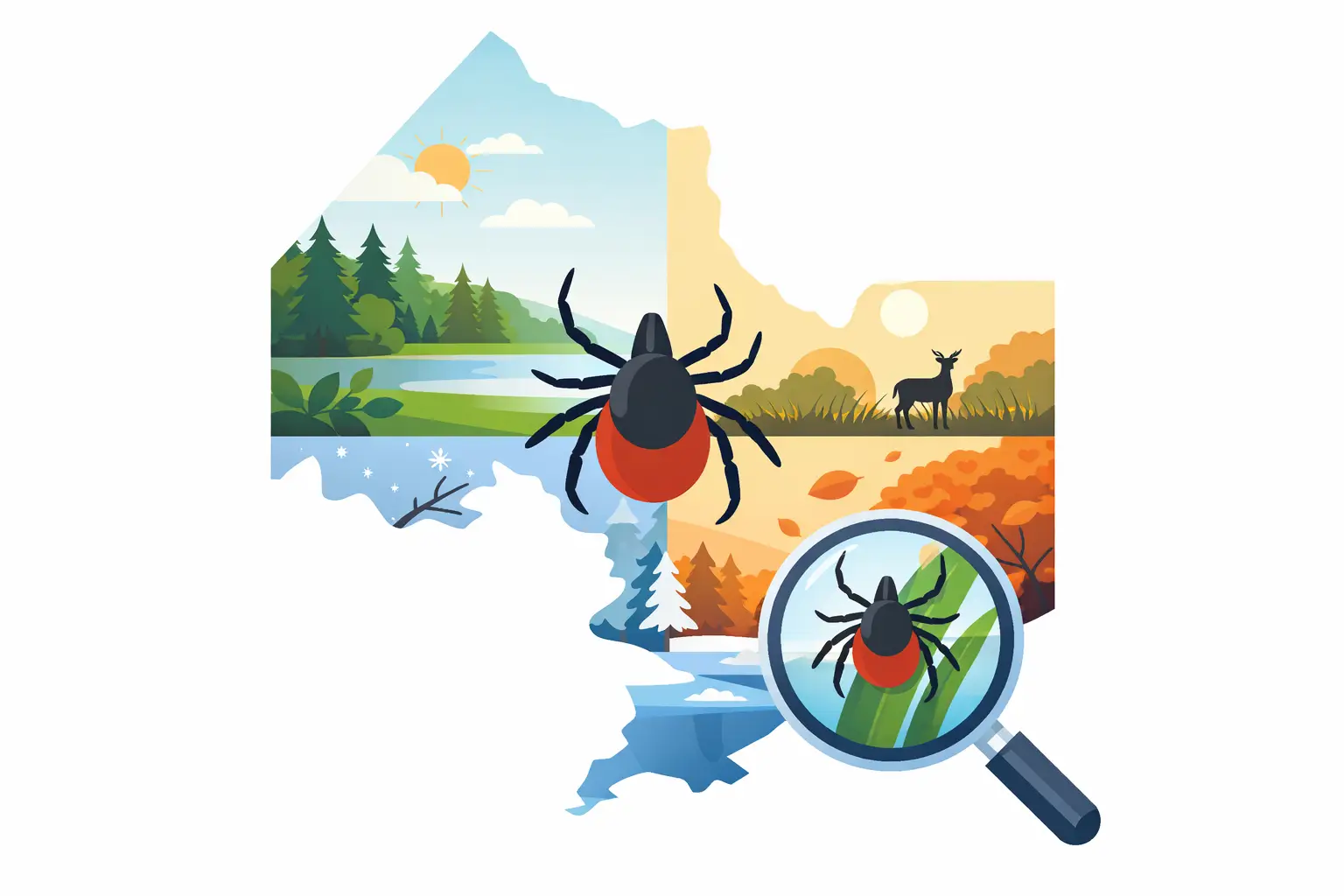
A lot of Ontario families assume ticks are only a summer problem. That is usually when people notice them most – after a hike, while gardening, or when the dog comes back from the yard – but that is not the full picture.
If you are wondering when are ticks worst in Ontario, the short answer is spring through early summer, with another active stretch in the fall. The longer answer matters more, because tick risk depends on temperature, humidity, shade, wildlife activity, and the kind of property you spend time on.
When are ticks worst in Ontario?
In most parts of Ontario, ticks are at their most active from about April to July. That is the period when many people start spending more time outdoors, and it overlaps with a stage in the tick life cycle when they are especially likely to attach to people and pets. Fall can also bring a noticeable spike, especially from September into November, as adult ticks stay active in cooler weather.
What catches many homeowners off guard is that ticks do not disappear just because summer ends. Blacklegged ticks, the species most associated with Lyme disease in Ontario, can remain active any time temperatures are above freezing. A mild winter day can still create conditions where ticks are looking for a host.
So if you want the most practical answer, tick season in Ontario is not one short window. It is a long season with higher-risk periods, especially in spring, early summer, and fall.
Why spring and early summer often feel the worst
Spring creates the right conditions for tick activity. Snow has melted, moisture levels are higher, grass and brush are growing in, and wildlife is moving through residential areas more often. That combination gives ticks cover, humidity, and access to hosts.
Late spring into early summer is also when people lower their guard. Kids are playing in the yard again. Pets spend more time outside. Homeowners start yard cleanup, landscaping, and gardening. Even a well-kept property can have tick pressure if it backs onto trees, brush, stone walls, fence lines, or unmanaged neighbouring land.
This is one reason some families in places like Kemptville, Smiths Falls, and Brockville notice ticks close to home, not just on trails or in rural bush. Ticks do not need deep forest to become a problem. They often thrive at the edges – where lawns meet taller grass, wooded patches, leaf litter, and shaded damp areas.
Fall is another high-risk season
Many people relax once the hottest part of summer passes. That can be a mistake.
Adult blacklegged ticks become very active again in the fall, particularly when the air is cool but not yet frozen. September, October, and even parts of November can bring real exposure risk. Dogs are often the first sign there is a problem, especially if they brush through ornamental grasses, wooded lot lines, or trail edges.
Fall yard work can also increase contact. Raking leaves, trimming back garden beds, splitting wood, and cleaning up around sheds or fence lines all put people into the kind of habitat ticks like best.
What time of year is lowest risk?
The lowest risk is usually during the coldest stretches of winter, when the ground is frozen and temperatures stay below freezing. Even then, “lowest” does not always mean zero.
Ontario winters are not always consistent. A few mild days in January or February can be enough for ticks to become active again, especially in sheltered areas with leaf cover. That is why relying only on the calendar is not a great strategy. Temperature and habitat matter as much as the season itself.
The weather conditions ticks like most
Ticks do not fly and they do not jump. They wait on grasses, weeds, low shrubs, and brush, then latch onto a passing host. For that to work well, they need the right environment.
They tend to do best in humid, shaded areas where they are protected from drying out. After wet weather, in overgrown corners of a yard, along tree lines, under dense shrubs, and around leaf litter, tick activity can be more concentrated. Hot, dry, open lawns are generally less favourable, but that does not make the whole property safe if the edges still provide shelter.
This is where homeowners can misread the risk. A tidy patio and mowed central lawn may look fine, while the real problem sits twenty feet away behind the shed or along the back fence.
Where ticks are most likely to be found on your property
Ticks are usually not spread evenly across a yard. They cluster where conditions support them and where hosts pass through.
The highest-risk spots often include:
- Wooded borders and tree lines
- Tall grass and unmanaged vegetation
- Leaf piles and damp ground cover
- Fence lines used by deer or small mammals
- Areas around sheds, stone edges, or brush piles
- Shaded ornamental beds with dense plant growth
If your property backs onto ravines, trails, bush, farmland, or creek corridors, the risk can increase. Wildlife movement matters. Deer, mice, and other animals help carry ticks into residential spaces, even when the yard itself looks relatively maintained.
Why pets and children face more exposure
Children and pets are often the first family members exposed to ticks because of how they use outdoor space. Kids play near the ground, cut through edges of the yard, and sit in grass or garden areas. Dogs push into shrubs, sniff along fence lines, and move through the exact spots ticks prefer.
Ticks can also be hard to spot right away. Nymphs are very small and easy to miss, which is one reason spring and early summer matter so much. A person or pet can pick up a tick during normal outdoor activity without realizing it until later.
That does not mean families should avoid their yards. It means the property should be managed with risk in mind, especially during peak months.
How to reduce tick risk during peak season
Protection works best when it is layered. Personal checks matter, but they should not be your only plan.
Start with the property itself. Keep grass cut, reduce brush, remove leaf litter from active areas, and trim back overgrown edges where ticks stay sheltered. If there are parts of the yard where kids play, pets roam, or guests gather, those spaces should be clearly separated from denser vegetation.
Clothing and daily habits help too. After time outside, check ankles, waistlines, behind knees, under arms, and along the scalp. Pets should be checked around ears, collar areas, toes, and under the belly. Quick checks are especially useful after gardening, yard work, or time near wooded edges.
For many homeowners, though, habitat reduction only goes so far. If the property has ongoing wildlife traffic, shaded borders, or recurring tick activity, targeted seasonal treatment can make a meaningful difference. That is where a customized approach matters. A blanket spray over the whole yard is not always the smartest or safest answer. Focused treatment in the right zones can reduce exposure while using far less product.
When to book tick control in Ontario
If you want protection during the worst part of tick season, the best time to act is before activity peaks. In Ontario, that usually means early spring booking, followed by recurring treatment through the active season where needed.
Waiting until you find multiple ticks on a pet or family member often means the problem has already been building on the property for weeks. Early treatment gives you a better chance of reducing pressure before outdoor use ramps up.
For households with dogs, young children, wooded lot lines, or frequent backyard entertaining, a proactive plan tends to be more effective than reacting mid-season. The same goes for event hosts preparing for outdoor weddings, family gatherings, or commercial spaces that need more usable exterior areas.
At Mosquito Pros, that is why treatment plans are built around the property, not a one-size-fits-all schedule. Tick pressure is different from yard to yard, and so is the smartest way to manage it.
The real answer depends on your property
So, when are ticks worst in Ontario? Most often, spring through early summer is the heaviest period, with a second strong stretch in the fall. But the real risk on your property depends on what surrounds it, how much shade and moisture it holds, and how often pets, kids, and wildlife move through those spaces.
If you have ever found a tick in the yard, that is reason enough to take the season seriously. The goal is not to create fear around being outside. It is to make your outdoor space safer, more comfortable, and easier to enjoy without second-guessing every patch of grass.
Ontario tick risk in 2026
Public Health Ontario’s current surveillance shows that established blacklegged tick risk continues across much of southern Ontario, including areas around Lake Ontario and the St. Lawrence corridor. Risk maps are useful, but ticks can still be found anywhere suitable habitat exists. Wooded edges, long grass, leaf litter, stone walls, and routes used by deer or small mammals deserve attention even if a property sits outside a highlighted risk area.
Can ticks be active outside summer?
Yes. Blacklegged ticks can become active whenever temperatures rise above freezing. That means checks and prevention remain important during mild periods in early spring, late fall, and even an unusually warm winter day.
Inspect people and pets after time outdoors, keep grass and leaf litter managed, and create a clean buffer between wooded edges and frequently used areas. For properties with recurring pressure, learn about targeted tick control or request a quote from Mosquito Pros.
