
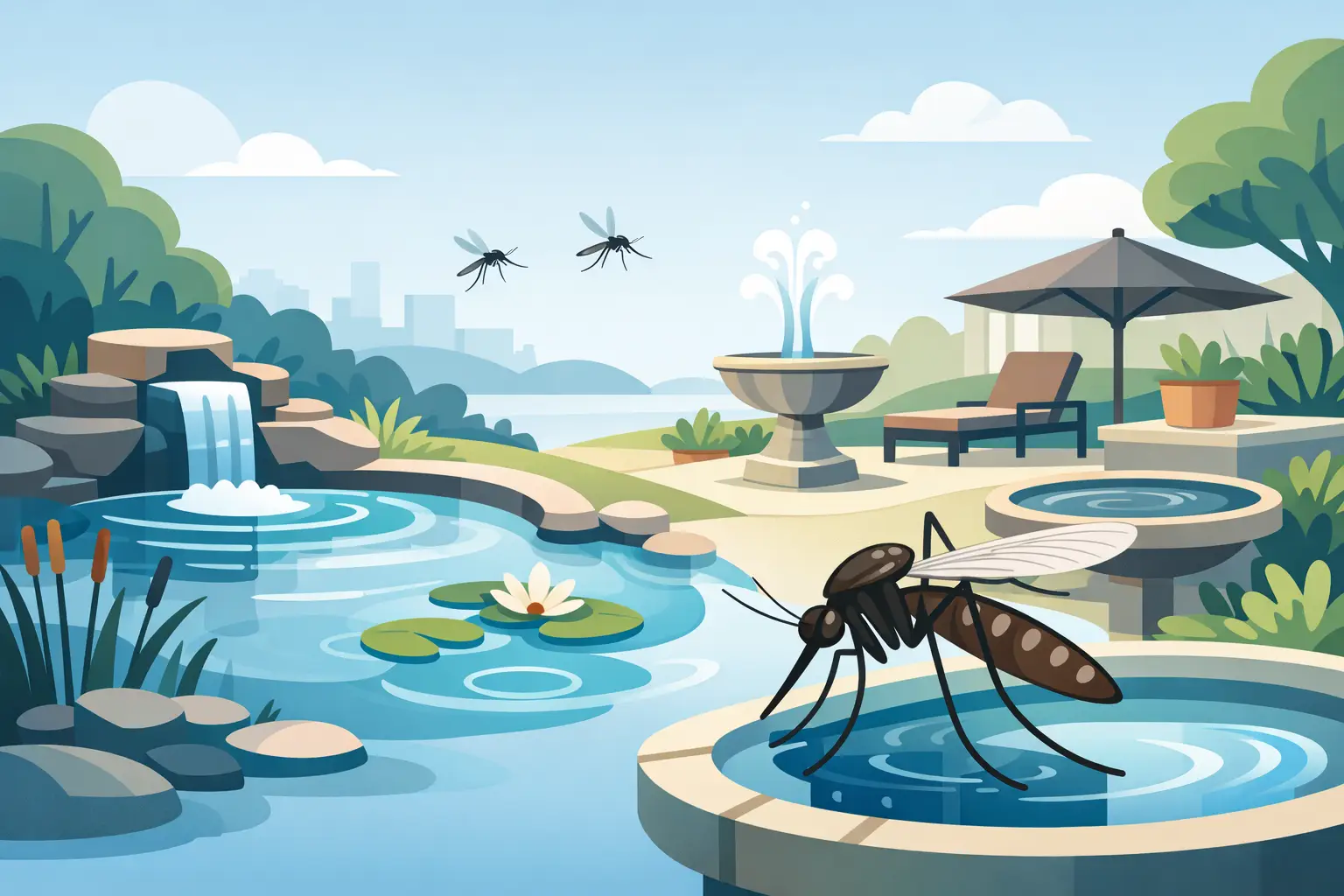
A backyard pond should make a patio feel more peaceful, not send everyone indoors at dusk. Yet mosquito concerns near water features are common across Ontario because even a well-kept landscape can include small pockets of still water that become productive breeding sites. The good news is that a pond, fountain, or rain garden does not automatically mean a mosquito-filled yard. What matters is how water moves, where it collects, and whether adult mosquitoes have shaded places to rest nearby.
For families and pet owners, this is more than a comfort issue. Mosquito bites can limit time outside and expose pets to heartworm risk. A property-specific approach can reduce mosquito pressure while preserving the water feature you enjoy.
Why water features can attract mosquitoes
Female mosquitoes lay eggs in or near water, but they do not all need a large pond to reproduce. Many species use shallow, protected, stagnant water. A birdbath left untouched for a week, a clogged gutter, or water pooled on a pool cover can be a bigger concern than a properly maintained pond with circulating water.
The water feature itself is only part of the picture. Adult mosquitoes spend much of the day resting in cool, humid cover, including dense shrubs, tall grass, hostas, woodpiles, and the shaded underside of a deck. When that shelter sits close to water, mosquitoes have what they need to breed, rest, and find people or pets nearby.
Moving water changes the equation
A fountain, waterfall, or aerator can make a meaningful difference because it disrupts the still surface many mosquitoes prefer. That does not make a feature mosquito-proof. Quiet edges, debris-filled corners, plant saucers, and nearby drainage areas can still hold enough stagnant water for larvae.
Natural ponds also need a different approach than ornamental fountains. They may support beneficial insects, frogs, fish, and aquatic plants. The goal should be reducing mosquito habitat without disrupting the ecosystem or applying a generic treatment where it does not belong.
Ontario weather creates a long mosquito window
Mosquito activity rises as temperatures warm in spring and can continue well into fall. After a stretch of rain, mosquito populations can increase quickly because temporary water sources appear throughout the property. Hot, humid evenings tend to bring the most noticeable biting pressure, especially around patios, decks, fire pits, and waterfront seating areas.
That timing matters for property maintenance. Waiting until mosquitoes are already overwhelming a gathering space often means the breeding cycle has had time to build. Regular checks throughout the season are more effective than one large clean-up effort in midsummer.
Common sources of mosquito concerns near water features
When homeowners see mosquitoes hovering around a pond or fountain, the visible feature often gets the blame. A closer inspection frequently reveals a different source nearby. Walk the property after rainfall and look beyond the main water feature.
Pay particular attention to these common problem areas:
- Pond margins where leaves, algae, or pots create calm pockets of water
- Birdbaths, pet bowls, buckets, wheelbarrows, and children’s outdoor toys
- Clogged eavestroughs, downspout extensions, and low areas in the lawn
- Pool covers, unused hot tubs, rain barrels, and unused containers
- Dense vegetation, under-deck areas, and shrubs close to patios or play spaces
It only takes a small amount of standing water for mosquitoes to develop. Emptying and refreshing containers at least once a week interrupts that cycle. For features that cannot be emptied, such as ponds or rain barrels, the right water movement, screening, or appropriately selected mosquito control measure can help.
What mosquito activity means for families and pets
Mosquitoes are frustrating when they interrupt dinner on the deck, but they can also be a health concern. In Ontario, mosquito-borne illnesses are a reason to take persistent activity seriously. Pets also need protection, particularly dogs that may be exposed to heartworm through mosquito bites.
Risk varies by location, season, mosquito species, and time spent outdoors. It is not helpful to treat every mosquito sighting as an emergency. It is equally unwise to accept constant biting as a normal part of summer. If family members avoid the yard at dusk, guests are being bitten during outdoor meals, or pets are swarmed near the back door, it is time to identify the source and reduce the population around your living space.
Repellent, light-coloured clothing, and limiting outdoor time during peak activity can provide personal protection. Those steps are useful, but they do not solve the conditions allowing mosquitoes to build up around the property.
Reduce mosquito pressure without removing the feature
A water feature can remain part of a comfortable, family-friendly yard. The best results usually come from combining basic maintenance with targeted mosquito control around the areas where people and pets spend time.
Maintain the water, not just the appearance
Keep fountains and pond pumps operating as intended, and clear leaves or debris that create stagnant corners. Refresh birdbaths regularly. If you use rain barrels, make sure they have properly fitted screens and that overflow does not create puddles near the foundation.
For ponds, consider whether circulation reaches the entire feature. A pump that moves water in one central area may leave sheltered edges undisturbed. Pond owners should also consider fish, plants, wildlife, and product labels before adding anything to the water. A solution appropriate for a decorative container may not be suitable for a living pond.
Make resting areas less inviting
Mosquitoes need shelter from sun and wind. Trimming back overgrown vegetation, mowing regularly, removing yard clutter, and improving airflow around decks can reduce the cool, damp hiding places adult mosquitoes prefer.
This does not mean stripping a yard of every shrub or garden bed. Focus on the areas closest to doors, patios, children’s play areas, dog runs, and seating. A thoughtfully maintained landscape can still offer privacy and habitat while being less favourable to biting insects.
Avoid broad, one-size-fits-all spraying
A heavy blanket application is not the answer for every property, especially where ponds, pollinator gardens, pets, and children are part of the landscape. Treatment should account for the property layout, mosquito resting zones, water features, and the outdoor spaces that need protection.
Mosquito Pros assesses each yard before targeting suitable mosquito resting areas. The plan focuses on reducing adult activity around outdoor living spaces, rather than treating a water feature indiscriminately. Product choice and use around people and pets follow label directions.
When professional treatment makes sense
Home maintenance can control many breeding sources, but some properties face ongoing pressure because of neighbouring vegetation, drainage patterns, wooded lots, wetlands, or larger landscaped water features. If mosquitoes return quickly after you remove standing water, there may be resting habitat or breeding areas that are not obvious from the patio.
Professional support is particularly useful before an outdoor wedding, family reunion, backyard party, or commercial event where guests will be outside during peak mosquito hours. It can also help homeowners in Merrickville, Kemptville, Smiths Falls, Carleton Place, Brockville, and surrounding communities who want their yards to stay usable through the season instead of reacting to each new wave of bites.
A proper assessment should begin with questions: Where are mosquitoes most active? When do they bite? Is there a pond, drainage issue, wooded edge, or dense garden nearby? Are children and pets using the space? Those details determine the right plan and help avoid unnecessary treatment.
A more comfortable backyard starts at the water’s edge
You do not have to choose between enjoying a pond and protecting your outdoor space. Check for stagnant water after rain, maintain circulation, reduce sheltered resting areas, and act early when biting activity increases. With the right attention around the feature and the spaces beside it, your patio can stay where summer evenings belong: outside with family, friends, and far fewer mosquitoes.


