
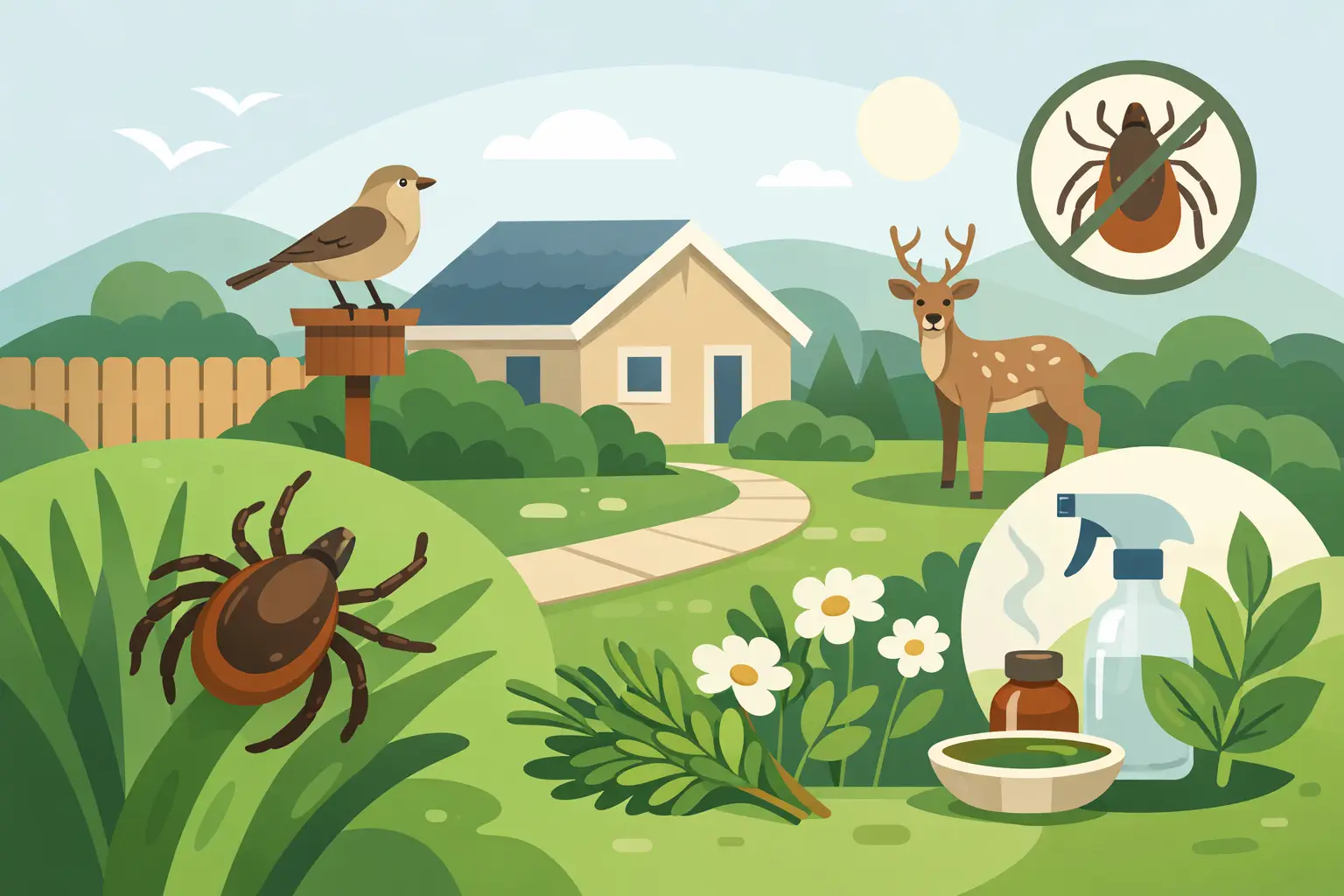
Ticks do not need a deep forest to become a problem. A shady fence line, a leaf-covered garden edge, or a dog’s favourite spot beneath the cedar hedge can give them exactly what they need. If you are wondering how to reduce ticks naturally, start by making your yard less suitable for ticks and less welcoming to the wildlife that carry them.
For Ontario families and pet owners, this is more than an outdoor nuisance. Blacklegged ticks can carry the bacteria that causes Lyme disease, and they are often small enough to go unnoticed until after they have attached. Natural prevention can make a meaningful difference, but it works best as a consistent yard-care routine rather than a one-time fix.
Why Ticks Settle Into Certain Yards
Ticks do not fly or jump. They wait on grass blades, low plants, leaf litter, and brush, then latch onto a passing person, pet, deer, mouse, or other animal. They need moisture and shade to survive, which is why the most tick-friendly parts of a property are often the areas that receive the least attention.
Long grass, dense shrubs, woodpiles, stone walls, and piles of leaves create protected hiding spaces. Wildlife activity adds the other part of the equation. Deer can transport adult ticks across a property, while mice and other small mammals may host young ticks. A beautiful, natural-looking yard can still be a lower-risk yard, but it needs clear boundaries and routine maintenance.
How to Reduce Ticks Naturally Through Yard Care
Natural tick reduction begins with habitat management. The goal is not to strip your property of every plant or turn it into a bare lawn. It is to reduce damp, sheltered areas close to where children play, pets roam, and guests gather.
Keep grass short and edges defined
Mow regularly during tick season, especially along lawn edges, pathways, play areas, and around patios. Ticks are more likely to wait in tall grass and low-growing vegetation than on a well-maintained lawn exposed to sun and airflow.
Pay extra attention to transition zones. The strip between a lawn and a wooded area, hedge, field, or unmanaged lot is often where tick activity is highest. Keeping this edge trimmed makes it harder for ticks to move from brush into your everyday outdoor space.
Remove leaf litter and overgrown brush
Leaf litter holds moisture and gives ticks a protected place to rest. Rake leaves from beneath shrubs, along fence lines, around decks, and near outdoor seating areas. Clear brush piles, fallen branches, and dense weeds where practical.
This does not mean every garden bed needs to be bare. Mulched beds and native plants can remain part of a healthy landscape. Focus on keeping them tidy and avoiding thick ground cover directly beside high-use areas. If your children use a playset near a wooded edge, create a clear, open buffer around it.
Create a dry barrier at the yard’s edge
A band of wood chips or gravel between a lawn and a wooded or brushy area can help create a drier zone that ticks are less likely to cross. A barrier works best when it is wide enough to be meaningful and kept free of weeds, leaves, and overgrowth.
This approach is particularly useful for rural and semi-rural properties around Merrickville, Kemptville, Smiths Falls, and surrounding communities, where yards often back onto fields, trails, or wooded areas. It will not stop every tick, but it can reduce the number reaching your main lawn and living spaces.
Make your property less attractive to wildlife
You cannot control every deer, mouse, squirrel, or raccoon that passes through your neighbourhood. You can reduce the reasons they choose to linger near your home. Keep pet food indoors, clean up fallen birdseed, secure garbage, and store firewood neatly away from the house.
Consider placing bird feeders away from decks and play areas, since dropped seed can attract small mammals. If deer frequently cross your yard, fencing around gardens and targeted landscaping choices may help redirect their route. The best approach depends on the size and layout of your property.
Natural Options Need Realistic Expectations
Many homeowners look for plants, essential oils, or homemade sprays that will keep ticks away. Some natural ingredients may offer short-term repellent benefits on clothing or skin when used according to a properly labelled product, but they are not a dependable substitute for yard maintenance, pet protection, and regular checks.
Be cautious with DIY essential-oil sprays. “Natural” does not automatically mean safe for children, pets, pollinators, or plants. Concentrated essential oils can irritate skin and may be harmful if pets lick treated surfaces or if the oils are applied incorrectly. Never apply an unlabelled homemade mixture to your pet, and speak with your veterinarian before using any tick product on dogs or cats.
Certain aromatic plants are often promoted as tick repellents, including lavender, rosemary, mint, and lemongrass. They can be pleasant additions around patios and garden borders, but planting them alone will not provide reliable tick control. Use them because you enjoy them, not as your only line of defence.
Protect Pets and People Every Day
A lower-tick yard is valuable, but it is not a guarantee. Ticks can still arrive on wildlife, pets, clothing, or a visitor who has been walking through tall grass. Personal prevention fills the gaps.
After time outdoors, check children, adults, and pets before heading inside. Ticks commonly hide behind knees, around the waist, under arms, along the hairline, behind ears, and in the groin area. On pets, check around the ears, collar area, face, toes, tail, and under the front legs. A quick check after a walk or backyard playtime is far easier than dealing with an attached tick later.
Wear light-coloured clothing when walking through brush or tall grass so ticks are easier to spot. Closed shoes, long pants, and tucked-in socks can reduce exposed skin on trails or while doing yard work. For pets, veterinarian-recommended tick prevention remains one of the most dependable ways to lower risk.
If you find an attached tick, use fine-tipped tweezers to grasp it as close to the skin as possible and pull upward with steady pressure. Avoid squeezing the body or using heat, petroleum jelly, or other home remedies. Clean the area and monitor for symptoms. If you develop a rash, fever, fatigue, headache, or joint pain after a tick bite, contact a health-care provider promptly.
When Natural Yard Care Is Not Enough
Natural steps are the right foundation, especially for households that want to reduce chemical use. However, heavy tick pressure may call for another layer of protection. This is common on properties beside wooded areas, near deer trails, or with large, shaded sections that are difficult to maintain.
A targeted treatment should not mean blanket spraying every inch of a yard. The most effective approach focuses on the places ticks actually rest and travel: shaded borders, brush lines, dense vegetation, and perimeter areas. A property-specific plan can reduce exposure while using less product than a broad, one-size-fits-all application.
Mosquito Pros offers natural treatment options and customized tick control for homeowners who want protection that accounts for children, pets, yard layout, and how the outdoor space is used. Timing matters too. Treating before a busy season, before an outdoor event, or after noticing frequent ticks can help protect the areas that matter most.
Build a Routine Before Tick Season Peaks
Tick prevention is easier when it becomes part of normal outdoor maintenance. Start in spring by clearing leaves and brush, trimming lawn edges, and checking areas that stayed damp through winter. Continue through the warmer months with regular mowing, pet checks, and quick inspections after time outdoors.
The safest yard is not necessarily the most heavily treated one. It is the yard where habitat is managed, pets are protected, and higher-risk areas receive the right level of attention. A few practical changes now can make backyard dinners, kids’ playtime, and dog walks feel far less worrying all season long.

