
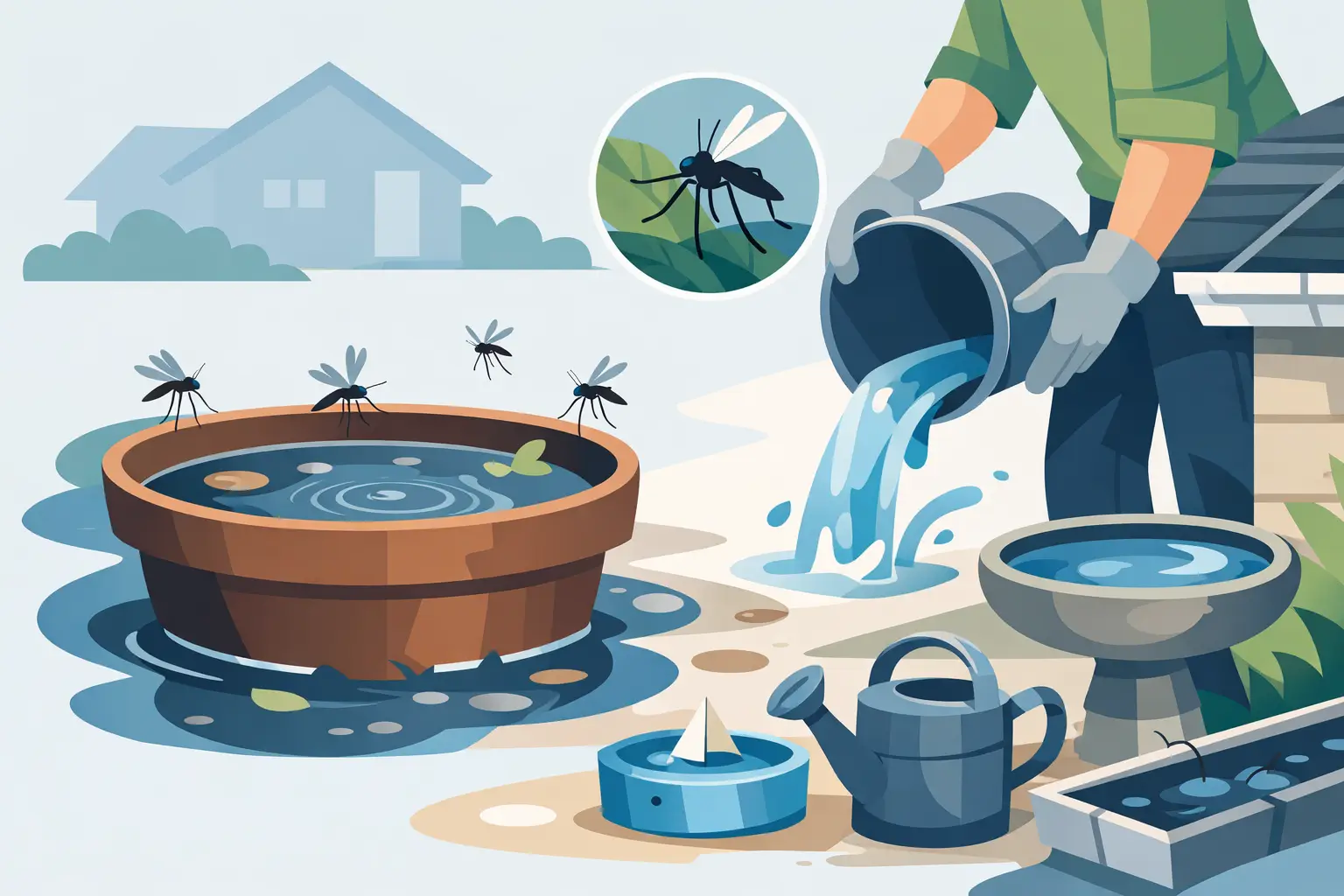
Mosquitoes do not need a pond to become a problem. A bottle cap, a clogged gutter, or a forgotten bucket after an Ontario rainstorm can hold enough water for mosquitoes to lay eggs. The most effective first step to remove standing water for mosquitoes is to look at your property the way a mosquito does: search for small, sheltered places where water can sit undisturbed for days.
This simple yard task matters because many mosquito species can complete their early life cycle in as little as a week during warm weather. Removing water before larvae develop helps reduce the number of biting adults around your deck, garden, children’s play area, and pet space.
Why standing water attracts mosquitoes
Female mosquitoes lay their eggs in or near water, depending on the species. Once eggs hatch, mosquito larvae remain in water until they become adults. Still, shallow water that is protected from wind and predators is especially appealing. That includes objects most homeowners would not consider a breeding site.
Rainfall, humid summer weather, and shaded yards can make the issue harder to manage across Eastern Ontario. A yard may look dry on Monday and have dozens of small water-holding spots after a heavy storm on Wednesday. That is why water removal works best as a regular routine, not a one-time spring cleanup.
Standing water control also has limits. It reduces breeding opportunities on your property, but mosquitoes can travel in from nearby ditches, wooded areas, drainage corridors, and neighbouring yards. Removing water is a powerful layer of protection, not always a complete solution on its own.
Where to look when removing standing water for mosquitoes
Start close to the house, then work outward. Check areas near patios, entrances, sheds, gardens, and play structures first, since these are the spaces your family uses most often.
Walk the property after rain and inspect anything that can catch water. Common trouble spots include:
- Plant pots, saucers, watering cans, buckets, wheelbarrows, and recycling bins
- Children’s toys, sandboxes, plastic play equipment, and trampoline covers
- Birdbaths, pet water bowls, fountains, and decorative water features
- Clogged gutters, downspouts, window wells, and low spots beside the foundation
- Old tires, tarps, pool covers, boats, trailers, and outdoor furniture covers
- Rain barrels, compost lids, drainage basins, and unused containers around sheds
Do not overlook dense landscaping. A folded tarp under a deck, a tipped-over flowerpot behind a shed, or a bag of toys left in the corner of the yard may hold water long after the lawn has dried.
Empty, scrub, cover, or improve drainage
The right fix depends on what is holding the water. If a container is not needed, empty it and store it upside down or indoors. This prevents it from refilling during the next rainfall.
For items that need water, such as birdbaths and pet bowls, empty and refill them at least once a week. A quick scrub is worthwhile because mosquito eggs can cling to the sides of containers. Fresh water supports pets and birds while disrupting the mosquito life cycle.
Rain barrels are useful for water conservation, but they must be managed carefully. Fit the opening and overflow with fine mesh screening, keep the lid securely closed, and repair any tears immediately. The same principle applies to ponds and water features. Moving water from a functioning pump or fountain is less attractive to many mosquitoes than still water, although equipment must run consistently to make a difference.
Gutters deserve particular attention. Leaves, roof grit, and small branches can create shallow pools that are easy to miss from the ground. Clean gutters and ensure downspouts direct water away from the home. If water repeatedly pools near a patio, walkway, or foundation, grading or drainage improvements may be the lasting answer. Simply sweeping the same puddle away after every storm is not always enough.
Deal with water you cannot remove
Some water sources cannot be emptied, including larger ornamental ponds, drainage areas, and natural low spots. Avoid treating every water feature as a mosquito problem. Healthy ponds with movement, appropriate maintenance, and natural predators may not produce significant mosquito activity.
For water that must remain but is small and contained, use mosquito control products only as directed on the label and only where they are appropriate. Products designed for mosquito larvae can be useful in certain non-drinking water situations, but they are not a substitute for eliminating unnecessary water. Never add products to waterways, ponds, or drainage systems without confirming they are suitable for that use.
Temporary puddles are different from permanent drainage concerns. If a section of lawn stays wet for several days after every rainfall, investigate the cause. Compacted soil, blocked drainage, poor grading, or a damaged downspout may be contributing. Addressing the source protects your yard from more than mosquitoes – it can also help prevent muddy turf and moisture problems near the home.
Build a weekly mosquito prevention routine
A 10-minute inspection once a week is often more effective than a major cleanup once a month. During peak mosquito season, inspect again after heavy rainfall. Assign the task to a regular yard day so it does not get missed when weekends get busy.
Focus on turning over containers, clearing debris from drains, refreshing water bowls and birdbaths, and checking covers or tarps for sagging areas. If you have children, make toy pickup part of the routine. If you have pets, inspect their outdoor water stations and shaded resting areas where bowls or containers may collect rain.
Keep vegetation trimmed around seating areas as well. Mosquitoes rest in cool, shaded plants during the day, then become more active around dawn and dusk. Removing standing water reduces breeding, while maintaining the landscape makes your outdoor space less comfortable for adult mosquitoes already present.
Protect outdoor spaces beyond water removal
Water management is the foundation of mosquito prevention, but it works best alongside practical habits. Use fans on decks and patios, especially for outdoor meals and gatherings. Mosquitoes are weak fliers, and steady airflow can make a noticeable difference in a small seating area.
For families spending time outside at dusk, consider light-coloured clothing, long sleeves when practical, and a Health Canada-approved personal repellent used according to its instructions. Pet owners should also speak with their veterinarian about appropriate heartworm prevention. Yard mosquitoes are more than a nuisance when they interfere with safe, comfortable time outdoors.
If mosquitoes remain heavy despite regular water control, the issue may be coming from beyond the visible sources on your property. Mature trees, dense shrubs, wet adjacent land, and nearby breeding areas can support adult mosquito populations. In that case, a targeted property assessment can identify resting areas and help determine whether a custom treatment plan makes sense.
Mosquito Pros provides lower-volume, property-specific mosquito treatments for homes and outdoor spaces in communities such as Kemptville, Merrickville, Smiths Falls, and Brockville. The goal is not to apply more product than necessary, but to target the areas where mosquitoes rest and where your family needs protection most.
Before your next backyard dinner, children’s playdate, or weekend on the patio, take one slow walk around the yard after rain. The small amount of water you find and remove today can prevent a much bigger mosquito problem next week.


