
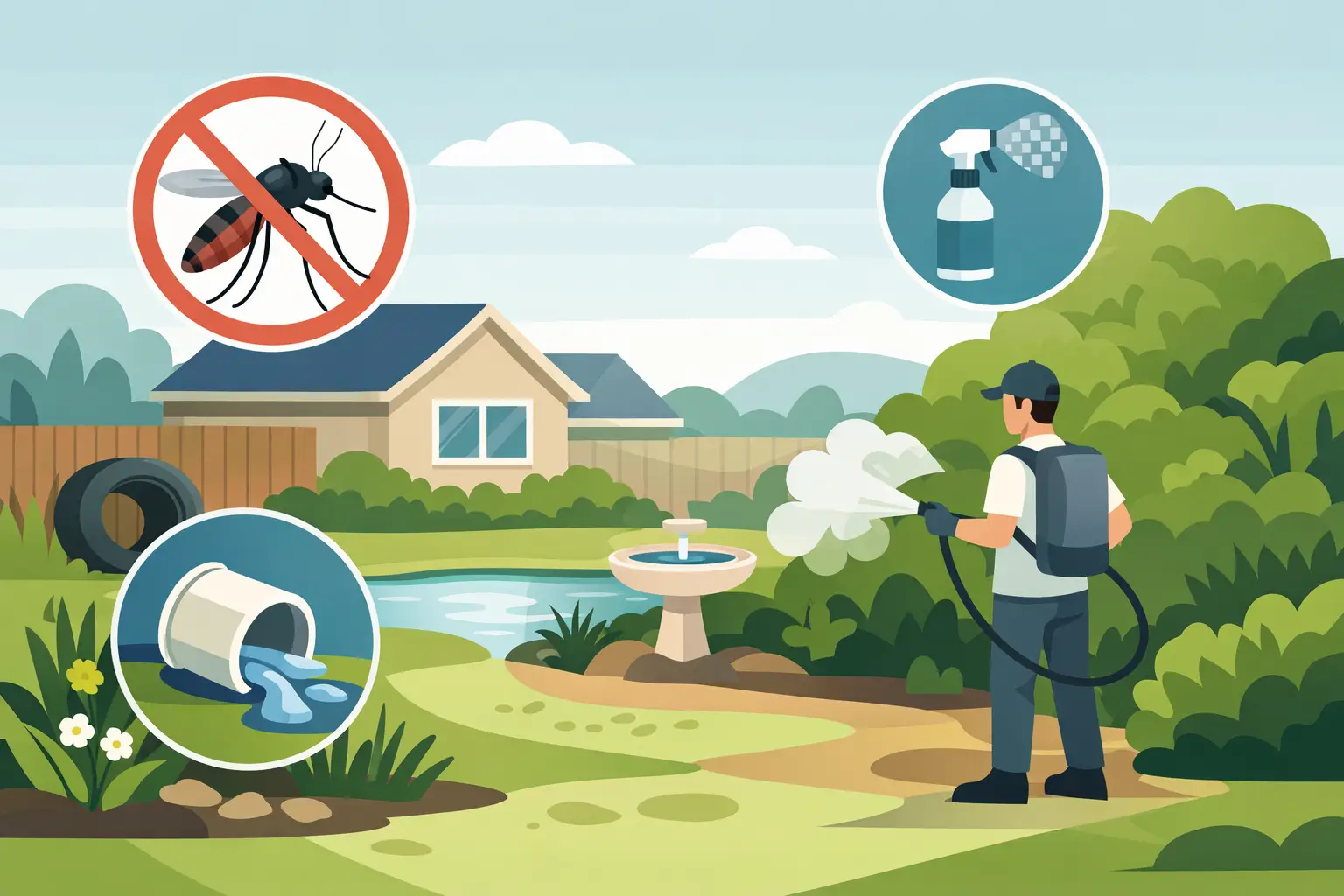
Mosquitoes rarely make themselves known when you first step outside. They appear when dinner is on the patio, children are playing near the garden, or the dog is settling into the shaded part of the yard. This residential mosquito prevention guide focuses on the practical steps Ontario homeowners can take to reduce breeding areas, limit resting spots, and protect the outdoor spaces they use most.
A mosquito-free property is not always realistic during an Ontario summer, especially near wooded areas, drainage ditches, ponds, or neighbouring properties with standing water. The goal is to substantially reduce mosquito pressure and make your yard far less inviting to them. Consistent prevention works better than a single weekend cleanup.
Start With Standing Water
Mosquitoes need water to complete their life cycle. Even a small amount can be enough for some species to lay eggs, which is why the most effective prevention often starts with a close look around the property after rainfall.
Walk your yard weekly and check the places water tends to collect. Empty bird baths every few days, refresh pet water bowls regularly, and tip out water from planters, toys, tarps, wheelbarrows, recycling bins, and pool covers. If you use rain barrels, make sure the opening is covered with fine mesh and that the lid fits securely.
Pay particular attention to clogged eavestroughs and downspouts. They hold water longer than many homeowners realize and can become a protected breeding spot. Low areas in the lawn may need grading or drainage improvements if they remain wet for days after a storm.
Not every water feature needs to disappear. Ponds, for example, can be managed with circulation, appropriate maintenance, and professional advice suited to the feature. The key is avoiding still, shallow water that remains undisturbed.
Look Beyond the Backyard
Your own yard can be well maintained while mosquitoes continue to arrive from nearby vegetation or standing water. That does not mean prevention has failed. It means your approach should include the areas where adult mosquitoes rest and travel, not only where they breed.
In Merrickville, Kemptville, Smiths Falls, and other rural or semi-rural communities, properties near trees, fields, creek beds, or dense hedgerows can face heavier mosquito activity. You cannot control every nearby source, but you can make the space closest to your home less favourable.
Reduce Shady Resting Areas
Adult mosquitoes avoid direct sun and wind during the heat of the day. They often rest in cool, damp, shaded vegetation until conditions are right for feeding. Dense shrubs, tall grass, overgrown garden edges, and leaf piles give them the shelter they are looking for.
Keep grass cut, trim back vegetation around decks and patios, and remove heavy piles of leaves, branches, and garden debris. Focus first on the areas closest to doors, seating areas, play structures, dog runs, and walkways. You do not need to strip away every planted area to reduce mosquitoes. Creating airflow and opening up the densest growth can make a noticeable difference.
Mulch beds deserve attention as well. Mulch supports healthy gardens, but thick, wet layers beside patios or entrances can stay cool and damp. Keep it tidy, avoid overwatering, and leave a clear edge between heavily planted beds and the spaces where your family gathers.
Make Patios and Decks Less Attractive
A few targeted changes can make an outdoor living area more comfortable, even when mosquitoes remain active elsewhere on the property.
Fans are one of the simplest tools available. Mosquitoes are weak fliers, so a properly placed fan can disrupt their flight around a dining table or seating area. This is especially useful for a one-time gathering, but it is not a substitute for broader yard prevention.
Use light-coloured, loose-fitting clothing when spending time outdoors in the early morning or evening. Long sleeves and pants offer physical protection during peak activity periods, particularly for children helping in the garden or adults doing yard work. Approved personal repellents can add another layer of protection when used exactly as directed on the label.
Citronella candles and decorative torches may help create atmosphere, but their effect is limited to a very small area and depends heavily on wind. Treat them as an accessory, not your main mosquito plan. The same applies to ultrasonic devices and many plug-in gadgets that promise whole-yard control without addressing water or vegetation.
Protect Pets During Mosquito Season
Mosquito bites are not only an annoyance for people. Mosquitoes can transmit heartworm to dogs, and ticks remain another concern in Ontario yards. Speak with your veterinarian about preventive products that suit your pet’s age, health, lifestyle, and risk level.
Keep pets away from tall grass and dense brush where possible, particularly at dawn and dusk. Check dogs after walks and time spent in wooded or grassy areas. Yard maintenance and targeted mosquito control can reduce exposure around the home, while veterinary prevention addresses the risks pets may face beyond your property.
Use Property-Specific Treatment When Needed
Home maintenance is the foundation of mosquito prevention, but it may not be enough for properties with persistent pressure. A wooded lot, thick perimeter vegetation, nearby water, or a large outdoor entertaining area can require a more targeted solution.
Professional barrier treatments focus on the vegetation and shaded zones where adult mosquitoes rest. The most effective service is not a one-size-fits-all spray across every square metre of a yard. It begins with an assessment of where mosquitoes are likely coming from, where people and pets spend time, and which areas can be treated with precision.
Ask a provider how they tailor the application, what areas they avoid, and what steps you should take before and after treatment. A responsible plan should account for gardens, pollinator-friendly plants, water features, pets, children, and your intended use of the yard. Timing also matters. Seasonal recurring service generally provides more reliable relief than waiting until mosquitoes have already taken over the property.
Mosquito Pros uses customized, lower-volume treatment plans designed around the property and the people using it. For homeowners with a patio event, family celebration, or a summer-long mosquito problem, a professional assessment can help determine whether a barrier treatment, a natural option, or a combination of prevention measures makes sense.
Time Your Prevention Around Ontario Weather
Mosquito activity rises as temperatures warm and water becomes available in spring. A wet spring can create an early and heavy season, while hot, humid conditions can keep mosquitoes active well into late summer. Waiting until you are being bitten every time you go outside makes prevention harder.
Begin the season by clearing winter debris, checking drainage, and repairing screens. Repeat water checks after every significant rainfall. If mosquito pressure is usually high at your home, arrange professional service before the busiest outdoor months rather than after a planned event is already underway.
Weather also affects day-to-day activity. Mosquitoes are often most active around dawn and dusk, but shaded yards can remain uncomfortable throughout the day. Windy, sunny conditions may provide temporary relief, while a still and humid evening can bring mosquitoes out quickly.
Avoid Prevention Mistakes That Waste Time
The biggest mistake is treating mosquito prevention as a single task. One emptied planter or one treatment may help briefly, but mosquitoes continue to reproduce and move through the area over the season. Build a short weekly yard check into your routine instead.
Another common mistake is concentrating only on obvious puddles. Water hidden in a folded tarp, clogged gutter, unused planter, or children’s toy can be just as relevant. Finally, do not assume every flying insect is a mosquito. Pollinators are valuable, and responsible mosquito management should target mosquito resting areas carefully rather than treating flowering plants indiscriminately.
A Residential Mosquito Prevention Routine That Holds Up
A reliable routine is straightforward: remove standing water, maintain grass and vegetation, improve airflow around gathering areas, protect yourself and your pets during peak activity, and seek targeted help when the property needs more than maintenance alone. These steps work together. Skipping one does not erase the value of the others, but consistent effort produces the strongest results.
Your yard should feel like part of your home during summer, not a place everyone rushes through before the mosquitoes arrive. Start with the water and shaded areas you can control this week, then build the level of protection that fits how your family actually uses the space.


