
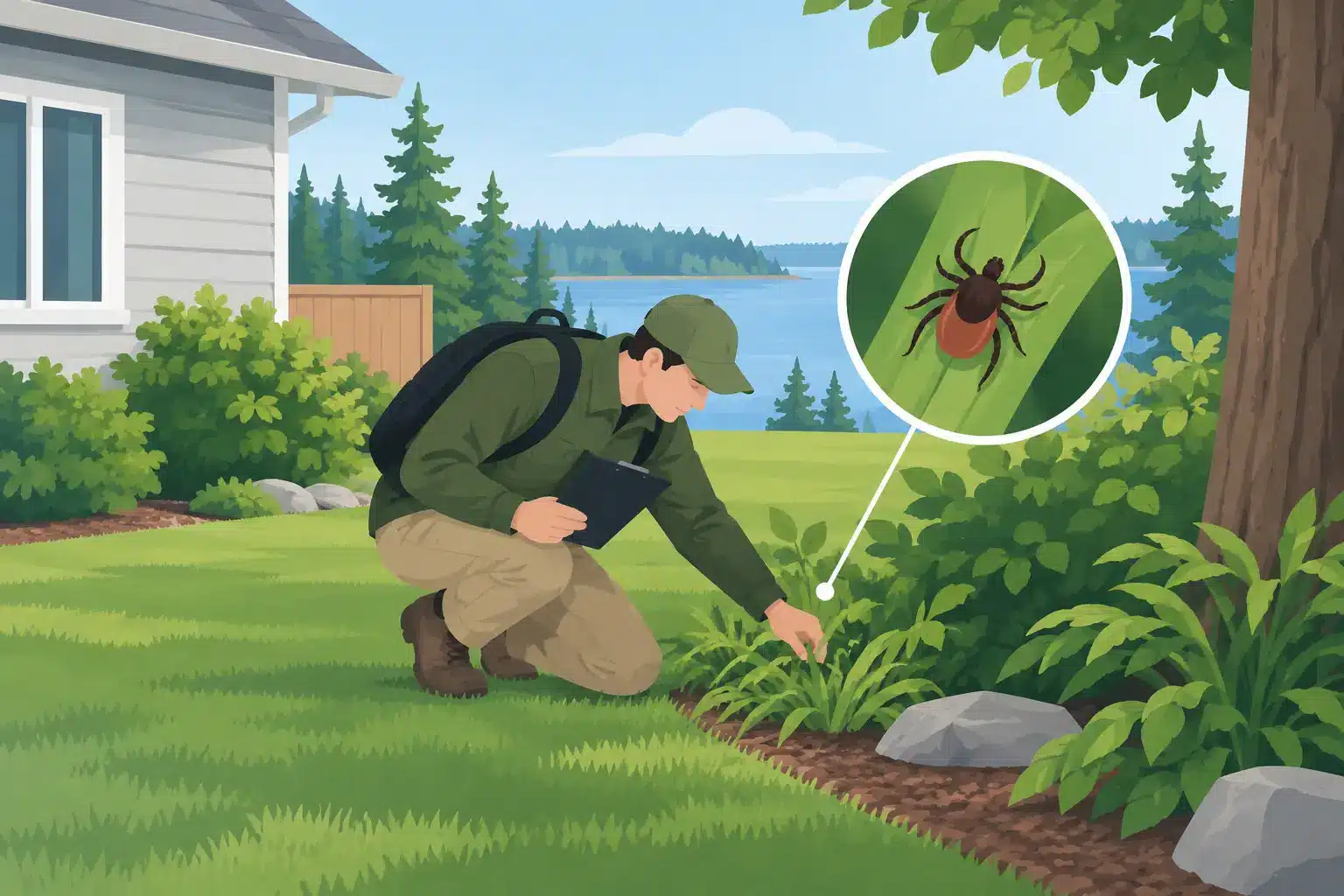
A tick habitat inspection guide starts where most people stop looking: not in the middle of the lawn, but along its edges. Ticks favour humid, sheltered areas where they can wait on low vegetation for a person, dog, deer, or small animal to pass by. If your family spends time gardening, playing, walking pets, or relaxing outside, identifying those zones can help reduce exposure before tick season gets busy.
In Eastern Ontario, a tidy-looking property can still have tick-friendly pockets behind a shed, beside a woodpile, or where the lawn meets brush. The goal is not to make your yard sterile. It is to understand where the risk is concentrated so you can clean up, adjust how the space is used, and decide whether targeted tick control makes sense.
Start Your Tick Habitat Inspection at the Property Edge
Begin at the outer boundaries of your property. Walk slowly around fence lines, hedges, stone walls, wooded borders, drainage swales, and areas that back onto fields or unmanaged land. These transition zones are often more valuable to inspect than open, sunny turf.
Ticks need moisture to survive and tend to avoid exposed, dry grass during the hottest part of the day. Look for dense leaf litter, low branches, tall grass, groundcover, and shaded vegetation. A narrow strip of overgrowth can create a sheltered travel route for mice, chipmunks, deer, and other wildlife that may carry ticks onto the property.
Pay close attention to where your lawn changes into brush or woodland. This is also where children and pets often wander while chasing a ball, exploring, or taking a shortcut around the yard. If a path enters a wooded area, keep it clear and wide enough that people do not brush against vegetation on both sides.
Check These High-Risk Hiding Places
A thorough inspection does not require special equipment. Wear closed shoes, long pants, and gloves if you will be moving debris. Take notes or photos as you walk so recurring trouble spots are easy to find later in the season.
Focus on these areas:
- Leaf piles, especially those left under shrubs, decks, fences, and play structures
- Tall grass, ornamental grasses, unmanaged garden edges, and dense groundcover
- Woodpiles, stacked lumber, old pallets, brush piles, and stone features
- Shaded areas beside sheds, garages, patios, pools, and outdoor storage
- Pet runs, dog paths, bird feeders, compost areas, and wildlife trails
- The perimeter of playgrounds, fire pits, seating areas, and cottage walkways
The presence of one of these features does not automatically mean you have a serious tick problem. Risk depends on shade, moisture, wildlife activity, and how often people or pets use the nearby space. A woodpile at the far back of a large property is different from one beside the children’s swing set or your dog’s favourite resting spot.
Look for Wildlife Activity, Not Just Ticks
Ticks are difficult to spot during a casual walk-through. A more useful inspection looks for the conditions that support them and the animals that bring them into the yard.
Deer tracks, droppings, worn trails through vegetation, and damaged plants can signal regular deer movement. Small mammals matter too. Mice and chipmunks use brush, stone walls, stored materials, and dense groundcover as shelter. Bird feeders can attract seed-seeking rodents when spilled seed builds up underneath.
You do not need to eliminate wildlife to reduce tick pressure. Instead, create distance between wildlife habitat and the parts of the property your family uses most. Move woodpiles away from the home where practical, keep bird-feeding areas clean, trim vegetation back from patios, and avoid placing children’s play equipment beside wooded edges.
Inspect the Areas Your Family Uses Most
A good tick habitat inspection is not only about finding risk. It is about matching that risk to real activity. Think about where your children sit in the grass, where your dog explores after rain, where guests walk to the fire pit, and where you kneel to weed the garden.
Check lawn furniture, the edges of decks, outdoor toys, raised beds, and the route from the driveway to the back door. Moist, shaded strips beside fences or buildings can be easy to overlook because they are not technically part of the garden. Yet they may sit directly beside a high-traffic route.
For pet owners, inspect the entire path your dog takes around the yard. Dogs often follow the same perimeter route every day, pushing through shrubs and sniffing along fences. Keep that route mowed and clear, and check your pet for ticks after walks or outdoor play, particularly around the ears, collar area, legs, toes, and underbelly.
Use What You Find to Reduce Tick Habitat
After your inspection, begin with practical property changes. Mow regularly, remove leaf litter, trim back low branches, and clear brush from the edges of frequently used outdoor areas. Keeping grass short alone will not solve every tick issue, but it can reduce the protected, humid conditions ticks prefer.
Create a defined buffer between wooded or brushy sections and play or seating areas. Depending on the property, that may mean relocating a picnic table, widening a path, pruning back shrubs, or using a dry, open strip between the lawn and a natural area. The right approach depends on the layout of your yard and what you want to preserve.
Be realistic about trade-offs. Native plantings, shade gardens, woodlots, and privacy hedges are valuable features, and removing them is rarely the only answer. In many cases, selective trimming and focused treatment of high-risk perimeter areas offer a more practical balance than broad changes across the entire property.
When a Professional Tick Inspection Helps
Consider professional help when your property borders woods, fields, wetlands, or heavy brush; when you routinely find ticks on pets or family members; or when you cannot identify where exposure is happening. Larger rural properties, cottages, and properties with several outbuildings can have risk zones that are easy to miss.
A professional assessment should look beyond the visible lawn and focus on the shaded, vegetated, moisture-prone areas where ticks rest and move. At Mosquito Pros, property-specific tick control plans are designed around these conditions rather than applying the same approach to every yard. Targeting the habitat can reduce unnecessary treatment in low-risk open areas while concentrating attention where it is most useful.
Treatment is not a replacement for personal precautions. Use tick repellent as directed, wear appropriate clothing when working in brush, and complete tick checks after spending time outdoors. If you find an attached tick, remove it promptly with fine-tipped tweezers and speak with a health-care professional if you have concerns about symptoms or potential disease exposure.
Recheck After Weather and Seasonal Changes
Tick habitat changes through the season. Spring moisture, summer growth, windstorms, landscaping work, and fallen leaves can all create new sheltered pockets. Reinspect after major yard projects, after clearing a fence line, and when vegetation becomes thick enough to brush against legs or pet fur.
Make a quick inspection part of your regular outdoor routine, especially before a backyard gathering or a weekend at the cottage. A few focused minutes around the perimeter, pet areas, and family activity zones can reveal the small conditions that make a big difference. The safest yard is not one without nature, but one where your family can enjoy the outdoors with fewer hidden risks.


