
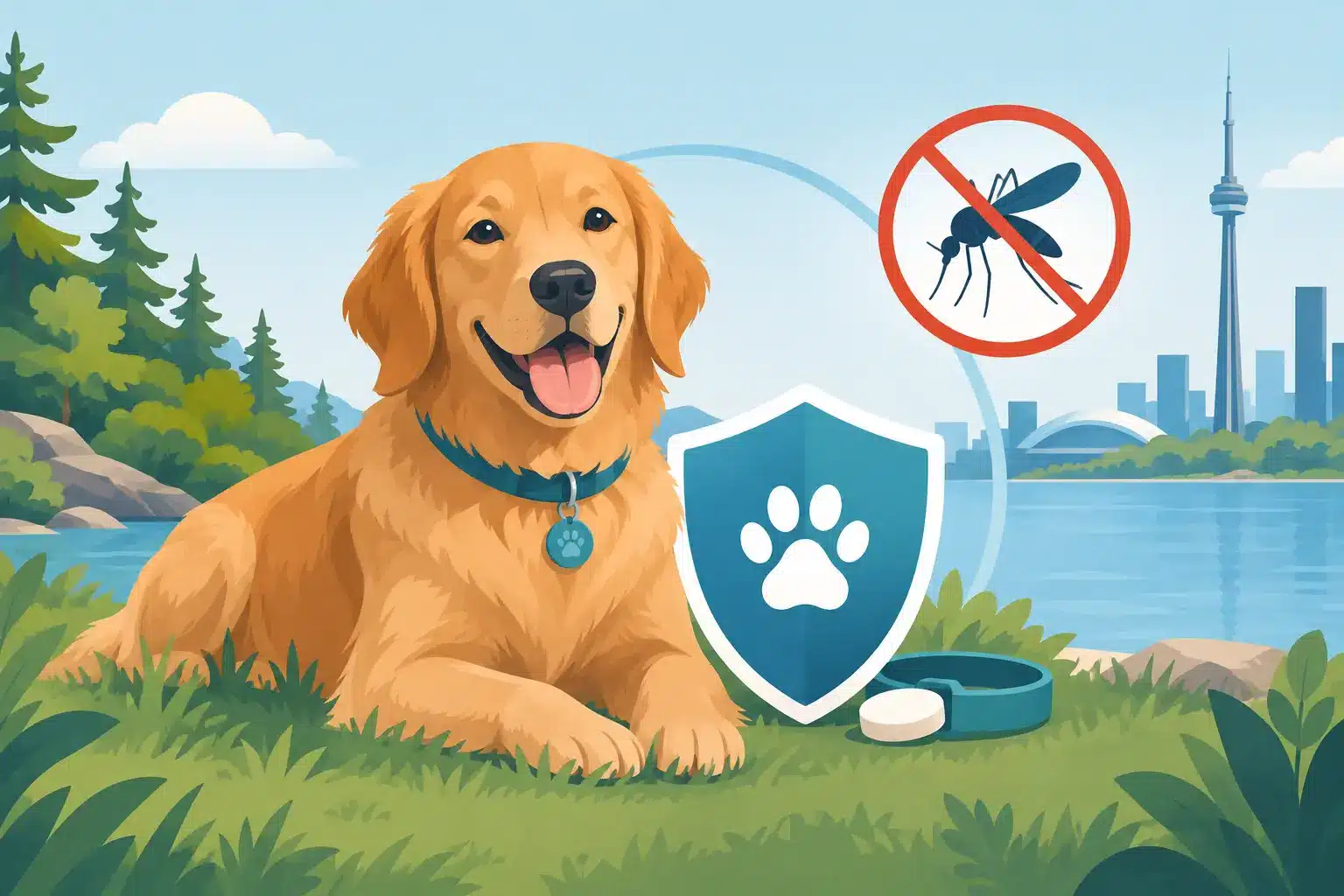
Heartworm prevention is not just a warm-weather task for dog owners. In Ontario, mosquitoes can turn a few unprotected bites into a serious health risk for pets. Knowing how to reduce heartworm risk means combining veterinary guidance with practical mosquito control around the places your dog spends time most.
Heartworm disease can be difficult and expensive to treat once it takes hold. Prevention is far simpler, safer, and more predictable. For families in Eastern Ontario, the most effective approach starts before mosquito season builds and continues until your veterinarian advises it is safe to stop.
How Heartworm Spreads to Dogs
Heartworm disease is spread through the bite of an infected mosquito. When a mosquito feeds on an infected animal, it can pick up immature heartworm larvae. That mosquito may later pass larvae to another dog during a bite.
The larvae do not become adult heartworms overnight. They develop gradually inside the dog, eventually moving through the body and settling in the heart, lungs, and nearby blood vessels. By the time a dog shows signs such as coughing, fatigue, reluctance to exercise, weight loss, or laboured breathing, the disease may already be advanced.
Dogs are the primary concern because they are natural hosts for heartworms, but cats can also be affected. Even indoor pets are not completely protected if mosquitoes get into the home. The key point is simple: no yard, neighbourhood, or pet lifestyle is automatically mosquito-free during Ontario’s active season.
Start With Veterinarian-Guided Prevention
The most reliable way to reduce heartworm risk is to speak with your veterinarian about a preventive medication plan. These medications are typically given on a regular schedule and are designed to eliminate immature heartworms before they develop into adult worms.
Your veterinarian can recommend a product and schedule based on your dog’s age, size, health history, lifestyle, and travel habits. A dog that spends every weekend at a cottage, joins family hikes, or travels to areas with longer mosquito seasons may need a different approach than a dog that spends most of its time close to home.
Consistency matters. Missed doses can leave a gap in protection, so set a monthly reminder, keep medication with your pet supplies, or ask your clinic about options that fit your routine. Do not start, restart, or switch heartworm medication without veterinary advice. Testing may be needed, especially if a dose was missed or a dog has not been on prevention previously.
Reduce Mosquito Pressure Around Your Yard
Heartworm medication protects the dog, but reducing mosquito activity on your property adds another valuable layer of protection. Fewer mosquitoes around patios, decks, gardens, and dog runs means fewer opportunities for bites.
Start by removing standing water wherever possible. Mosquitoes can breed in surprisingly small amounts of water, including clogged eavestroughs, birdbaths left unchanged, wheelbarrows, plant saucers, tarps, children’s toys, and unused containers. Empty and refresh water-holding items regularly, especially after rainfall.
Pay attention to the shaded, damp areas of your property as well. Dense shrubs, tall grass, leaf piles, and vegetation near the home can give adult mosquitoes a cool place to rest during the day. Keeping grass trimmed, clearing yard debris, and improving drainage where practical can make these areas less inviting.
Some water features cannot simply be emptied. Ponds, rain barrels, and drainage areas may require a more specific plan. The right solution depends on the feature, how the water is used, and whether wildlife is present. Avoid treating water or outdoor areas with products that are not intended for that purpose.
Make Outdoor Time Less Attractive to Mosquitoes
Mosquitoes are often most active around dawn, dusk, and humid evenings, though activity can vary by species and weather. If your dog does not need a long walk during peak mosquito activity, moving that walk earlier or later may reduce exposure.
For backyard time, choose open and breezy areas when possible. Fans can help around patios and seating areas because mosquitoes are weak fliers. Keeping your dog close to the family instead of allowing them to rest in shaded brush or beside damp vegetation also reduces likely contact points.
Pet-safe mosquito protection should always be selected carefully. Never assume that a product made for people is suitable for dogs or cats. Certain ingredients, essential oils, and insect repellents can be harmful to pets when applied incorrectly or used in the wrong concentration. Ask your veterinarian before using any topical repellent, spray, collar, or natural product on your animal.
Consider Professional Mosquito Treatment for High-Use Spaces
For many properties, basic yard maintenance makes a meaningful difference. But heavily treed lots, waterfront properties, rural yards, dense landscaping, and areas near drainage or wetlands can experience persistent mosquito pressure despite regular cleanup.
A professional mosquito treatment plan can help target the places mosquitoes rest and hide, including shaded vegetation, perimeter areas, moisture-prone zones, and spaces around decks or outdoor living areas. This is particularly useful for families with dogs that spend a great deal of time outdoors, as well as for cottages, outdoor gatherings, and properties where mosquito activity makes the yard difficult to enjoy.
The right service should be tailored to the property rather than treated as a one-size-fits-all spray. Mosquito Pros assesses each site and uses a lower-volume treatment approach that can use up to 94% less product than traditional high-volume spraying, while following product labels and property-specific instructions. Treatment can reduce mosquito pressure, but it does not replace veterinarian-prescribed heartworm prevention.
That distinction matters. No mosquito-control service can guarantee that a dog will never encounter a mosquito away from home, at a park, on a walk, or while travelling. The strongest protection comes from pairing a well-managed outdoor space with the medication plan recommended by your veterinarian.
Watch for Gaps in Seasonal Protection
Ontario’s mosquito season does not follow the calendar perfectly. A warm spring can bring mosquito activity earlier, while mild fall weather can extend it later than expected. Local conditions such as rainfall, standing water, and nearby vegetation can also affect mosquito populations from one neighbourhood to the next.
This is why prevention should not be based only on whether mosquitoes feel active in your yard that week. Your veterinarian can advise when to begin and end medication based on regional conditions and your dog’s individual risk. If you travel south with your pet or visit regions with year-round mosquito activity, mention that during your appointment.
Annual heartworm testing is also part of responsible prevention for many dogs. Preventive medications are highly effective when used correctly, but testing helps catch problems early and confirms that a prevention plan is working as intended. It also gives you a chance to review tick protection, vaccines, nutrition, and other seasonal health needs in one visit.
A Practical Routine for Pet Owners
Reducing risk works best when it becomes part of your normal warm-weather routine. Keep your dog’s prevention medication on schedule, reduce standing water after rain, maintain grass and vegetation, and plan outdoor time with mosquitoes in mind. If your property has ongoing mosquito activity, consider adding targeted professional treatment before peak season or ahead of an important outdoor event.
Heartworm disease is a serious concern, but pet owners are not powerless against it. A veterinarian-guided prevention plan and a well-managed yard give your dog more freedom to enjoy Ontario’s outdoor season with fewer mosquito bites and greater peace of mind.


