
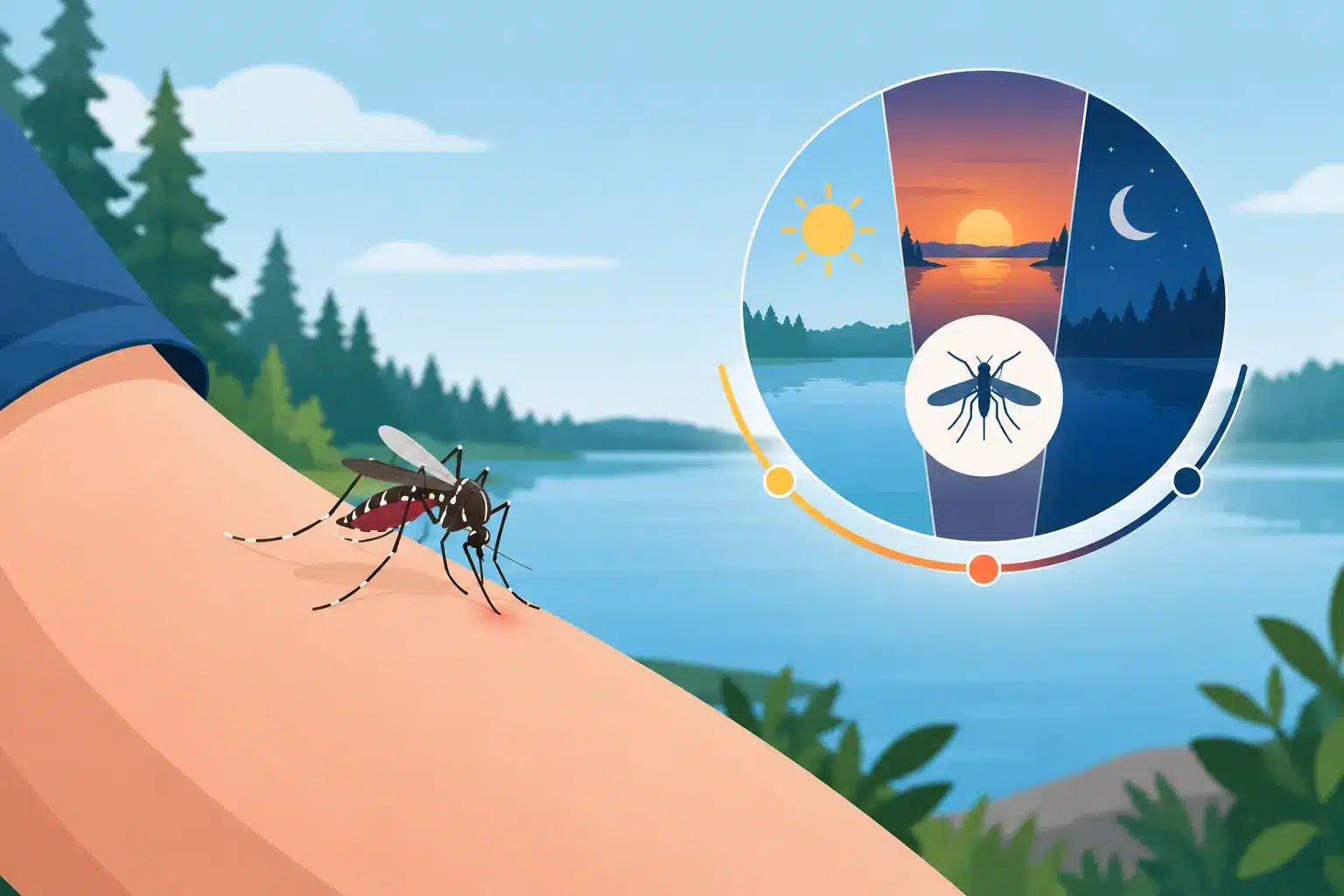
A quiet patio can change fast after a warm Ontario rain. One evening, your family is outside comfortably; the next, mosquitoes are gathering around ankles, porch lights, pets, and anyone trying to enjoy dinner outdoors. Understanding Ontario mosquito behaviour helps explain why this happens and why a treatment plan should focus on where mosquitoes rest and breed, not simply where people notice the bites.
In Eastern Ontario, mosquito activity is shaped by weather, moisture, shade, vegetation, and the layout of your property. A cottage lot near wetlands will behave differently than a sunny suburban yard, but both can become uncomfortable quickly when conditions line up. The good news is that mosquito pressure can often be reduced with a targeted approach that accounts for how these insects actually move through a property.
What Drives Ontario Mosquito Behaviour?
Mosquitoes need water to complete their life cycle. Female mosquitoes lay eggs in or near water, and the larvae develop there before becoming adults. That does not always mean a large pond or swamp is the problem. Small, overlooked sources can be enough: clogged eavestroughs, containers, children’s toys, tarps, plant saucers, birdbaths, wheelbarrows, and low spots that hold water after rain.
Rainfall is a major trigger, especially when warm temperatures follow. Standing water creates breeding opportunities, while humidity helps adult mosquitoes remain active longer. This is why a property that felt manageable in early June may suddenly feel overrun after several wet, hot days in July.
Adult mosquitoes also need protected places to rest. During bright, hot periods, they commonly shelter in dense shrubs, tall grass, under decks, around woodpiles, along shaded fence lines, and in other cool, humid vegetation. These areas matter because mosquitoes do not spend all day flying openly through a lawn. They wait in sheltered cover, then move toward people and pets when conditions are right.
When Ontario Mosquitoes Are Most Active
Many of the mosquitoes that bother Ontario homeowners are most active around dawn and dusk. Cooler temperatures, lower wind, and higher humidity make these periods ideal for feeding. If bites seem worst while you are watering the garden, walking the dog, or sitting outside near sunset, timing is likely part of the issue.
That said, mosquito activity is not limited to the evening. Shaded properties can have daytime activity, particularly after rain or in humid weather. Mosquitoes resting beneath trees, beside thick hedges, or under a covered deck may become active when someone enters the area. This is common on wooded lots, properties near water, and yards with mature landscaping.
Wind changes the picture. Mosquitoes are weak fliers, so a breezy afternoon may provide relief even when mosquito numbers are high. Once the air becomes still again, they return. Temperature matters too. Activity generally increases with warmth, though extreme heat and direct sun can push mosquitoes back into shade until later in the day.
Why They Seem to Target Certain People
Mosquitoes do not choose victims at random. They are attracted by carbon dioxide from breathing, body heat, movement, sweat, and natural skin chemistry. People exercising outdoors, children playing actively, and pets moving through shaded vegetation may attract more attention than someone sitting still in a breezy, sunny spot.
Clothing can also make a difference. Dark colours are easier for mosquitoes to detect visually, while loose, light-coloured clothing creates a more practical physical barrier. These measures can reduce bites, but they will not solve a property-level mosquito issue when breeding sites and resting areas remain available.
The Yard Features That Keep Mosquitoes Close
A well-kept property can still have mosquitoes. The concern is not whether your yard looks tidy from the street, but whether it provides water, shade, and cover at ground level.
Dense foundation plantings, overgrown hedges, tall grass around a shed, and clutter beneath a deck all create favourable resting habitat. So do areas where drainage is poor. A single source of standing water may produce mosquitoes, but a yard with several small water sources and abundant shade gives adult mosquitoes everything they need to stay nearby.
Properties near creeks, marshy ground, wooded edges, or the Rideau corridor can face added pressure from surrounding habitat. Homeowners cannot eliminate every mosquito beyond their property line. They can, however, make their own outdoor spaces less inviting and reduce the number of mosquitoes resting near patios, play areas, pools, and entrances.
This is where a customized plan matters. Treating only open lawn is usually not the most effective use of product. Mosquitoes are more likely to rest in shaded, vegetated, perimeter, and moisture-prone areas. A property assessment identifies those high-value zones and helps avoid a one-size-fits-all approach.
How to Reduce Mosquito Pressure Between Treatments
Source reduction is a practical first step. After rain, walk the property and empty, drain, cover, or refresh anything that holds water. Birdbaths and pet water dishes should be refreshed regularly. Eavestroughs should drain properly, and tarps should be pulled tight so they do not collect pockets of water.
Keep grass trimmed and reduce excess vegetation where practical, especially around decks, fences, sheds, and common gathering spaces. You do not need to remove every shrub to have a more comfortable yard. The goal is to reduce dense, damp hiding places close to the areas your family uses most.
For outdoor plans, timing helps. Schedule meals, celebrations, and playtime earlier in the day when possible, or choose a breezier, more open area of the yard. Fans can make patios less comfortable for mosquitoes because moving air interferes with their flight. Repellent and protective clothing remain useful personal protection, particularly for walks near wooded or wet areas.
These steps are worthwhile, but their limits should be clear. They are less likely to provide enough relief during peak mosquito season on properties with heavy vegetation, nearby water, or persistent moisture. In those cases, professional treatment can help bring mosquito activity down to a more manageable level.
What a Targeted Mosquito Treatment Should Address
Effective mosquito control is based on mosquito behaviour, not blanket spraying. A professional should assess where mosquitoes are likely resting, where moisture is collecting, how the family uses the yard, and whether pets, gardens, water features, or pollinator areas need special consideration.
Targeted barrier applications focus on shaded vegetation and perimeter areas where adult mosquitoes shelter. Treatments are typically most valuable before a backyard wedding, family gathering, cottage weekend, or a season when mosquitoes consistently make outdoor space unusable. Ongoing seasonal service can be a better fit for households that want regular protection through the months when activity is highest.
There are trade-offs. A single treatment may be appropriate for an event, but it will not prevent future mosquitoes from arriving after new rain or hatching nearby. Seasonal treatments offer more consistent coverage, while source reduction supports better results between visits. Natural treatment options may also suit some households, though they can require different expectations around duration and follow-up. The right choice depends on the property, mosquito pressure, and how often you want to use the space.
Mosquito Pros uses a lower-volume approach that can use up to 94% less product than traditional high-volume spraying, with applications directed to the areas where mosquitoes live and hide. That precision matters for families and pet owners who want meaningful relief without treating more of the property than necessary.
Pay Attention Early in the Season
Ontario mosquito season does not begin at the same time every year. A mild, wet spring can bring early activity, while cooler or drier conditions may delay it. Waiting until bites are constant often means mosquitoes have already established themselves around the property.
Early monitoring gives you more options. If you notice water collecting, increased activity at dusk, or mosquitoes flushing from shrubs when you walk by, act before your patio, yard, or event date becomes difficult to enjoy. For families with young children, pets, or regular outdoor routines, reducing mosquito pressure is about more than comfort. It is about having confidence that the yard is available when you want to use it.
A few minutes spent checking water and shade after rainfall can make a real difference. When mosquito activity continues despite those efforts, a property-specific treatment plan can help protect the outdoor time you have been waiting all year to enjoy.


