
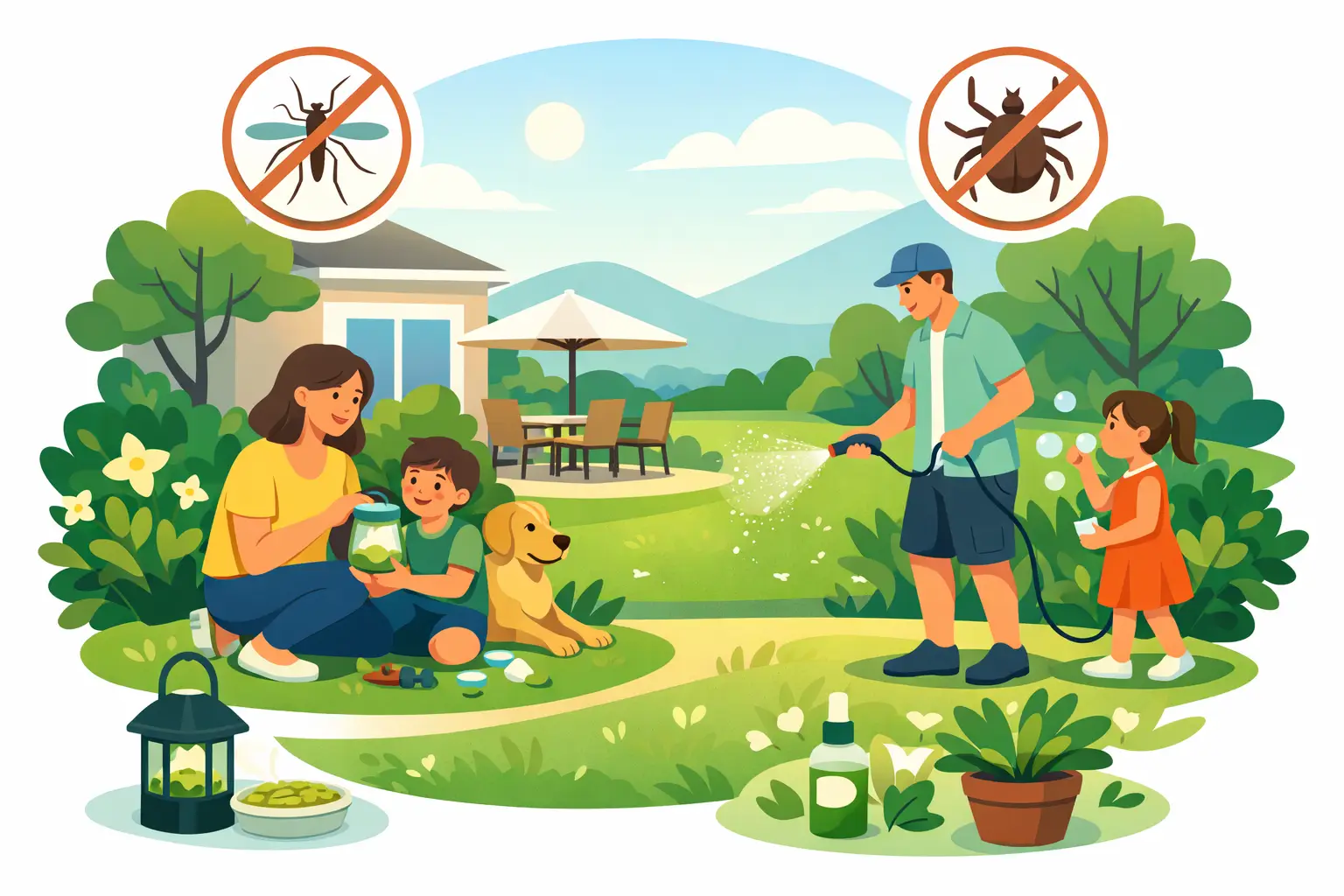
The problem usually shows up at the worst time – right before dinner on the deck, during a backyard birthday, or when the kids and dog finally get outside. Family safe outdoor pest solutions matter because no one wants to choose between enjoying the yard and worrying about mosquito bites, ticks, or what has been sprayed around their home.
For Ontario families, that concern is reasonable. Mosquitoes are more than a nuisance, and ticks are a real health issue tied to Lyme disease risk. The right approach is not simply spraying more product and hoping for the best. It is using targeted, lower-volume treatments and practical yard strategies that reduce pest pressure while keeping safety at the centre of every decision.
What family safe outdoor pest solutions really mean
A family-safe approach is not the same as a no-action approach. It means choosing methods that are designed around people, pets, and how a property is actually used. If children play in the grass, if the dog runs the perimeter fence, or if your patio is the main gathering space all summer, treatment should reflect that.
The safest effective outdoor pest plans usually combine precision with restraint. That means identifying where mosquitoes rest, where ticks are likely to wait for hosts, and where people spend the most time. When treatment is focused on those areas instead of applied broadly across every inch of the property, you can often get strong results with less product.
That trade-off matters. A blanket spray may sound thorough, but more volume does not automatically mean better protection. In many cases, it just means more material used than the property actually needs.
Why generic yard spraying often misses the mark
Many homeowners assume all pest control works the same way. It does not. Outdoor pest pressure changes from one property to the next based on shade, standing water, tree cover, nearby bush, and how the yard is maintained.
A heavily shaded lot with dense shrubs and a damp back corner will behave differently than an open property with full sun and little vegetation. The mosquito problem around a pool is different from the tick pressure near a wooded edge. That is why one-size-fits-all programs often underperform. They are built for speed, not precision.
Family safe outdoor pest solutions work best when they are customized. A property-specific plan can focus on mosquito harborage zones, likely tick corridors, and high-use areas like patios, play spaces, and seating areas. That kind of treatment is not just more efficient. It is also easier to align with a safety-first mindset.
The best outdoor pest strategy starts with the yard itself
Treatment matters, but so does the environment pests are using. If you want better results that last, the yard needs to work with the treatment instead of against it.
Mosquitoes thrive in areas with moisture, shade, and still air. Even small sources of standing water can support breeding, from clogged gutters to toys, planters, and low spots in the lawn. Ticks prefer tall grass, leaf litter, brushy edges, and transition zones where lawns meet woods or overgrowth.
That means smart prevention is often simple. Keep grass trimmed, reduce dense ground clutter, and clear leaf buildup around fences, sheds, and tree lines. Empty standing water regularly, especially after rain. If there is a part of the yard that always stays damp and shaded, that is worth special attention because it may be a resting area for mosquitoes throughout the season.
These steps do not replace professional treatment when pest pressure is high, but they do improve performance. They also help reduce how much intervention may be needed over time.
Safer treatment depends on precision, not guesswork
When people hear pest control, they often picture heavy spraying. That image is one reason families hesitate to book service, especially when young children or pets use the yard every day. The good news is that modern outdoor pest control does not have to look like that.
A more responsible treatment model uses targeted applications to areas where pests actually live and travel. Shrub lines, lower foliage, perimeter vegetation, deck undersides, fence lines, and wooded edges are often far more important than open lawn. Focusing on these zones helps reduce exposure while still controlling the pests that make outdoor space unusable.
This is where lower-volume treatment makes a real difference. Using less spray while applying it more accurately can support both effectiveness and peace of mind. For homeowners, that means fewer assumptions and more confidence in what is being done around the property.
It also helps to understand that natural options have a place, but they are not identical to conventional treatments. Some families prefer a natural treatment approach, particularly for lower-pressure situations or short-term needs. That can be a good fit, but expectations should be clear. Natural products may require more frequent service or may not perform the same way during peak mosquito or tick season. The best choice depends on the property, the level of pest activity, and how the yard is used.
Mosquito control and tick control are related, but not the same
Homeowners often group mosquitoes and ticks together, but control strategies differ. Mosquitoes are mobile, fast-breeding, and strongly influenced by weather. Ticks move less, but they are persistent and closely tied to habitat.
For mosquitoes, success usually comes from reducing breeding sites and treating resting areas where adults hide during the day. For ticks, the focus is often on perimeter zones, long grass, brush edges, and shaded pathways where people and pets are likely to brush against vegetation.
That distinction matters for families who want practical protection. If your main concern is being able to sit outside in the evening without constant biting, the plan may lean heavily toward mosquito control. If you have dogs, back onto wooded land, or have had ticks on the property before, the treatment should account for that specific risk.
The most effective family-safe plans do both without treating the entire yard as one uniform problem.
Timing matters more than many people realize
Outdoor pest control is not just about what gets applied. It is also about when. Waiting until mosquitoes are overwhelming or after a tick encounter has already happened can limit your options.
Early seasonal treatment generally gives better control because it interrupts pest activity before populations build. Ongoing service through peak months usually performs better than a single visit because weather, growth, and pest pressure keep changing. Heavy rain, heat, and rapid vegetation growth can all affect how long a treatment holds.
That does not mean every property needs the same schedule. A low-pressure yard used occasionally may need a lighter plan than a busy family home with pets, dense landscaping, and frequent outdoor entertaining. Event-based treatment can also make sense for weddings, parties, and gatherings where comfort matters on a specific date.
What to ask before choosing a provider
If you are comparing services, safety claims should be backed by a clear treatment philosophy. Ask whether the company customizes by property, where they treat, how much product they use, and whether they offer options based on family and pet concerns.
It is also fair to ask what results you should realistically expect. No reputable provider should promise a pest-free yard under all conditions. Weather, neighbouring properties, nearby water, and surrounding vegetation all affect outcomes. What a good provider can offer is meaningful reduction, practical recommendations, and a plan that fits your specific risk level.
For families in communities like Kemptville, Smiths Falls, Brockville, and nearby areas, local knowledge helps too. Ontario properties vary widely, and treatment decisions should reflect regional pest pressure, seasonal timing, and the realities of rural, suburban, and edge-of-woodlot living.
The goal is not just fewer bites
The real value of outdoor pest control is not simply comfort, although that matters. It is being able to use your property the way you intended. It is letting kids play longer, hosting people without apology, and reducing the stress that comes with mosquitoes around dusk or ticks near the back fence.
That is why the best family safe outdoor pest solutions are built around both protection and restraint. They reduce risk without treating your yard carelessly. They focus on where pests live, how your family uses the space, and what level of control makes sense for your season.
If your yard has started to feel like a place to avoid, the answer is not necessarily more spray. It is a smarter plan, applied with care, so your outdoor space can feel like part of home again.

