
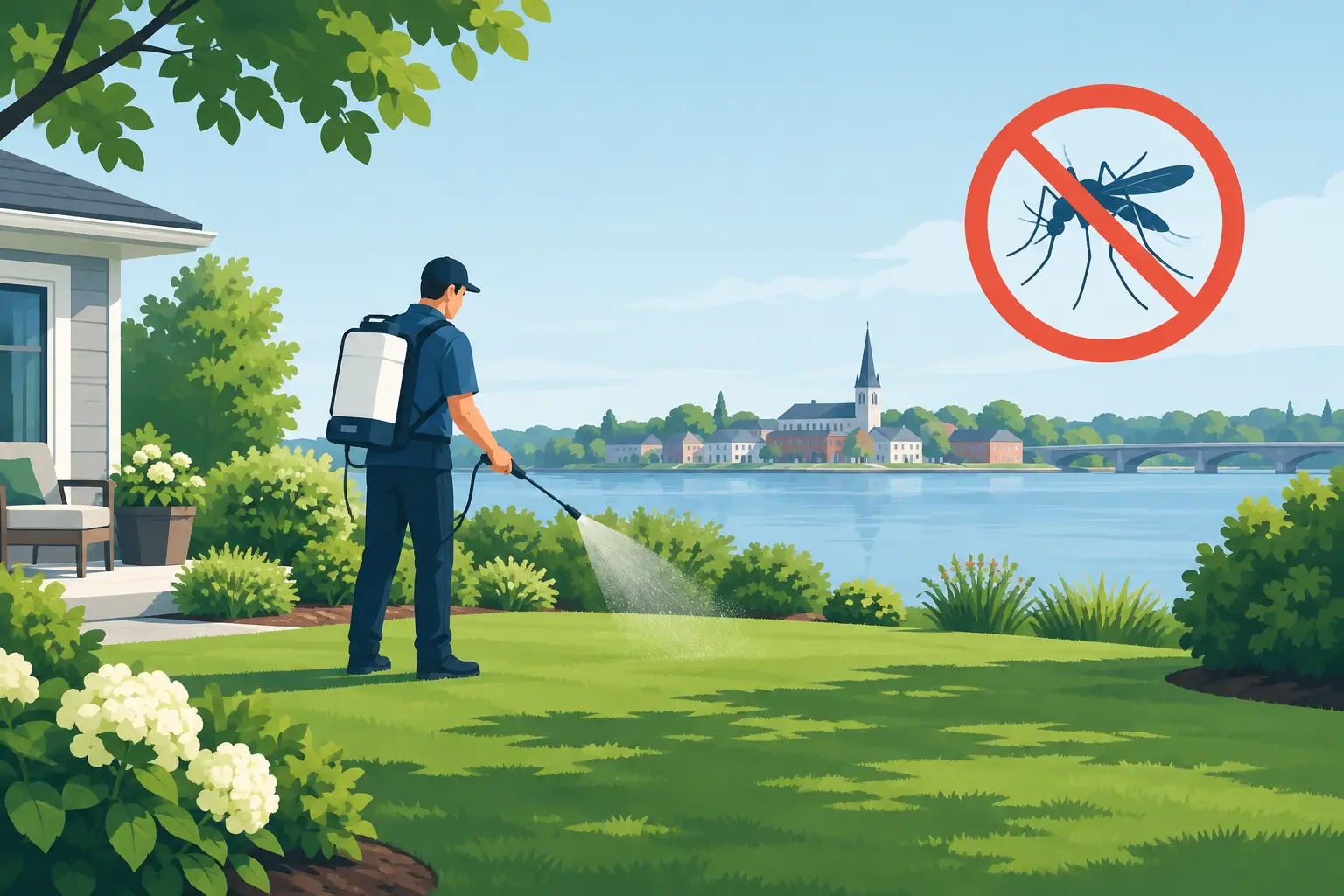
A backyard should not become unusable the moment the sun starts to set. In Carleton Place, mosquito control is often the difference between enjoying dinner on the deck and moving everyone indoors before dessert. Warm weather, shaded lots, mature trees, rain-filled containers and nearby low-lying areas can all create the conditions mosquitoes need to settle in.
For families, the problem is more than itchy bites. Mosquitoes can disrupt sleep, keep children from playing outside, and expose pets to risks such as heartworm. A practical control plan reduces mosquito activity where people actually spend time, while respecting the fact that every property has different pressure points.
Why Mosquitoes Can Take Over a Carleton Place Yard
Mosquitoes do not need a pond to become a major backyard nuisance. Many species develop in small amounts of standing water, including water collected in clogged eavestroughs, children’s toys, flowerpots, tarps, wheelbarrows and poorly draining areas of the lawn. After a stretch of rain, a quiet corner of the property can become an active breeding site surprisingly quickly.
Adult mosquitoes then rest during the day in cool, protected vegetation. Dense shrubs, tall grass, hedges, hostas, under-deck spaces and woodpiles can give them the shade and humidity they prefer. When evening arrives, they move toward patios, play areas and entrances looking for a meal.
That is why simply treating the centre of a lawn rarely solves the problem. Effective mosquito control starts by identifying where mosquitoes rest, where water collects and where your household spends its outdoor time. A property with a sunny, open yard may need a very different approach than a wooded lot with several shaded sitting areas.
Start With the Conditions You Can Change
Professional treatments are highly effective when they are paired with basic source reduction. Homeowners do not need to eliminate every drop of water outdoors, but removing easy breeding opportunities makes a meaningful difference throughout the season.
Walk the yard after rainfall and look for anything holding water for more than a few days. Empty and refresh birdbaths regularly, turn over unused containers, keep garbage and recycling lids closed, and make sure rain barrels are screened. If a low area stays wet, consider whether grading, drainage improvements or a change to the surrounding landscaping could reduce the issue over time.
Vegetation matters too. Keeping grass cut and trimming back overgrown shrubs improves airflow and reduces the sheltered resting areas mosquitoes use during the day. This does not mean stripping a yard of the greenery that makes it enjoyable. It means paying attention to the thick, damp pockets closest to patios, pathways and play structures.
These steps will not always be enough on their own, especially during a wet Ontario summer. They do, however, help a targeted treatment last longer and give mosquitoes fewer places to rebound between visits.
How Professional Carleton Place Mosquito Control Works
A quality mosquito service should be built around your yard rather than a generic spray pattern. The goal is to treat the shaded foliage and protected perimeter areas where adult mosquitoes rest, not to blanket every surface with product.
A technician should assess the property’s layout, vegetation, outdoor living zones and likely mosquito harbourage. The treatment is then directed at the areas that matter most: along fence lines, under decks, around dense shrubs, beside sheds and near pathways leading to patios or pools. This focused approach helps reduce mosquito activity where your family and guests will notice it.
At Mosquito Pros, treatments are customized by property and use up to 94% less spray than many conventional programs. Lower-volume application is not about cutting corners. It is about applying treatment precisely, where it is needed, with family- and pet-conscious methods at the centre of the plan.
What Results Should You Expect?
Mosquito control is designed to significantly reduce mosquito pressure, not promise that nature will never produce another mosquito. New mosquitoes can move in from neighbouring properties, nearby wooded areas and standing water beyond your property line. Heavy rainfall can also create new breeding conditions after a treatment.
Most homeowners notice that their patio, deck and common play areas become much more comfortable. The best results usually come from recurring seasonal service, particularly when mosquito activity is high. Regular visits allow the treatment plan to adjust to weather patterns, new growth and changing pressure around the property.
If you are planning an outdoor wedding, backyard party or family gathering, special event mosquito control can also make sense. Timing matters. Treating in advance gives the service time to target resting sites before guests arrive, rather than reacting once the first people start swatting.
Protecting Children, Pets and Pollinators
Safety-conscious mosquito control requires more than choosing a product. It requires choosing the right treatment areas, using the appropriate application rate and following clear instructions after service. Families should keep children and pets away from treated areas until the application has dried, as advised by the technician.
Pet owners should also consider the bigger picture. Mosquitoes can transmit heartworm to dogs, while ticks can carry pathogens associated with Lyme disease. Yard treatments reduce exposure in the spaces your pet uses most, but they do not replace veterinary-recommended preventives, tick checks or routine pet care.
Pollinator protection is equally important. Flowering plants that attract bees and butterflies should be identified during the property assessment. A careful provider can avoid unnecessary treatment of those areas and focus instead on mosquito resting zones such as dense, non-flowering foliage and shaded structural areas.
Natural treatment options may be a good fit for some households, particularly those seeking a plant-based approach. The trade-off is that natural options can require more frequent service or more diligent source reduction depending on weather, mosquito species and the property’s conditions. The right choice depends on your priorities, the severity of the issue and how the yard is used.
When Is the Right Time to Begin Treatment?
The best time to plan mosquito service is before mosquitoes are at their worst. Early-season treatment helps get ahead of the population as temperatures rise and spring rain creates breeding sites. Waiting until a backyard is already difficult to use can still bring relief, but it may take a more sustained plan to bring pressure down.
Treatment schedules should also account for your lifestyle. A family that uses the yard daily may prefer recurring protection through the season. A homeowner preparing for a single celebration may need an event-focused treatment. Restaurants, campgrounds, golf facilities and other commercial properties may need a tailored schedule that protects patios, entrances and customer-facing outdoor spaces without interrupting operations.
There is no one-size-fits-all answer because mosquito activity changes with rainfall, shade, nearby water and property maintenance. A customized quote should reflect those conditions instead of treating every yard as identical.
Questions Homeowners Often Ask
Will one treatment get rid of mosquitoes for the whole summer?
One treatment can reduce active adult mosquitoes, but it cannot stop new mosquitoes from entering the property or prevent rain from creating fresh breeding sites. Recurring service provides more consistent protection over the season.
Do I still need to remove standing water?
Yes. Source reduction is one of the most useful parts of a mosquito plan. Professional treatment addresses adult resting areas, while eliminating standing water helps reduce the next generation before it develops.
Can mosquito treatments help with ticks too?
Mosquito and tick pressure often overlap in shaded, overgrown areas, but they require a property-specific strategy. If ticks are a concern, mention it during your assessment so treatment can be directed to the vegetation and yard edges where tick exposure is more likely.
A comfortable yard is not a luxury during the short Ontario outdoor season. With a thoughtful mix of standing-water management, targeted treatments and ongoing attention to the areas mosquitoes favour, your family can spend more evenings outside with far less swatting and worrying.
