
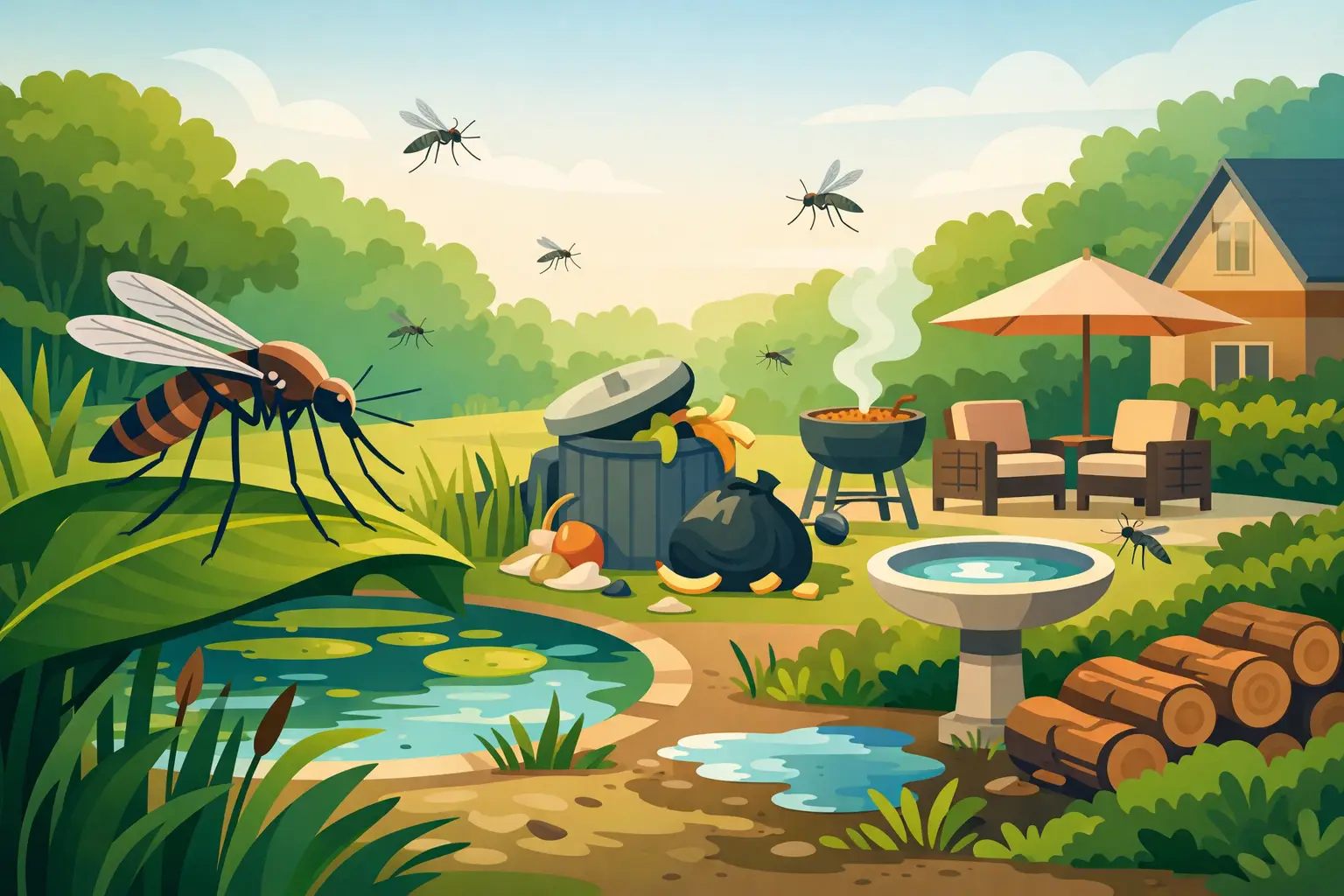
A mosquito problem rarely starts with one obvious puddle. It often builds quietly across a property: water caught in a forgotten container, thick shrubs that hold humidity, clogged gutters, and shaded areas where adult mosquitoes can rest through the heat of the day. Understanding what causes mosquito infestations helps Ontario homeowners make smarter decisions before bites take over the yard.
Mosquitoes are more than an outdoor nuisance. Their bites can limit how families use decks, pools, gardens, and play areas, while mosquitoes can also expose pets to heartworm risk. The good news is that most infestations are tied to conditions that can be identified and reduced with a property-specific approach.
What Causes Mosquito Infestations in Ontario Yards?
Mosquitoes need two things to establish themselves near a home: a place to breed and a protected place for adults to rest. Warm weather, summer rainfall, and humid conditions can speed up the problem, but the property itself usually determines whether mosquitoes stay nearby.
A small amount of standing water can be enough for some mosquito species to lay eggs. Once temperatures rise, eggs can develop into biting adults surprisingly quickly. That is why a yard may seem manageable one week and become uncomfortable after a stretch of rain and heat.
Standing Water Creates Breeding Sites
Standing water is the most common answer to what causes mosquito infestations. Mosquitoes do not need a pond-sized water source. They can breed in water held in flowerpot saucers, children’s toys, wheelbarrows, tarps, buckets, birdbaths, recycling bins, and outdoor furniture covers.
Rain barrels and ornamental ponds deserve attention too. These features do not automatically cause a mosquito issue, but they need proper management. A rain barrel should be screened, while a pond may need circulation or other appropriate mosquito-control measures. The key difference is whether water remains still long enough for larvae to develop.
Low spots in the lawn can also hold water after heavy rain. If the same area stays soggy for days, the issue may be drainage rather than housekeeping. Correcting grading or drainage can reduce breeding opportunities while also protecting the health of the lawn and foundation.
Clogged Gutters and Hidden Water Traps
Gutters are easy to overlook because the problem sits above eye level. Leaves, shingle grit, seed pods, and other debris can block drainage and leave pockets of water behind. Downspout extensions, corrugated drainage tubing, and unused planters can create similar hidden traps.
This is one reason mosquito pressure can persist even when a homeowner regularly empties visible containers. A quick walk around the yard is useful, but it should include checking behind sheds, under decks, along fence lines, and around roof drainage areas. Mosquito breeding sites are often small, shaded, and out of sight.
Dense Vegetation Gives Adult Mosquitoes Shelter
Removing water helps reduce new mosquitoes, but adult mosquitoes also need places to hide. They rest in cool, damp, protected areas during the day, then become active when temperatures soften in the evening. Dense hedges, long grass, overgrown garden borders, leaf piles, tall weeds, and shaded space beneath decks can all become mosquito resting areas.
This does not mean a healthy garden has to be stripped down. Trees, shrubs, and privacy hedges are valuable parts of an outdoor space. The practical goal is to improve airflow and reduce deep, damp shelter near the places people use most. Trimming back overgrowth around patios, walkways, play structures, and pet areas can make a meaningful difference.
Rain, Heat, and Ontario’s Seasonal Conditions
Mosquito activity changes with the weather. Heavy rain can fill containers and low areas, while hot, humid periods help mosquito populations develop and become more active. A dry spell may reduce some breeding sources, but shaded yards and water-holding features can continue to support mosquitoes.
Seasonal timing matters as well. Early summer prevention can limit population growth before peak backyard season. After frequent rainfall, it is wise to inspect the property again rather than assuming the earlier cleanup is still enough. Mosquito control works best as an ongoing seasonal routine, not a one-time task.
Why One Yard Can Have More Mosquitoes Than the Next
Mosquitoes do not respect property lines. A nearby ditch, wetland, unmanaged pool, drainage area, or neighbour’s standing-water source can add pressure to your yard. Homes close to wooded areas, fields, and water may experience more activity than homes in open, breezy locations.
Still, local conditions are only part of the picture. Two homes on the same street can have very different mosquito problems because one has thick shrub cover, poor drainage, or several overlooked water sources. This is why a generic treatment plan can miss the mark. Effective mosquito management begins with assessing where mosquitoes are breeding, resting, and entering the outdoor living space.
Common Yard Conditions That Make Infestations Worse
Mosquito problems often come from several smaller issues happening at once. Watch for these conditions around the property:
- Containers, toys, tarps, or covers that collect rainwater
- Clogged gutters, blocked downspouts, and poorly draining areas
- Birdbaths or pet water dishes left unchanged for long periods
- Thick brush, tall grass, leaf litter, and dense hedges near patios
- Untreated pools, hot tub covers, or unused water features
- Gaps under decks or around sheds where shade and moisture linger
Not every item on this list creates an infestation by itself. A birdbath that is refreshed frequently is very different from a bucket holding stagnant water for weeks. The concern is the combination of reliable breeding water and nearby shelter for adult mosquitoes.
How to Reduce Mosquito Breeding Around Your Home
Start with a weekly check after rainfall. Empty and scrub small containers, clear gutters when needed, and turn over items that can catch water. Refresh birdbath water regularly and make sure rain barrels have tight-fitting screens. If a tarp is necessary, pull it tight so water cannot pool in the folds.
Next, focus on the areas where your family spends time. Mow regularly, remove yard debris, and trim vegetation back from decks, seating areas, and play spaces. Fans can make patios less attractive to mosquitoes during gatherings because these insects are weak flyers, though a fan does not solve breeding or resting sites elsewhere in the yard.
Repellents and citronella products may offer short-term personal comfort, especially for a single evening outdoors. They are not a complete property solution when mosquitoes are breeding or resting across the yard. The trade-off is simple: temporary measures can help during an event, while source reduction and targeted professional treatment address the conditions that keep mosquitoes returning.
When Professional Mosquito Treatment Makes Sense
If mosquitoes remain heavy after water management and yard cleanup, a professional inspection can identify problem areas that are easy to miss. This is especially helpful for properties with mature landscaping, recurring drainage issues, large outdoor entertaining areas, or proximity to wooded and wet areas.
A quality treatment should be tailored to the property rather than applied as a broad, one-size-fits-all spray. Targeting the vegetation and protected areas where adult mosquitoes rest can reduce activity around patios, decks, pools, and play areas while using less product than an indiscriminate approach. Families with children and pets should also ask how treatments are selected, applied, and timed for their specific outdoor space.
For homeowners in Merrickville, Kemptville, Smiths Falls, Carleton Place, Brockville, and surrounding communities, mosquito pressure can change quickly after warm rain. Mosquito Pros builds treatments around the conditions on each property, with lower-volume, family-conscious options designed to make outdoor areas more comfortable.
The most useful next step is to walk your yard after the next rainfall. Look for water that should not be there and vegetation that keeps an area cool and damp. Addressing those details early can protect more of the season for your family, your pets, and the outdoor space you work hard to enjoy.


