
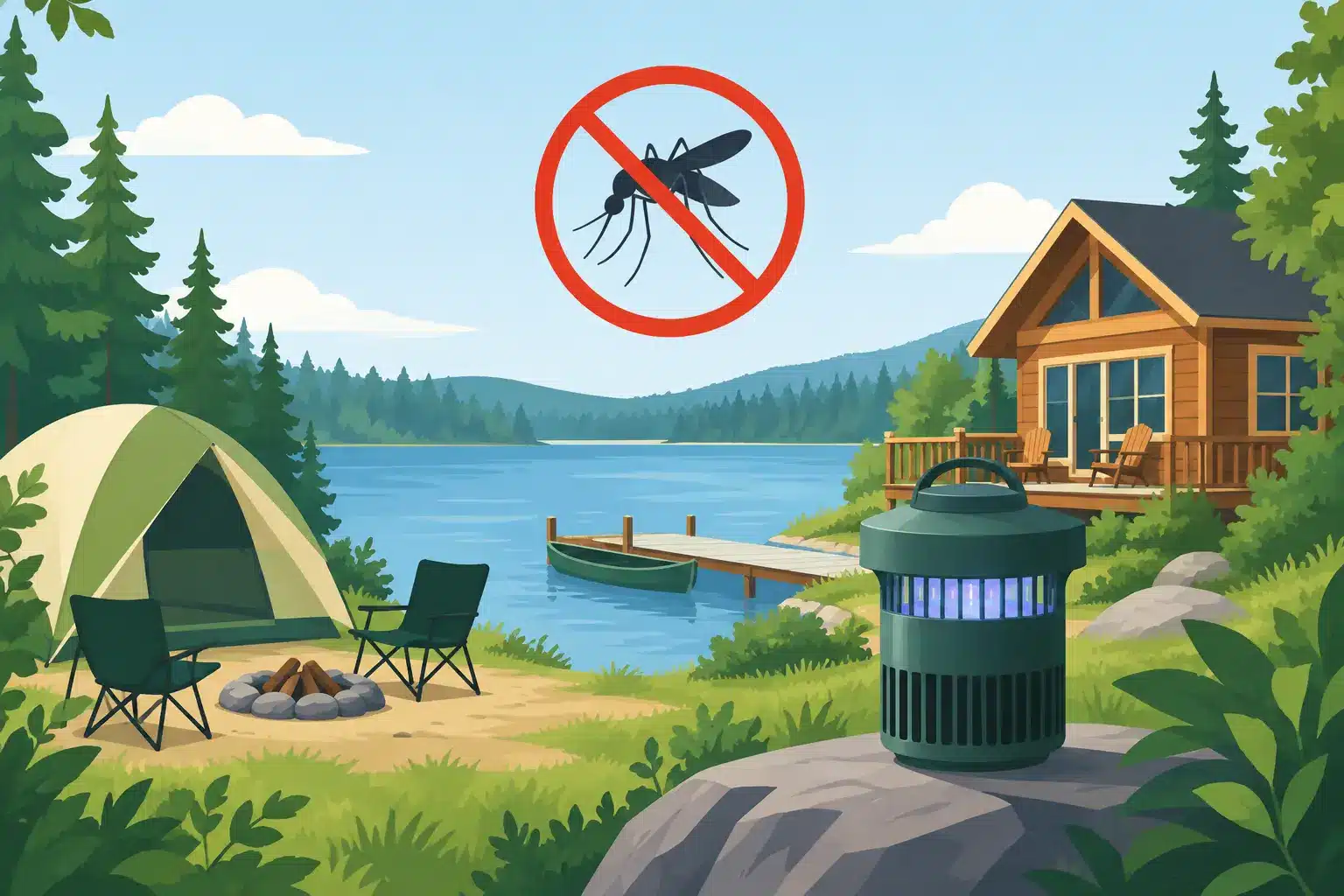
A dockside dinner, a campfire, and kids racing across the lawn should not end with everyone heading indoors to escape biting mosquitoes. Effective campground and cottage mosquito control Ontario property owners can count on begins before the first big hatch, with attention to the places mosquitoes rest, breed, and wait for people and pets to arrive.
At cottages and campgrounds, the problem is rarely one obvious puddle. It is usually a combination of shoreline vegetation, shaded trails, damp low spots, rain-filled equipment, woodpiles, and dense brush around gathering areas. A treatment plan needs to account for how people actually use the property – not just spray the nearest trees and hope for the best.
Why cottage and campground mosquito pressure is different
Ontario cottages and campgrounds often have the conditions mosquitoes prefer: moisture, shade, vegetation, and a steady supply of hosts. Being near a lake or river can contribute to the overall mosquito population, but the mosquitoes biting guests are often resting much closer to the cabin, washroom building, patio, tenting area, or fire pit.
Mosquitoes shelter from heat and wind in cool, protected vegetation during the day. Cedar hedges, tall grass, shrubs, hostas, brush piles, and the edges of wooded trails can all become resting zones. At dusk, they move toward the areas where families are cooking, relaxing, or putting children to bed.
That is why a generic approach can disappoint. A wide open seasonal site needs a different strategy than a compact cottage lot surrounded by mature trees. A campground with tent pads, playgrounds, walking paths, and communal washrooms also has more high-traffic areas to protect than a typical backyard.
Start with the water mosquitoes can use
Mosquitoes need standing water to reproduce, but it does not have to be a pond or a marsh. Many species can develop in surprisingly small amounts of water. Reducing those breeding opportunities is one of the most practical steps a property owner or site manager can take.
Walk the property after rainfall and look beyond obvious containers. Check wheelbarrows, tarps, canoes stored upside down with low spots, gutters, bird baths, unused planters, children’s toys, tire swings, and covers that collect rainwater. Empty or refresh small water-holding items regularly. Keep eavestroughs clear and correct drainage issues that leave water sitting near cabins, entrances, or heavily used paths.
Natural shoreline, wetlands, and drainage areas are different. They may be an important part of the property and cannot simply be removed or treated casually. In those situations, focus on the spaces people use most and the vegetation surrounding them. The goal is not to eliminate every mosquito from a rural setting. It is to make outdoor living areas more comfortable and reduce avoidable exposure.
Target resting areas, not just open grass
A well-kept lawn helps, but mowing alone is not mosquito control. The most productive treatment targets are often shaded edges and dense plant material where adult mosquitoes rest. This can include the perimeter around decks and screened rooms, shrubs beside cabin doors, vegetation bordering dining areas, and shaded routes between campsites and facilities.
A property-specific barrier treatment applies product where it can have the most impact instead of blanketing every square metre. That matters at cottages and campgrounds, where there may be vegetable gardens, pollinator plants, waterfront vegetation, children’s play spaces, pets, and guests moving through the property all day.
Mosquito Pros builds treatments around these real property conditions. Its lower-volume approach uses 94% less spray than many conventional programs while focusing on the vegetation and zones that need attention. For families and operators who want effective control without an indiscriminate spray routine, precision is a meaningful part of protection.
Timing matters more than a single treatment
Mosquito activity changes with weather. Warm temperatures and periods of rain can accelerate activity, while wind and dry conditions may provide temporary relief. One treatment before a long weekend may improve comfort for an event, but it is not the same as a seasonal plan for a property that is used every week.
For cottages, recurring treatment is often most useful through the period when the property sees the most family and guest traffic. For campgrounds, scheduling should consider opening dates, peak booking periods, weddings, holiday weekends, and outdoor programming. A treatment plan can also be adjusted when weather creates unusual mosquito pressure.
Protect the places people gather
Not every acre has equal value. Put the strongest focus on the areas where people sit still, eat, sleep, and play. Mosquitoes are most frustrating when they interrupt a meal on the deck, send campers into tents early, or make a waterfront ceremony uncomfortable.
At a cottage, this may mean the deck, dock approach, fire pit, outdoor kitchen, hammock area, and pathways to the lake. At a campground, priority zones may include check-in areas, picnic shelters, playground perimeters, communal fire pits, patios, event lawns, and paths to washroom buildings.
Fans can help in smaller gathering spaces because mosquitoes are weak flyers. Screens and well-maintained doors provide another practical layer around cabins and enclosed shelters. These measures work best alongside site maintenance and targeted treatments, rather than as a replacement for them.
For special events, timing is especially important. Treating the right resting areas ahead of an outdoor wedding, family reunion, or corporate gathering can make a noticeable difference in guest comfort. It is wise to plan early, particularly during peak mosquito season, rather than wait until the week of the event.
Do not overlook ticks at rural properties
Mosquito control and tick control are related, but they are not the same service. Ticks spend time in tall grass, leaf litter, wooded edges, and brushy transitions between lawn and forest. Cottages and campgrounds with trails, dog-walking areas, play spaces near woods, or informal paths to the water can create frequent tick contact points.
That matters because ticks can carry Lyme disease, while mosquitoes can expose pets to heartworm. Families with children and dogs should think beyond nuisance bites. Keeping grass trimmed, clearing leaf debris from high-use edges, maintaining defined paths, and using targeted tick treatments where appropriate can reduce risk around the spaces people use most.
Guests and family members should still take personal precautions. Light-coloured clothing makes ticks easier to spot, and a quick tick check after time in brush or tall grass is a sensible routine. No property treatment should be presented as a reason to stop checking pets, clothing, and skin after outdoor activity.
Choosing a treatment approach for your property
The right plan depends on the setting, the size of the property, the level of mosquito pressure, and how the space is used. A small family cottage may need focused treatment around the cabin and outdoor living space. A campground may require a mapped plan that prioritizes guest areas while accounting for sensitive zones, maintenance schedules, and recurring activity.
Natural treatment options can be a good fit for some owners, especially when their priority is a plant-based approach. The trade-off is that performance and residual duration can vary with conditions, so expectations should be discussed clearly. Conventional options may provide a different level or duration of control. A qualified provider should explain the choices, identify the likely resting areas, and recommend a schedule that makes sense for the property rather than pushing a one-size-fits-all package.
Before booking, ask how the treatment is customized, where product will be applied, what preparation is needed, and how the provider addresses children, pets, gardens, and outdoor amenities. Clear answers are a sign that the plan is designed for your site, not copied from the last one.
A cottage or campground should feel like a place where people can stay outside until the fire burns low. With consistent water management, smarter maintenance, and targeted treatment around the spaces that matter most, mosquito season does not have to control the experience.