
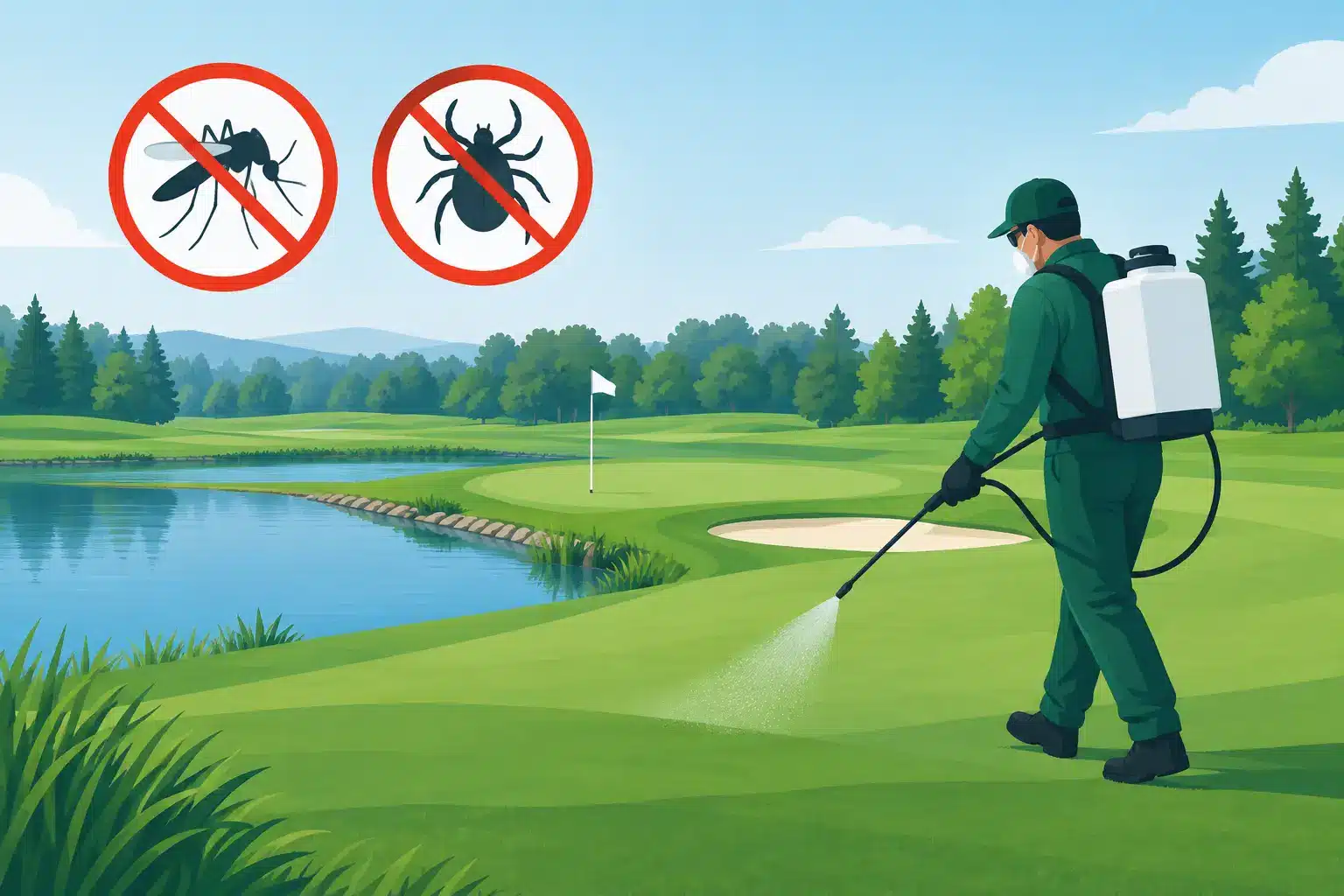
A mosquito problem on the 9th-hole patio or ticks in the rough can change how members, guests, and staff use a property. Effective golf course mosquito and tick control Ontario programs protect more than a round of golf. They help protect outdoor dining areas, practice facilities, event spaces, maintenance crews, players, pets, and the reputation your course has worked hard to build.
Golf properties are not treated like residential yards. They have larger footprints, changing traffic patterns, water features, wooded edges, tall grass, cart paths, and sensitive areas that require thoughtful planning. The right approach is targeted, property-specific, and designed around how people actually use the course.
Why Golf Courses Need a Different Pest-Control Plan
A golf course can offer ideal conditions for mosquitoes and ticks, often within a few metres of heavily used spaces. Mosquitoes may breed in standing water around ponds, drainage areas, catch basins, tarps, equipment storage zones, and poorly draining low spots. Ticks are more likely to shelter along wooded boundaries, long grass, brush, leaf litter, and trail connections between the course and surrounding natural areas.
That does not mean every part of the property needs the same treatment. In fact, broad, one-size-fits-all spraying can waste product and overlook the places where exposure is most likely. A good program concentrates on priority areas such as clubhouse patios, tee boxes near vegetation, practice areas, wedding venues, maintenance entrances, staff break areas, and walking routes through shaded edges.
For Ontario courses, timing matters just as much as coverage. Mosquito and tick pressure often rises through late spring and summer, but rainfall, temperature, vegetation growth, and nearby habitat can shift activity from week to week. A plan should be flexible enough to respond to those conditions instead of following a fixed schedule with no room for adjustment.
Start With a Property Assessment
Before treatment begins, a professional should assess the course as a working outdoor environment. The goal is to identify where pests live, where people gather, and where a lower-volume, precise application will have the greatest value.
For mosquito control, that means looking beyond obvious ponds. Mosquitoes do not need a large body of water to reproduce. Small areas of trapped water around buildings, irrigation equipment, containers, drainage features, and landscaping materials can contribute to activity near the clubhouse or outdoor dining area.
For tick control, the inspection should focus on the transition between maintained turf and natural cover. Ticks generally do not thrive in short, sunny, regularly maintained grass. The greater concern is often the perimeter: wooded corridors, unmanaged brush, native plantings, stone walls, long grass near paths, and shaded landscaping beside patios or parking areas.
Course staff also bring valuable insight. They know where golfers complain about bites, where crews encounter ticks, and which locations become difficult after heavy rain. Combining that local knowledge with a site assessment produces a more useful plan than treating a map from a distance.
Mosquito Control for High-Use Golf Areas
The most effective mosquito strategy combines habitat management with targeted barrier treatments. Removing or improving drainage around small standing-water sources can reduce breeding opportunities. This is especially useful near service buildings, event areas, cart storage, and the clubhouse.
Barrier treatments are then applied to vegetation where adult mosquitoes rest during the day, including dense shrubs, shaded hedges, and protected landscape borders near active outdoor spaces. The emphasis should be on the areas where mosquitoes and people overlap, not on blanketing fairways or open turf that provides little resting habitat.
For a course hosting a tournament, wedding, corporate outing, or evening patio event, an event-focused treatment can be scheduled around the venue and guest areas. It is not a replacement for a seasonal program on a property with ongoing pressure, but it can make a meaningful difference for an important date.
Treatments should always be planned around weather, irrigation, playing schedules, and access needs. Wind and rain can affect application timing, while maintenance staff and guests need clear communication about treated areas and any required re-entry guidance.
Tick Control at the Course Perimeter
Ticks are a health concern, not simply an outdoor nuisance. In Ontario, blacklegged ticks can carry the bacteria that causes Lyme disease. Pets can also face risks from tick exposure, while mosquitoes may contribute to heartworm risk for dogs.
Tick control works best when treatment is paired with practical landscape management. Keeping grass trimmed around high-traffic edges, clearing leaf litter where appropriate, reducing dense brush near walkways, and creating a maintained buffer between wooded areas and guest spaces can reduce places where ticks wait for a host.
Targeted applications can then focus on likely tick habitat around trails, wooded edges, maintenance paths, staff areas, and outdoor gathering spaces beside natural cover. Golf courses often need a selective approach because some naturalized areas serve a landscape or environmental purpose. The answer is not always to remove vegetation. It is to identify where people need protection and manage that interface carefully.
Safety, Precision, and Course Operations
A pest-control program should support the course experience, not disrupt it. That means selecting treatment windows that respect tee times, events, food-service areas, groundskeeping schedules, and seasonal maintenance work.
It also means using only the amount of product needed for the job. Mosquito Pros builds custom treatment plans that can use 94% less spray than conventional high-volume approaches, concentrating applications where they are needed most. This lower-volume method is designed with families, pets, staff, and guests in mind while still addressing the conditions that allow mosquitoes and ticks to persist.
No responsible provider should promise that a large outdoor property will never have a mosquito or tick again. Weather, wildlife, neighbouring habitat, and seasonal population changes all affect results. What a well-managed program can do is substantially reduce pest pressure in priority areas and give players and staff a more comfortable, more usable outdoor environment.
When Should Ontario Golf Courses Begin Treatment?
The best time to plan is before peak activity becomes a daily complaint. In much of Ontario, courses should assess mosquito and tick risk in spring, then continue treatments through the active season based on property conditions. Early action can help get ahead of rising populations, particularly after mild winters or wet springs.
Recurring service is often the right fit for properties with ponds, dense landscaping, wooded edges, or frequent outdoor events. A lighter program may be enough for a course with limited habitat and fewer high-use outdoor spaces. The right frequency depends on the property, not a standard package.
Course managers should also review the plan before major calendar dates. Member-guest tournaments, patio launches, charity events, junior programs, and wedding bookings all create periods when comfort matters even more. Planning ahead avoids a last-minute scramble when mosquitoes are already active.
A Better Outdoor Experience Starts at the Edges
Golfers remember the course conditions, the service, and how comfortable they felt staying for one more drink after the round. They also remember being chased inside by mosquitoes or finding ticks after walking the perimeter.
A focused mosquito and tick plan helps protect the places that make a golf property feel welcoming: the first tee, the practice green, the patio, the event lawn, and the quiet paths between them. A professional assessment before the season gives your course time to address those pressure points with care, precision, and a plan built for your property.

