
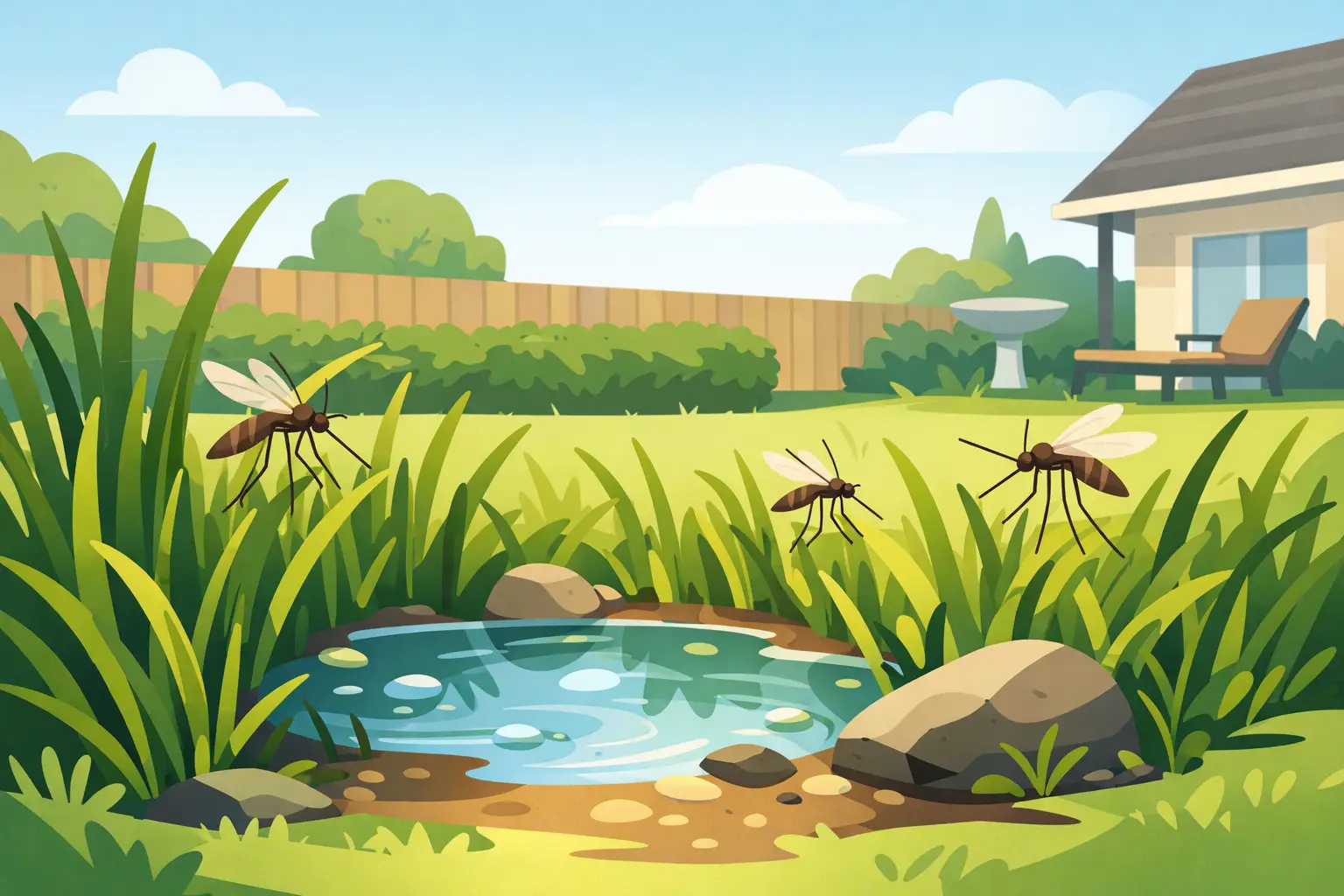
A thick patch of grass can make a backyard feel like it is full of mosquitoes, especially when the evening air settles in. But can mosquitoes breed in grass? Not by itself. Mosquitoes need water for their larvae to develop. Grass can, however, give adult mosquitoes a cool, shaded place to hide and can conceal the water sources that allow a population to grow.
For Ontario homeowners, that distinction matters. Cutting the lawn may make a yard less inviting to resting mosquitoes, but it will not solve a mosquito problem if standing water is still available nearby. The most effective approach targets both parts of the issue: breeding water and the vegetation where adult mosquitoes shelter.
Can mosquitoes breed in grass without water?
No. Mosquitoes do not lay eggs in dry blades of grass, and larvae cannot develop in soil or turf alone. After eggs hatch, mosquito larvae live in water, where they feed and grow before becoming adult mosquitoes. Even a small amount of still water can be enough for certain species.
That does not mean grass is irrelevant. Long grass, dense groundcover, brush, and damp garden edges can hold humidity and shade. Adult mosquitoes often rest in these protected areas during the hottest and brightest parts of the day, then become active around dawn and dusk.
Some mosquito species lay eggs near the edges of temporary water, including low spots that flood after heavy rain. Those eggs may remain in moist soil or leaf litter until water returns. In that situation, the grass is close to the breeding site, but the flooded water is still what enables larvae to hatch and develop.
Why tall grass can make mosquito activity feel worse
An untidy lawn does not create mosquitoes from nothing. It can make an existing mosquito issue more noticeable by giving adults better daytime cover. A shaded area beside a fence, under a deck, around ornamental grasses, or near a wooded edge can become a regular resting zone.
Tall grass also makes maintenance harder. It can hide discarded containers, children’s toys, tarps, clogged drains, and low areas where rainwater collects. If those sites are not checked, mosquitoes may have access to water long before anyone sees it.
This is particularly common after Ontario’s spring rains and summer storms. A yard may look dry from the patio while water remains trapped in a wheelbarrow, planter tray, pool cover, old tire, or uneven section of lawn. Mosquitoes do not need a pond-sized water source to become a nuisance around the home.
The water sources worth checking first
Start with the areas closest to where your family, pets, and guests spend time outdoors. Emptying small containers regularly is one of the most practical ways to reduce breeding opportunities, especially after rainfall.
Look carefully at these common trouble spots:
- Birdbaths, pet water dishes, plant saucers, and children’s outdoor toys
- Pool covers, hot tub covers, wheelbarrows, bins, buckets, and watering cans
- Clogged eavestroughs, downspout extensions, outdoor drains, and corrugated drainage tubing
- Old tires, tarps, garden equipment, and any object that can hold rainwater
- Low areas in the lawn, drainage ditches, and poorly graded sections of the property
Water that cannot be emptied should be maintained or treated appropriately. For example, a birdbath should be refreshed often, while a rain barrel should have a properly fitted screen. Larger drainage or pond concerns may require a different plan than a few water-filled containers.
How to make grass and landscaping less mosquito-friendly
You do not need to strip a yard of every shrub or shade tree to reduce mosquito activity. The goal is to improve airflow, remove unnecessary cover near gathering spaces, and make standing water easier to spot.
Keep grass cut to a reasonable height, particularly along fences, sheds, decks, play areas, and walkways. Trim back dense weeds and overgrowth around patios and seating areas. Clear leaf litter and heavy vegetation from damp corners where air does not move well.
Pay attention to the transition between lawn and landscape beds. Dense plantings can be beautiful, but when they are close to a deck or patio, they can become a convenient resting place for mosquitoes. Selective pruning can create more open space without changing the character of the yard.
If part of the lawn repeatedly holds water after rain, mowing alone will not address the cause. Improving grading, redirecting downspouts, filling shallow depressions, or addressing drainage can have a bigger impact. The right fix depends on whether the water disappears in a day, returns after every storm, or remains for longer periods.
Why mosquitoes can remain after you remove standing water
Removing water on your property is a strong first step, but mosquitoes can travel in from neighbouring yards, wooded areas, wetlands, and unmanaged drainage zones. This is why a careful homeowner can still experience persistent bites.
Adult mosquitoes may rest in shrubs and grass around your property even when they developed elsewhere. A good mosquito-control plan therefore combines source reduction with targeted treatment of the shaded vegetation where adult mosquitoes spend their day.
This is also where one-size-fits-all spraying can miss the mark. Every property has different conditions: a small urban patio needs a different approach from a rural lot with tree cover, a drainage ditch, or dense perimeter vegetation. A property-specific assessment identifies where mosquitoes are likely resting, where water is collecting, and which outdoor areas need the most protection.
Protecting children, pets, and outdoor plans
Mosquito bites are more than an annoyance when they keep children indoors, disrupt a backyard dinner, or make it difficult to enjoy time with pets. Mosquitoes can also carry diseases that affect people and animals, including heartworm risk for dogs. Reducing mosquito pressure helps make routine outdoor time more comfortable and lowers unnecessary exposure.
For day-to-day protection, use a few layers rather than relying on one tactic. Keep water from collecting, maintain grass and vegetation, use a registered personal repellent as directed, and consider fans for patios or covered seating areas. Mosquitoes are weak fliers, so moving air can make a noticeable difference during meals and gatherings.
For a wedding, family reunion, or other outdoor event, timing matters. Mosquito activity often increases near dusk, and a treatment plan should account for the event space, surrounding vegetation, and the date of the gathering. Waiting until guests are already being bitten limits the available options.
When professional mosquito treatment makes sense
Professional help can be useful when mosquitoes remain active despite regular yard maintenance, when a property has dense vegetation or drainage challenges, or when bites are interfering with daily outdoor use. It is also a sensible option for families who want added protection around patios, pools, play areas, and pet spaces during peak season.
A targeted barrier treatment focuses on the foliage and protected areas where adult mosquitoes rest, rather than treating every square metre of a property the same way. At Mosquito Pros, customized plans are designed around the conditions of the yard and use lower-volume, family-conscious treatment methods to help protect the spaces people use most.
The best time to act is before mosquito numbers build after repeated warm, wet weather. Keep the lawn maintained, inspect the yard after each rainfall, and address standing water while it is still easy to manage. A few focused habits can turn grass from a mosquito hiding place into just another part of a yard your family can enjoy.


