
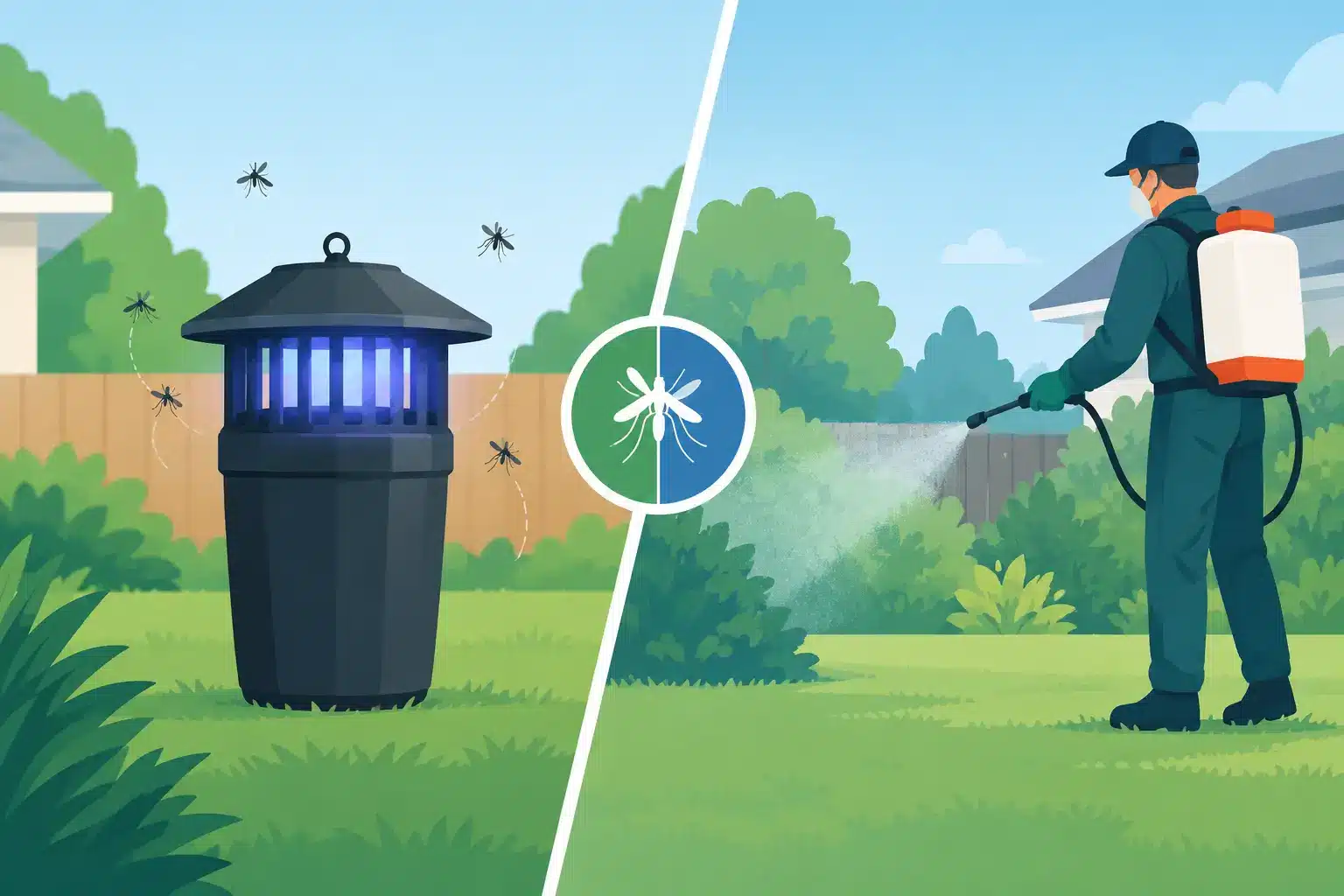
A trap glowing near the patio can feel like a practical answer to a mosquito problem. But when bites start before dinner and continue every time the dog needs to go outside, homeowners often find that mosquito traps versus yard spraying is not a simple either-or decision. The better choice depends on where mosquitoes are resting, how large the property is, and whether you need relief in one small area or across the yard.
For many Eastern Ontario properties, mosquitoes are not gathered in one convenient location. They rest in shaded shrubs, tall grass, under decks, along fence lines, and around damp vegetation. Effective control has to account for those hiding places, not just the mosquitoes that happen to fly past a device.
How Mosquito Traps Work
Mosquito traps use an attractant to draw mosquitoes toward a capture area or treatment surface. Depending on the unit, that attractant may include carbon dioxide, heat, light, scent lures, or moving air. Some traps use a fan to pull insects into a collection chamber, while others use a sticky surface or a treated station.
A well-placed trap can reduce the number of mosquitoes in a limited area, especially when it is operated consistently. It may be useful near a screened porch, a smaller patio, or a cottage sitting area where power and placement are practical. Traps can also provide visible evidence that mosquitoes are active, which some property owners find reassuring.
The limitation is reach. A trap must compete with people, pets, standing water, vegetation, and the natural conditions that attract mosquitoes. If the breeding and resting areas are spread throughout the property, one device is unlikely to make the entire yard comfortable. Results can also take time, since traps generally work by gradually removing mosquitoes rather than preventing immediate activity around the spaces your family uses.
What Affects Trap Performance
Placement matters more than many people expect. A trap positioned beside the deck may attract mosquitoes toward the area you want to enjoy. It is often more effective to place it away from gathering spaces, near shaded vegetation or a likely mosquito travel path, while following the manufacturer’s instructions.
Wind, rain, power access, lure replacement, and the local mosquito population also affect performance. A trap that works reasonably well in a small, open yard may struggle on a wooded property near drainage areas, wetlands, or dense hedge lines. It should also be understood as a population-reduction tool, not guaranteed bite protection.
How Yard Spraying Targets Mosquitoes
Professional yard treatment takes a different approach. Rather than trying to attract flying mosquitoes from across the property, a technician targets the places adult mosquitoes rest during the day. These are commonly cool, shaded, protected areas with dense foliage, under-deck spaces, perimeter vegetation, and moisture-prone zones.
A targeted barrier treatment is designed to reduce the adult mosquito activity around the property so fewer mosquitoes reach your patio, pool area, play space, or walking paths. This can produce more noticeable relief for homeowners who want to use their backyard soon after treatment, rather than waiting for a trap to gradually collect insects.
The quality of the treatment depends on the assessment. A generic spray across open lawn is not the same as a property-specific application. Mosquitoes do not spend much of the day sitting in the middle of a sunny lawn. A knowledgeable approach concentrates on the areas where they actually hide, while respecting product labels, weather conditions, and the details of the property.
At Mosquito Pros, treatments are customized around shaded, vegetated, perimeter, and moisture-prone areas. This lower-volume approach can use up to 94% less product than traditional high-volume spraying, while keeping the focus on effective mosquito habitat rather than blanket coverage.
Mosquito Traps Versus Yard Spraying: Key Differences
The most meaningful difference is coverage. A trap has a defined attraction range that can vary greatly with the model and conditions. A professional barrier treatment can address multiple resting zones across the yard, which is particularly valuable on larger lots, properties with mature landscaping, or homes close to water and wooded areas.
Timing is another factor. Traps need ongoing operation and regular maintenance. Lures, collection chambers, batteries, and power supplies all need attention. Spraying is typically scheduled as part of a seasonal plan or before a specific event, such as a backyard wedding, family reunion, or cottage weekend. It is a more direct option when the goal is to reduce mosquito pressure before guests arrive.
Cost should be measured over the full season, not only by the upfront price. A trap can appear less expensive at first, but some models require propane, replacement lures, consumables, repairs, and months of operation. Yard treatment is a service investment, yet it provides professional property assessment and targeted coverage. The right value depends on whether the trap is delivering enough relief for how you use your outdoor space.
Safety also requires a practical comparison. Any mosquito-control product or device should be used according to its instructions. With professional spraying, the provider should explain treatment areas, post-treatment guidance, timing around children and pets, and any property-specific considerations. With traps, consider cords, propane equipment, placement near play areas, and whether the device is being maintained correctly.
When a Trap May Be Enough
A mosquito trap may be a reasonable fit if mosquito activity is light, your usable outdoor area is small, and you are comfortable maintaining the unit. It can also complement other prevention efforts, such as emptying standing water from planters, tarps, birdbaths, toys, gutters, and other containers after rain.
Traps are often best viewed as one part of a broader strategy. They can help monitor or reduce activity in a specific zone, but they cannot correct the conditions that allow mosquitoes to breed or rest throughout the yard. If bites are occasional and limited to one corner of the property, a trap may be all you need.
When Yard Spraying Is the Better Choice
Targeted yard spraying is generally the stronger option when mosquitoes make normal outdoor activities unpleasant. If children avoid the yard at dusk, guests are being bitten on the patio, or you cannot walk the dog without swatting mosquitoes, the issue is likely larger than a single trap can handle.
It is also a practical choice for properties with dense shrubs, wooded edges, drainage areas, shaded decks, or several outdoor living spaces. Cottage owners may benefit before high-use weekends, while event hosts can schedule treatment ahead of outdoor celebrations. Commercial properties can use targeted service to make patios, entrances, and customer spaces more comfortable.
Tick concerns can further strengthen the case for a professional property assessment. Mosquito traps do not address ticks. Because ticks hide in vegetation, leaf litter, long grass, and property edges, mosquito and tick control should be planned as related but separate services when both pests are active.
A Combined Approach Can Make Sense
There is no rule that says you must choose only one method. A professionally treated property can still use a trap in a particularly troublesome area, provided it is placed thoughtfully and maintained. The treatment reduces mosquitoes resting across the yard, while the trap can help manage the remaining activity near a selected zone.
The foundation should still be source reduction. Remove standing water whenever possible, keep vegetation managed, and repair areas that hold water after rain. These steps will not eliminate every mosquito, especially when insects are coming from neighbouring properties or nearby natural habitat, but they reduce the conditions that support them.
A comfortable yard should not require your family to retreat indoors at sunset. If you are weighing a trap against a treatment plan, start with an honest look at the size of the problem, the layout of your property, and how quickly you need results. The right solution is the one that protects the outdoor time you have been waiting all winter to enjoy.


