
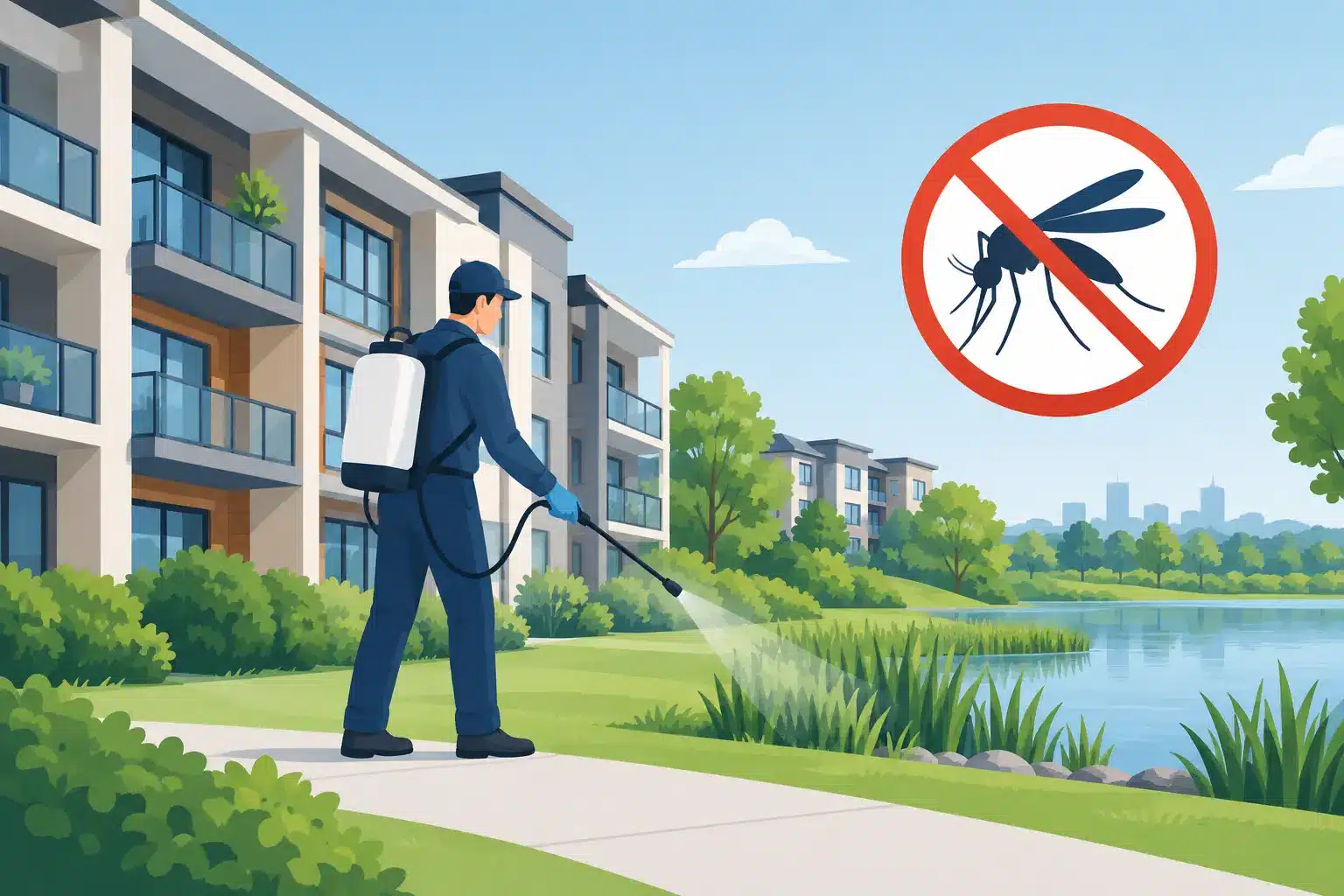
A courtyard can look well maintained and still become the place tenants avoid after dinner. One stretch of damp shade behind a building, a clogged gutter, or dense shrubs around a patio can give mosquitoes exactly what they need. For property management mosquito control Ontario property owners can rely on, the goal is not simply to spray a large area. It is to identify where mosquitoes rest, breed, and travel, then reduce activity without disrupting the people who use the property.
For apartment communities, condominium corporations, retirement residences, campgrounds, hospitality properties, and commercial sites, mosquito pressure is more than a seasonal annoyance. It affects tenant satisfaction, outdoor amenity use, event planning, staff comfort, and the perceived care of the property. A customized plan gives managers a practical way to protect those spaces throughout Ontario’s mosquito season.
Why mosquito complaints matter on managed properties
Mosquitoes change how people use a property. Tenants may stop using balconies, shared green space, dog-walking routes, playgrounds, pool decks, and seating areas. At restaurants, venues, golf facilities, and cottages, biting pressure can shorten visits and leave guests with a poor impression even when every other part of the experience is excellent.
There is also a health consideration. Mosquitoes can carry diseases, although risk varies by location, season, and species. Ticks deserve attention as well, particularly on properties with wooded borders, long grass, trails, or naturalized landscaping. Property managers do not need to diagnose disease risk. They do need a sensible plan that reduces pest exposure in the outdoor areas under their care.
The strongest programs also support communication. When residents or visitors know that management is addressing a recurring mosquito issue with a focused, professional approach, they have more confidence using the property outside.
What makes Ontario mosquito pressure different
Eastern Ontario’s mosquito season is shaped by weather, landscape, and maintenance conditions. A wet spring can create standing water in low areas, catch basins, tarps, planters, roof drainage systems, and construction materials. Hot, humid periods can then make activity feel relentless, especially near tree cover and irrigated landscaping.
Mosquitoes do not spend all day flying across open lawns. Many species rest in cool, shaded vegetation during daylight hours, then move toward people and pets as conditions become favourable. This is why a treatment plan based only on lot size can miss the problem. A paved commercial plaza with a landscaped loading area may need more attention than a larger property with open, dry ground.
It also depends on the property type. A condo complex may need treatment concentrated around pathways, seating, garbage areas, and dense perimeter vegetation. A campground or event venue may need broader protection around guest-use zones, washrooms, cabins, and wooded edges. The right answer follows the site, not a one-size-fits-all schedule.
How professional mosquito control should work
An effective service begins with an assessment. The technician looks at the areas where mosquitoes are likely to hide and where people are most likely to be bitten. That typically includes shrubs, hedges, tall grasses, wooded borders, shaded patios, fence lines, drainage areas, and moisture-prone sections of the property.
The treatment should be targeted to those resting areas rather than applied indiscriminately across every surface. At Mosquito Pros, this lower-volume approach can use up to 94% less product than traditional high-volume spraying while following product labels and property-specific instructions. That precision matters for managed properties where families, pets, employees, tenants, and guests share outdoor space.
Treatment timing matters too. A single visit can be useful before a wedding, open house, tenant event, or outdoor gathering. For properties dealing with ongoing mosquito pressure, scheduled seasonal visits are usually the better fit. Regular service helps maintain protection as weather changes, vegetation grows, and new mosquito habitat develops.
No reputable provider should promise a mosquito-free property forever. Rain, neighbouring vegetation, nearby water, and newly hatched mosquitoes can all influence results. What professional treatment can do is significantly reduce mosquito activity in key outdoor areas and provide a consistent plan for managing pressure through the season.
Property maintenance still plays a major role
Professional treatment works best when it is paired with routine site maintenance. Managers and maintenance teams do not need to eliminate every drop of water, but small corrections can remove many common breeding opportunities.
Pay close attention to blocked eavestroughs, poorly draining planters, discarded containers, tarps that collect rain, tire storage, clogged catch basins, and low areas that remain wet after storms. Irrigation schedules may also need adjustment where water is pooling unnecessarily. These are practical details, but they can make the difference between a property that experiences occasional mosquito pressure and one that produces repeated complaints.
Landscaping choices matter as well. Keeping vegetation trimmed away from patios, sidewalks, entrances, and amenity areas reduces the sheltered resting spots mosquitoes prefer. It is not a reason to remove healthy trees or green space. It is a reason to manage dense growth thoughtfully, especially around the places residents and guests gather.
Protecting tenants, pets, and day-to-day operations
Managed properties need pest control that respects operations. Treatment planning should account for resident notices, staff schedules, school or daycare activity, pet areas, outdoor dining, maintenance access, and booked events. Clear advance communication gives people time to follow any site-specific instructions and keeps surprises to a minimum.
For pet-friendly communities, mosquito and tick reduction can be especially valuable. Pets spend time close to grass, shrubs, and trail edges where pests are often active. Property-wide treatment does not replace veterinary prevention, but it can reduce the number of bites pets and their owners encounter in shared outdoor areas.
The same principle applies to children. Play areas and nearby vegetation should be assessed carefully, and applications should follow label directions. A thoughtful program focuses on making common outdoor spaces more comfortable while keeping treatment decisions grounded in the property layout and intended use.
Choosing a provider for commercial mosquito control
Price matters, but the lowest quote is not always the lowest-cost choice. A provider who treats without inspecting may overlook the areas driving complaints, leaving management to pay for repeat visits without meaningful relief. Look for a company that can explain where it will treat, why those areas matter, what residents should expect, and how follow-up will be handled.
Ask whether the provider offers both recurring and one-time services. Ask how they address tick-prone areas, whether natural treatment options are available when appropriate, and how they tailor applications for sensitive locations. A good answer will be specific to your grounds, not a generic sales pitch.
Documentation is useful for property files, especially for condominium boards, commercial managers, and sites with multiple decision-makers. Service records, treatment dates, site notes, and clear recommendations help managers track recurring concerns and demonstrate a proactive approach to outdoor maintenance.
Plan before peak mosquito season
The best time to arrange mosquito control is before complaints start piling up. Early planning allows time for a site assessment, resident communication, maintenance corrections, and treatment scheduling before patios, common areas, and event spaces see their heaviest use.
That does not mean it is too late once mosquitoes are active. Ontario properties can benefit from targeted control throughout the season, particularly after prolonged rain or before an important outdoor event. The key is acting on the conditions at your property instead of waiting for a manageable issue to become a tenant-relations problem.
A well-kept property should feel welcoming after sunset, not off-limits. With focused treatment, sensible maintenance, and a plan built around the people using the space, managers can give tenants and guests more reasons to stay outside and enjoy it.


