
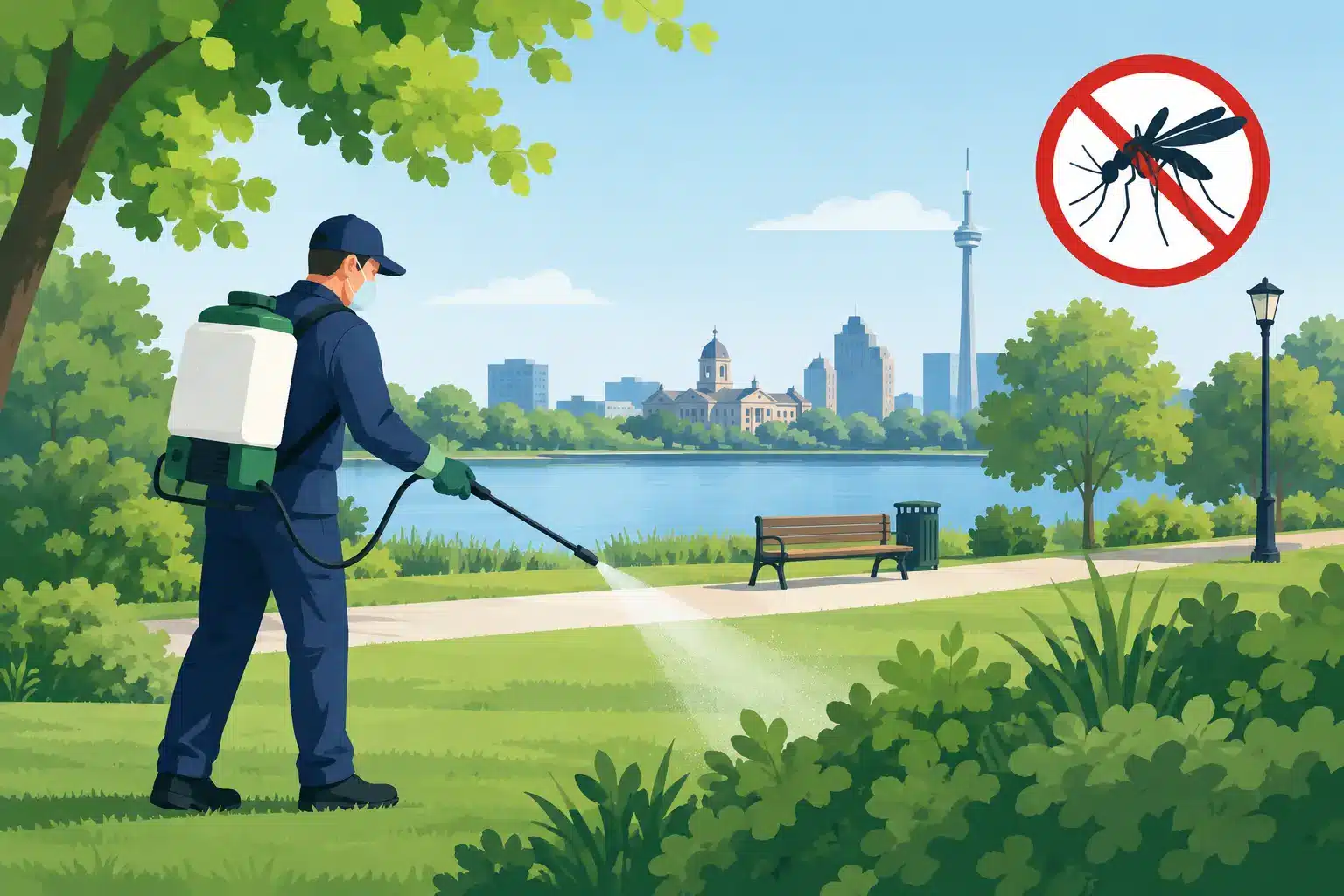
A park can have new playground equipment, clean trails, and packed picnic tables, yet still feel unusable when mosquitoes arrive at dusk. Effective municipal park mosquito control in Ontario is not about spraying every green space. It is about reducing mosquito pressure where people gather while protecting the way families, pets, pollinators, and local ecosystems use the park.
For municipal teams, property managers, and organizers responsible for public outdoor spaces, the best results come from a planned, site-specific approach. Ontario parks vary widely. A small neighbourhood playground beside mature cedars needs a different strategy than a waterfront trail, sports complex, campground, or event field near drainage ditches.
Why mosquito pressure changes from park to park
Mosquitoes do not need a large pond to become a problem. Many species develop in small amounts of standing water: clogged catch basins, tarps, discarded containers, low spots in turf, blocked eavestroughs on park buildings, and water that collects around storage areas. After rain, these overlooked sites can produce mosquitoes quickly.
Adult mosquitoes spend much of the day resting in cool, shaded vegetation. Dense shrubs, long grass around fence lines, wooded trail edges, ornamental plantings, and damp areas near drainage all provide shelter. When visitors arrive in the late afternoon or early evening, mosquitoes move from those resting areas toward people and pets.
That is why a park can look dry and well maintained while still having a serious mosquito issue. The breeding water may be out of sight, and the adult resting habitat may sit just beyond the playground, patio, dog park, or spectator area.
What a responsible municipal mosquito plan includes
A practical program begins before any treatment decision. The goal is to identify the conditions creating the problem, then use the least disruptive effective measure for each location. This integrated approach gives municipalities a more defensible plan and better long-term value than reacting with broad applications after every complaint.
1. Site assessment and complaint mapping
Park staff should record where and when mosquito complaints occur. Details matter: Is the issue strongest beside a splash pad at sunset? Along a wooded walking trail after rain? Near an outdoor concert area? A pattern of complaints helps distinguish a localized pressure point from a property-wide issue.
A qualified assessment should also identify vegetation density, drainage concerns, standing-water sources, nearby wetlands, public-use zones, and areas where people are likely to linger. This lets the treatment plan focus on the places that affect comfort and use of the park most directly.
2. Source reduction before treatment
Removing breeding opportunities is often the most effective first step. Maintenance teams can correct drainage issues, clear debris from catch basins, remove unnecessary water-holding items, repair leaks, and empty containers after rainfall. Aeration or water-management options may be appropriate for certain managed water features, but natural wetlands and ponds require a more cautious, site-specific approach.
Source reduction will not solve every issue. Some water sources cannot be removed, and mosquitoes can travel in from surrounding properties or natural areas. Still, reducing breeding habitat lowers the need for repeated intervention and supports more predictable control through the season.
3. Targeted larval control where appropriate
When standing water cannot be eliminated, a properly selected larval-control product may prevent mosquitoes from reaching the biting adult stage. This approach is often more precise than waiting until adult mosquitoes are already affecting visitors.
The product, timing, and application method must suit the site and follow the product label. Areas connected to sensitive habitats, waterways, or stormwater systems may require additional review. Municipalities should work with trained, licensed professionals when the work falls within regulated pesticide application requirements.
4. Focused adult mosquito treatments
Barrier treatments can help reduce adult mosquito activity around high-use spaces such as playground perimeters, picnic shelters, patios, amphitheatres, sports-field seating, dog parks, and event entrances. The treatment should target the shaded, vegetated, moisture-prone areas where mosquitoes rest, rather than open turf where it provides little benefit.
Timing is equally important. A treatment may be useful before a major outdoor event, during peak mosquito season, or as part of a recurring program in a consistently difficult area. It is not a permanent replacement for drainage maintenance or habitat management. Weather, rainfall, surrounding vegetation, and mosquito movement all affect how long results last.
Safety and compliance cannot be an afterthought
Public parks demand a higher level of planning because visitors may include young children, pet owners, seniors, sports teams, and people using the space daily. The service provider should follow all product-label directions, respect re-entry instructions, document applications, and communicate clearly with the municipality about treated areas and timing.
Ontario municipalities may also have local policies, environmental procedures, notification requirements, or procurement standards that apply to public-land pest management. Provincial pesticide rules and product labels set the baseline, but local expectations can be stricter. A responsible program checks those requirements before work begins, especially near waterways, schools, community gardens, or conservation-sensitive areas.
Lower-volume, targeted applications can be a sensible option when adult mosquito control is needed. By concentrating treatment only in identified mosquito harbourage, the provider can avoid the waste and unnecessary exposure associated with blanket spraying. Mosquito Pros uses a lower-volume approach that can use up to 94% less product than traditional high-volume spraying, with each application based on property conditions and label directions.
When seasonal service makes sense
One-time treatment can be valuable for an outdoor wedding, tournament, movie night, Canada Day event, or community fundraiser. For a single event, the site should be inspected early enough to address standing water and identify the vegetation zones closest to guests. A last-minute application may help with adult activity, but it cannot correct weeks of poor drainage or heavy breeding conditions overnight.
Seasonal service is generally a better fit for parks with repeated complaints, dense tree cover, persistent moisture, or a long calendar of outdoor programming. Visits can be scheduled around local mosquito pressure, rain patterns, and public-use periods. The purpose is not to promise a mosquito-free park, which is unrealistic in Ontario’s summer conditions. It is to make high-use spaces substantially more comfortable and reduce the conditions that allow mosquito pressure to build.
Give visitors a role in prevention
Even the best municipal plan works better when park users understand a few basic precautions. During peak mosquito hours, visitors can wear light-coloured clothing, use a Health Canada-approved personal repellent as directed, and keep children and pets away from dense brush when possible. Event organizers can also improve comfort by placing seating and lineups away from wooded edges and by avoiding low, damp areas for evening activities.
Clear communication is especially helpful after rain or before large public events. A short notice about mosquito activity and practical precautions is more useful than pretending the risk has disappeared. It shows that the municipality is acting responsibly while helping residents make informed choices.
A better park experience starts at the perimeter
The most successful mosquito programs rarely draw attention to themselves. Families stay for the whole picnic, spectators finish the game without swatting constantly, and outdoor events remain enjoyable after sunset. That outcome starts with careful inspection, routine water management, and targeted control where it will make the greatest difference. For Ontario parks, thoughtful prevention is not just maintenance work – it is part of keeping public outdoor spaces welcoming all season.


