
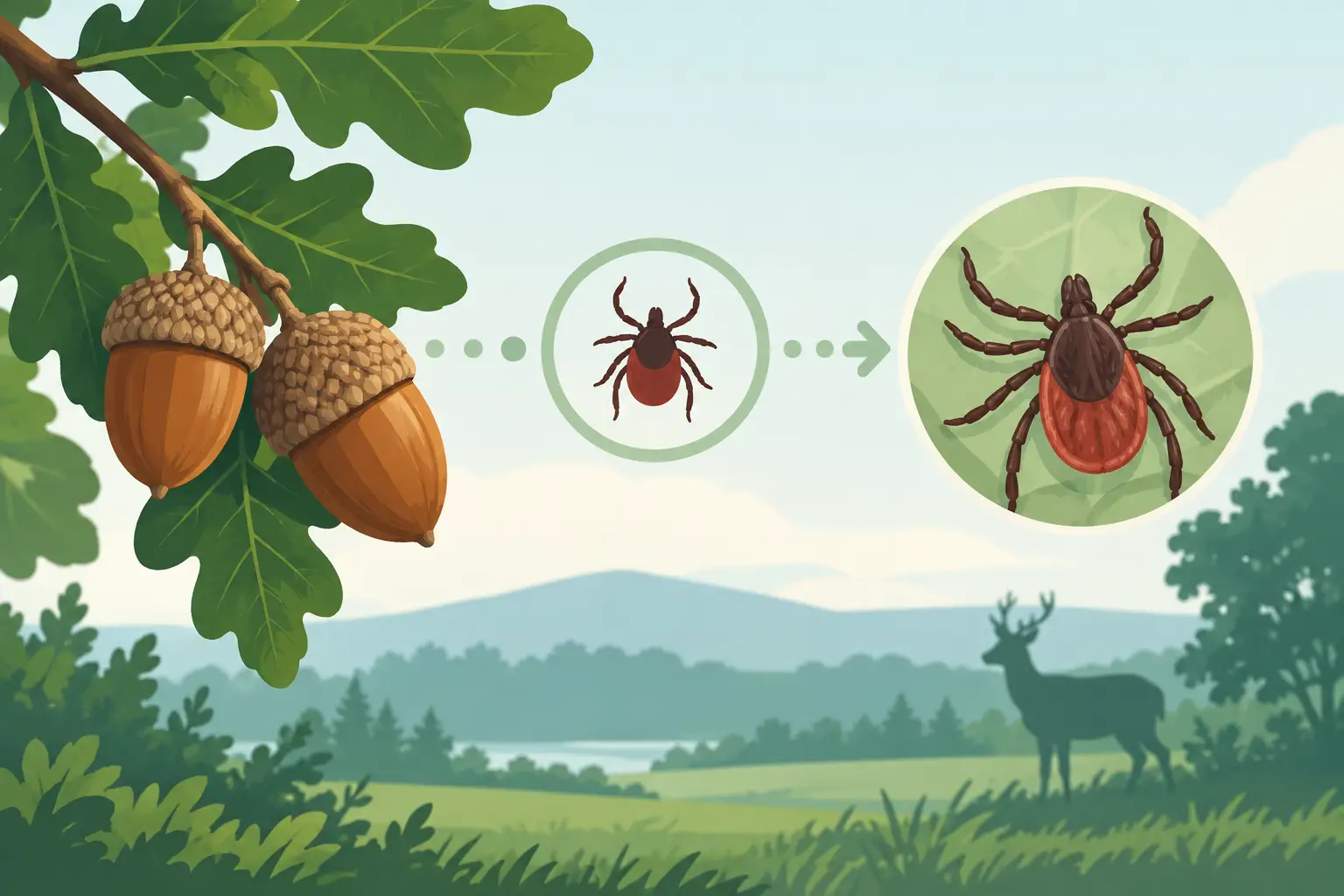
A carpet of acorns can look like a sign of a healthy fall forest. For families and pet owners, it can also be an early clue about next season’s tick pressure. The connection between acorn mast and tick populations is indirect, but it is well established: more acorns can support more small mammals, which can support more ticks.
That does not mean every heavy acorn year guarantees a tick problem in every Eastern Ontario yard. Weather, habitat, local wildlife, and how a property is maintained all matter. Still, understanding the pattern can help you take practical action before ticks become a daily concern.
Why a Heavy Acorn Year Can Lead to More Ticks
Oak trees sometimes produce an unusually large crop of acorns, known as a mast year. Acorns are a valuable food source for deer, squirrels, chipmunks, and mice. When food is plentiful, some small-mammal populations may grow or survive the winter in higher numbers.
Mice are a key part of the tick story. Blacklegged ticks, commonly called deer ticks, feed on small mammals during parts of their life cycle. White-footed mice can also carry the bacteria that causes Lyme disease and may pass it to feeding ticks. A greater number of mice can mean more opportunities for young ticks to find a blood meal and, in some areas, become infected.
Deer matter too, although in a different way. Adult blacklegged ticks frequently feed on deer, which can help ticks reproduce and spread through a landscape. Deer are not considered the main source of Lyme disease bacteria, but their movement can carry attached ticks into wooded edges, cottage properties, and residential neighbourhoods.
The Tick Increase Usually Has a Delay
A mast year does not usually mean the highest tick activity arrives immediately. The effect often unfolds over one or two seasons as rodents benefit from the food supply and ticks move through their larval, nymph, and adult stages.
This lag is why prevention should not wait until you see ticks on a dog or find one attached after gardening. If your property borders mature oak woods, brushy ravines, stone walls, long grass, or areas with frequent deer activity, the conditions may already be favourable for ticks regardless of the acorn crop.
Tick activity also depends on moisture and temperature. Mild winters, humid springs, and shaded vegetation can improve tick survival. On the other hand, a dry period, reduced host activity, or a well-maintained property can limit where ticks thrive. Acorns are one signal, not a forecast written in stone.
What Homeowners Can Do Around the Yard
The most useful approach is to reduce the places where ticks wait for a host and make the areas your family uses easier to inspect. Keep grass cut, clear leaf litter around play spaces and patios, and trim back dense vegetation along paths, fences, and seating areas. Store firewood neatly and away from the home when possible, since stacked wood can shelter mice and other small animals.
Create a clear transition between wooded edges and active lawn areas. A maintained border of low vegetation or mulch can make it less inviting for ticks to move directly into the spaces where children and pets play. If deer regularly cross the property, consider how fencing, plant choices, and landscaping can reduce that traffic near decks, gardens, and outdoor furniture.
Personal protection still matters. Use an approved repellent as directed, wear light-coloured clothing when walking through brush or tall grass, and complete tick checks after time outdoors. Check dogs as well, especially around the ears, collar area, legs, and between the toes. Prompt, careful tick removal lowers the chance of disease transmission.
When Property Treatment Makes Sense
Yard maintenance reduces risk, but it may not be enough for properties with persistent tick habitat. This is particularly true for homes beside woods, cottage lots, properties with heavy shade, or yards where children and pets spend long periods outside.
A professional tick-control plan should focus on the places ticks actually use: shaded vegetation, dense ground cover, wooded perimeters, brush lines, and moisture-prone areas. Broad, indiscriminate spraying is not the same as a targeted application. Mosquito Pros assesses each property and uses a lower-volume treatment approach designed around the site, following product labels and property-specific instructions.
If a mast year has left your yard covered in acorns, treat it as a reminder to look beyond the lawn. Check the edges, the leaf litter, the woodpile, and the routes wildlife uses. Acting before peak tick season can help protect the outdoor time your family and pets enjoy most.


