
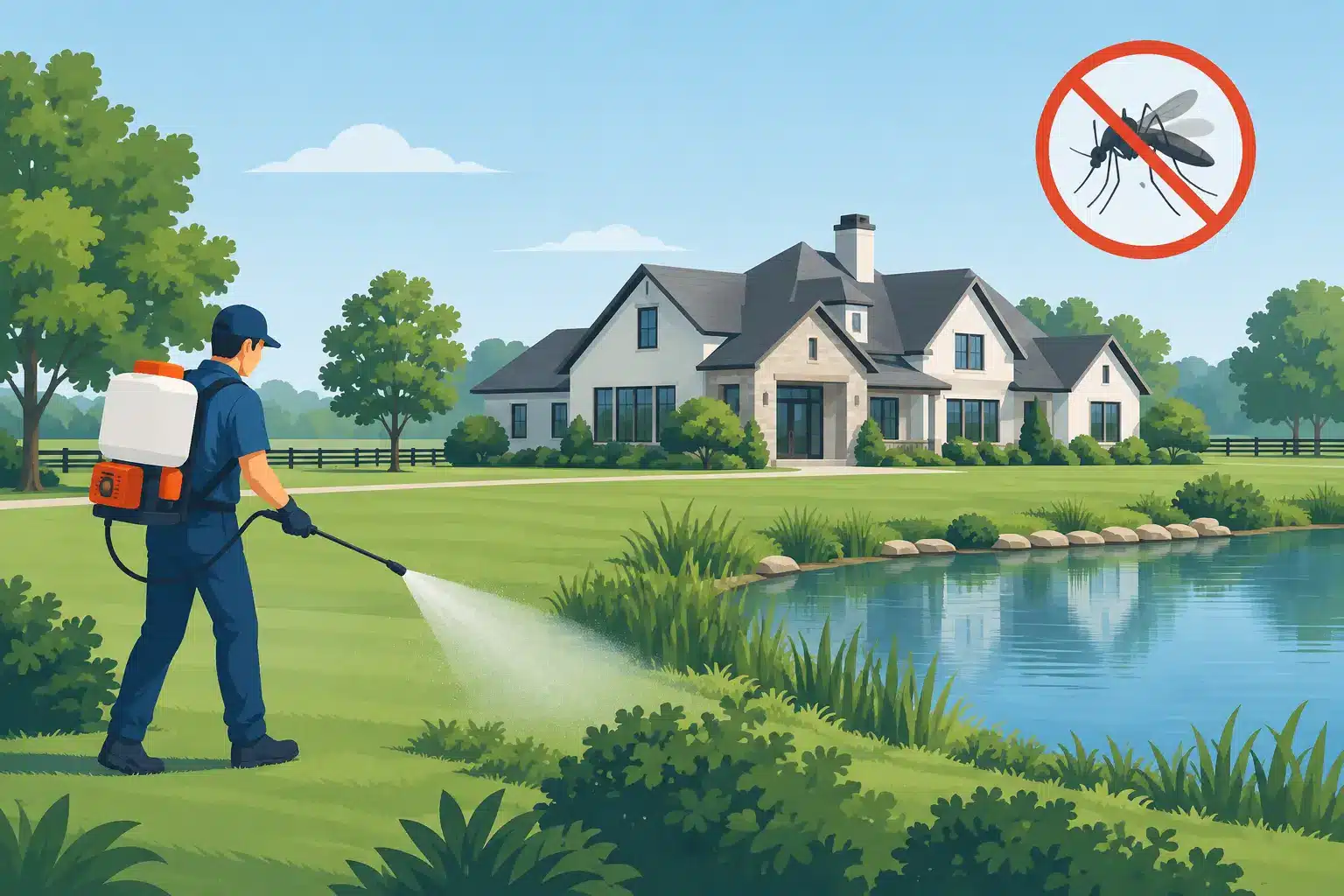
A large yard can turn into a small problem quickly when mosquitoes take over. The patio becomes off-limits at dusk, kids cut playtime short, and guests spend more time swatting than relaxing. Effective mosquito control for large properties requires more than treating the area closest to the house. It means finding where mosquitoes rest, breed, and travel across the entire property.
For homeowners, cottage owners, farms, venues, and commercial properties in Eastern Ontario, the right approach is targeted, seasonal, and built around how people actually use the space. A one-size-fits-all spray plan may leave the places that matter most unprotected.
Why large properties need a different mosquito plan
Mosquitoes do not spread evenly across a large property. They gather where conditions support them: dense vegetation, shaded tree lines, damp ground, low-lying areas, brush piles, overgrown hedges, and standing water. A treatment focused only on a deck or backyard may improve one small area while leaving a nearby ravine, fence line, or outbuilding perimeter untouched.
The challenge is also timing. Ontario mosquitoes are most active during warmer months, but populations can surge after rain and remain persistent where water drains slowly. On a larger property, there may be several moisture-prone zones with different conditions. A pond edge, wooded lane, drainage ditch, and garden area do not need exactly the same treatment strategy.
That is why property assessment matters. Before treatment, a professional should look at the full layout, identify high-pressure areas, and understand how people, pets, and guests move through the property. The goal is not to blanket every square metre. It is to focus treatment where it can make the greatest difference.
Start with the areas mosquitoes use most
Adult mosquitoes generally rest during the day in cool, protected vegetation. They often emerge from these sheltered areas toward patios, pools, play structures, pathways, barns, and gathering areas as the day cools down. Treating these resting zones can reduce the number of mosquitoes entering the usable part of the property.
On large properties, priority areas often include shaded hedges and shrubs, wooded borders, tree lines, tall grass around buildings, vegetation near seating areas, and the perimeter around outdoor structures. Attention should also go to places that hold small amounts of water, including tarps, tires, clogged gutters, wheelbarrows, planters, birdbaths, toys, and poorly drained ground.
Water management is a useful part of prevention, but it is not a complete solution. A property owner can empty containers and improve drainage while mosquitoes continue arriving from neighbouring wooded areas or resting deep in vegetation. Removing breeding opportunities lowers pressure. Targeted barrier treatment addresses the mosquitoes already using the property.
Keep the focus on the space you want to enjoy
A large acreage may include woods, fields, gardens, work areas, and recreation space. Not every section needs the same level of protection. For a family home, the highest priority may be the patio, pool, dog run, and lawn around the house. For a wedding venue, it may be ceremony space, parking walkways, cocktail areas, and washroom access routes.
This is where customization provides better value than a broad, generic application. It directs effort toward the places where mosquito pressure affects daily life, customer experience, or an upcoming event.
Choose targeted treatment over high-volume spraying
More product does not automatically mean better mosquito control. Large properties can benefit from a lower-volume, targeted approach that treats vegetation and perimeter zones rather than soaking open lawn or applying product indiscriminately.
Mosquito Pros can use up to 94% less product than traditional high-volume spraying, depending on the property and treatment plan. Applications follow product labels and property-specific instructions, with attention to family areas, pets, gardens, water features, and the conditions found during assessment.
There are trade-offs to consider. Dense, heavily wooded properties may require more extensive perimeter coverage than an open rural lot. Properties next to wetlands, unmanaged brush, or standing-water areas may experience stronger mosquito pressure throughout the season. In these cases, a single treatment can provide welcome short-term relief, but recurring service is usually the more reliable choice for consistent outdoor comfort.
Natural treatment options may also be appropriate for some households and settings. The right choice depends on the level of mosquito activity, the property layout, desired duration of control, and individual preferences. A professional can explain the available options clearly rather than treating every property the same way.
Build a seasonal schedule around mosquito pressure
For most large properties, mosquito service works best as a preventive seasonal program instead of a last-minute response after bites become unbearable. Beginning early helps reduce the buildup of adult mosquitoes in the areas around the home, cottage, or business.
Ongoing treatments are especially helpful after periods of rain, during peak summer activity, and on properties with thick vegetation or consistent shade. Treatment intervals should be based on the product used, weather, mosquito pressure, and the amount of new growth in landscaped areas. Fast-growing hedges and lush summer vegetation can create new resting sites between visits.
A one-time treatment still has a place. It is a practical option before an outdoor wedding, family reunion, cottage weekend, corporate event, or backyard celebration. For best results, event protection should be planned ahead of time so treatment can focus on the event footprint and the surrounding mosquito harbourage areas.
Do not overlook ticks on larger rural and wooded lots
Large properties in Eastern Ontario often face both mosquito and tick activity. The same conditions that make a property attractive to mosquitoes – tall grass, dense brush, wooded edges, and wildlife corridors – can also support ticks.
Tick control is not identical to mosquito treatment. Ticks spend much of their time low in vegetation, along trails, around woodpiles, and at the transition between lawn and woods. A combined plan can focus on these high-risk zones, particularly where children and pets play or where people regularly walk.
Reducing tick exposure also involves practical habits: keeping grass trimmed near activity areas, creating clear paths, checking people and pets after time in brush or tall grass, and speaking with a veterinarian about pet protection. Professional treatment adds another layer of protection for properties where tick pressure is a recurring concern.
What property owners can do between treatments
Professional service delivers the main reduction in mosquito activity, while simple maintenance helps prevent conditions from worsening. Walk the property after rainfall and look for containers or materials that collect water. Keep gutters flowing, store equipment so it drains, and address areas where water regularly pools near high-use spaces.
Vegetation also deserves attention. You do not need to strip a property of shade or landscaping, but thinning dense growth near patios, play areas, and walkways improves airflow and reduces sheltered resting areas. Keep outdoor seating away from thick shrubs when possible, and use fans in covered gathering spaces. Mosquitoes are weak fliers, so moving air can make a noticeable difference at the table or on the deck.
For large properties, it helps to think in zones. Identify the areas where bites are worst, where people spend the most time, and where moisture lingers. That information gives a treatment provider a stronger starting point and helps shape a plan that fits the way the property is used.
When to call for professional help
If mosquitoes are keeping your family indoors, affecting guests, or making a commercial outdoor space less inviting, it is time for a property-specific assessment. This is especially true when you have tried eliminating standing water but still experience heavy activity around shaded borders and outdoor living areas.
The best mosquito plan is the one that protects the parts of your property that matter most – whether that is a backyard dinner table, a cottage dock, a wedding lawn, or the trail your dog uses every day. A targeted assessment before peak season can help make those spaces feel like yours again.


